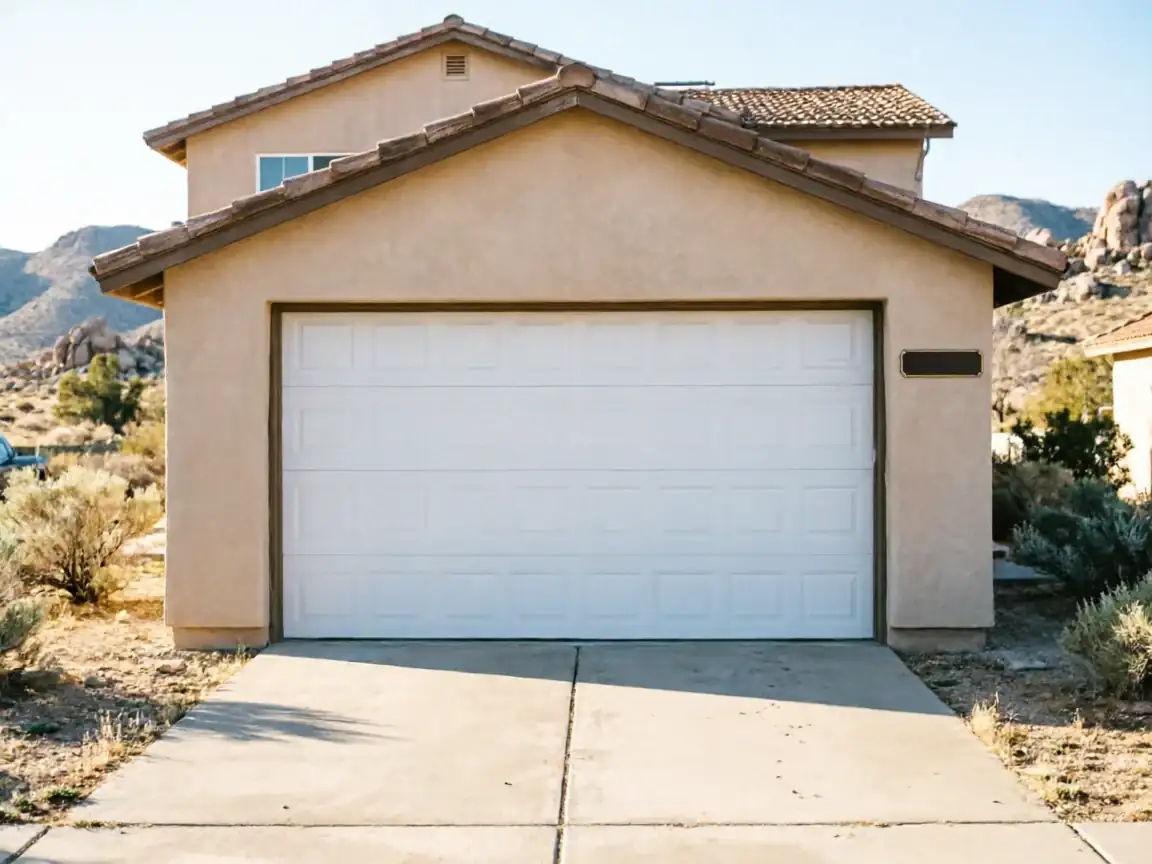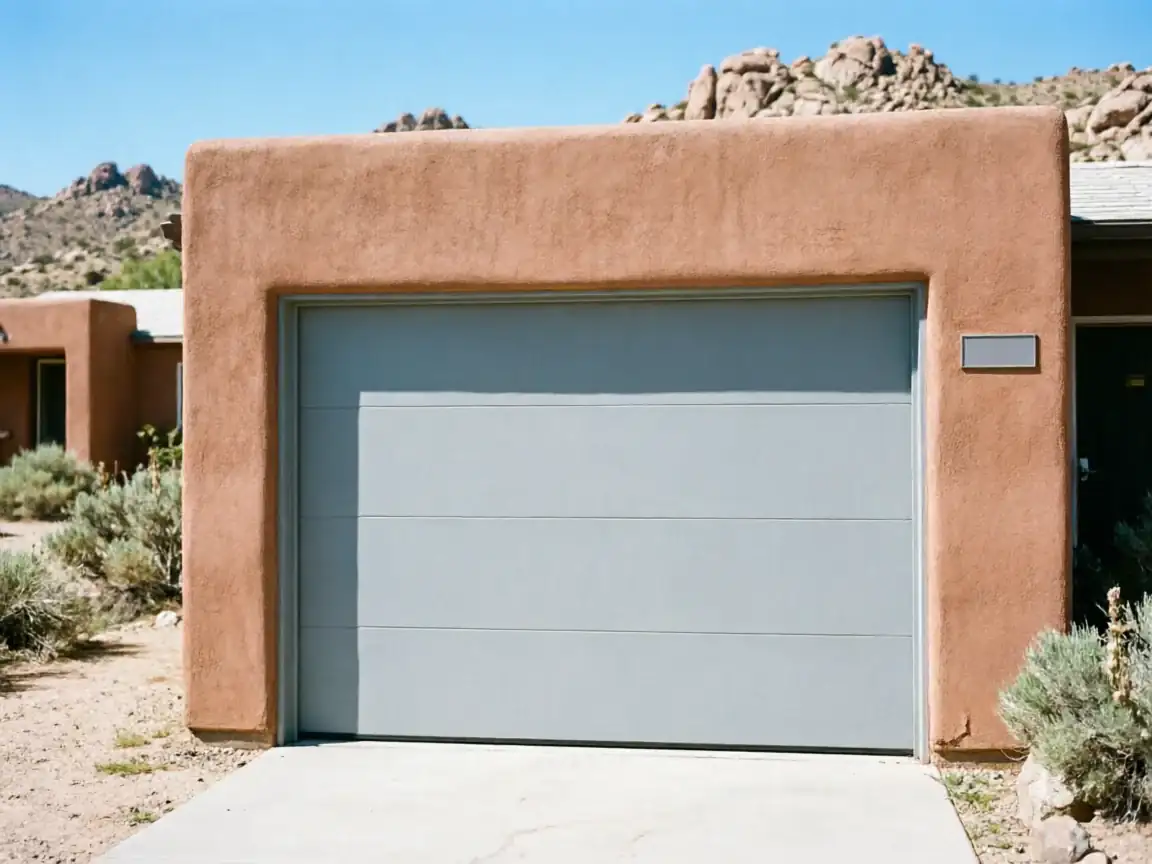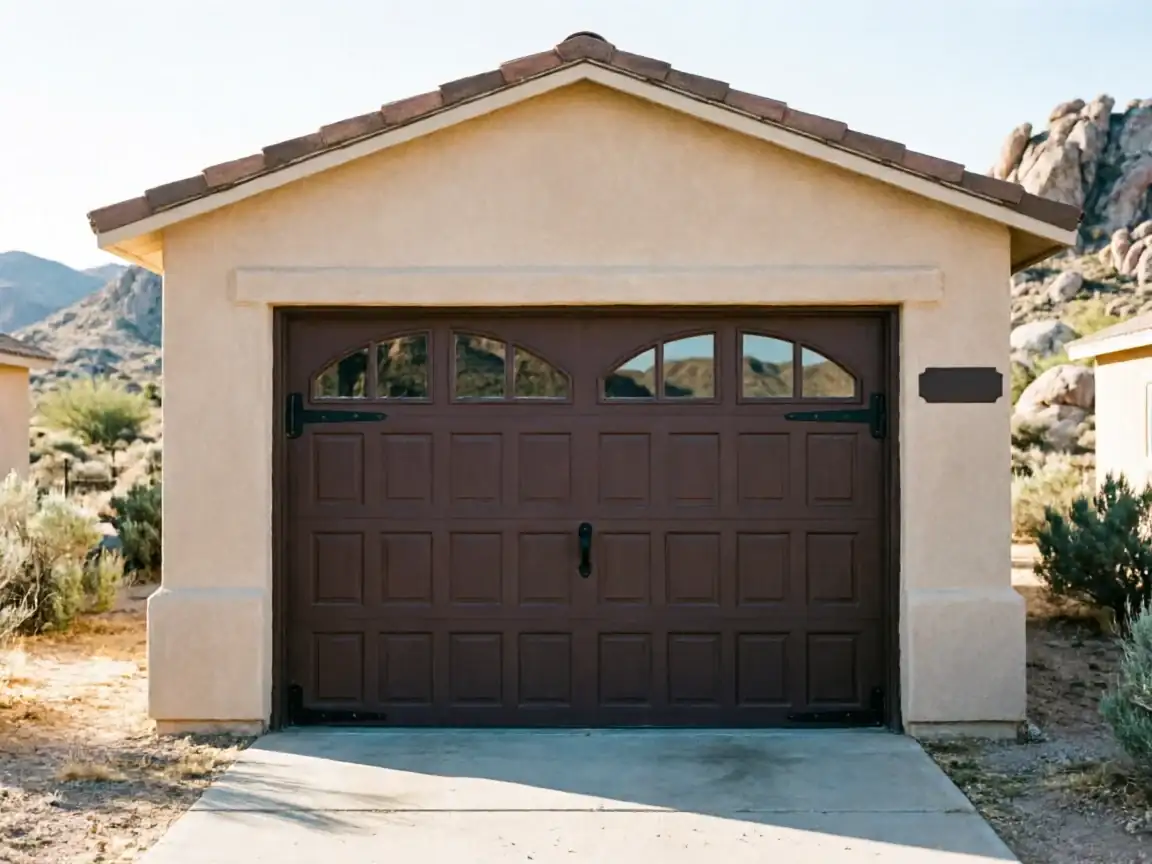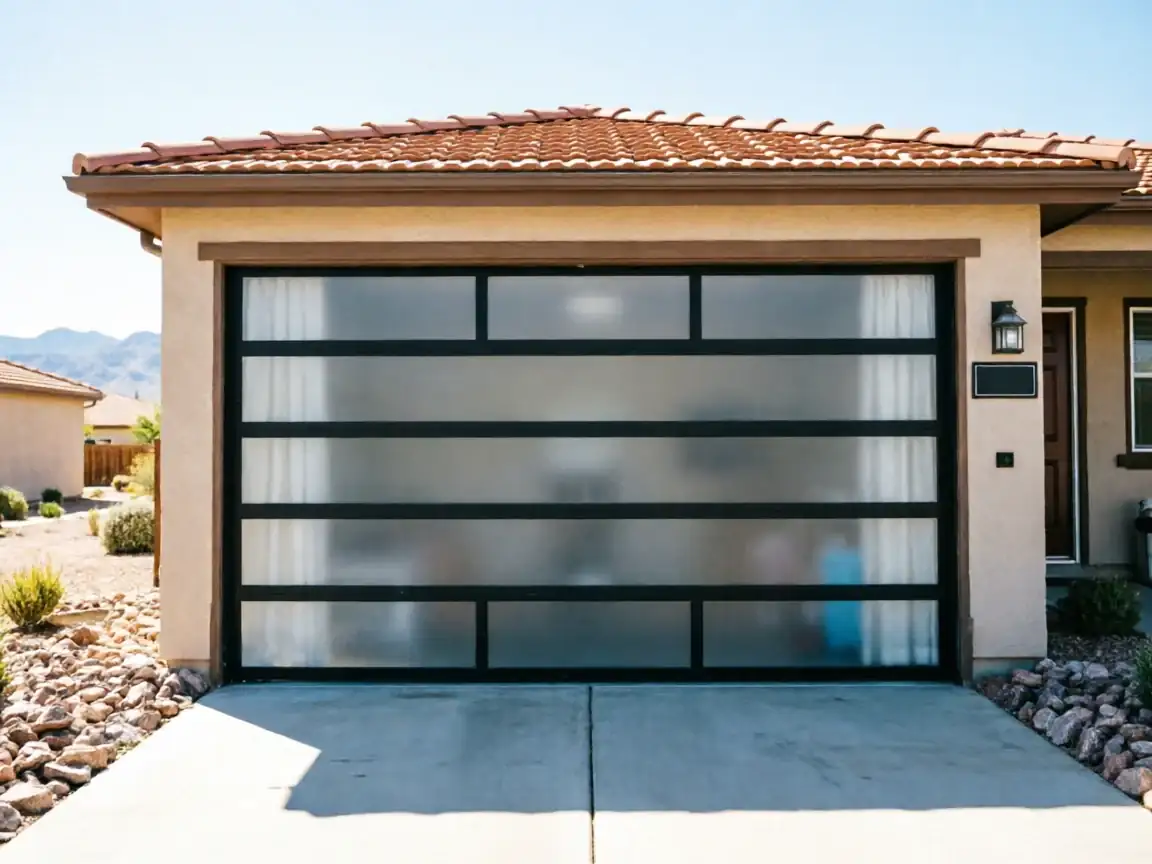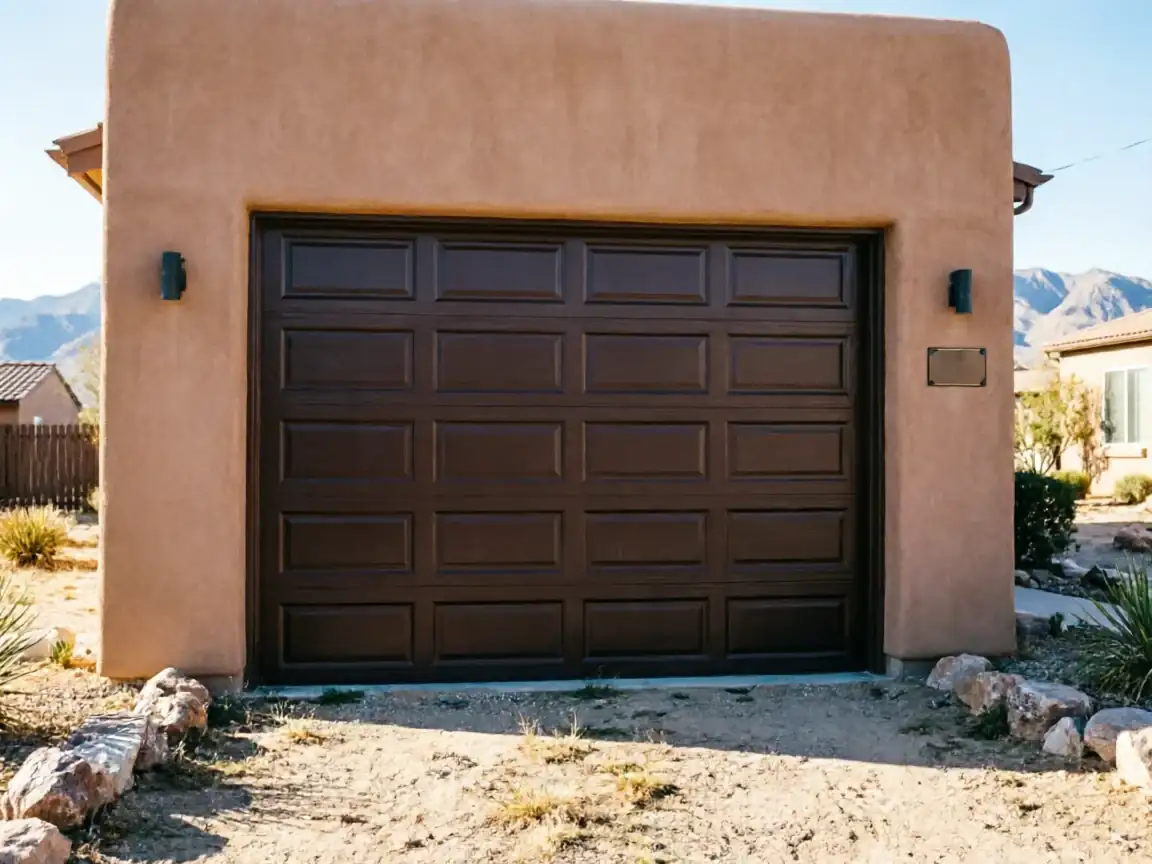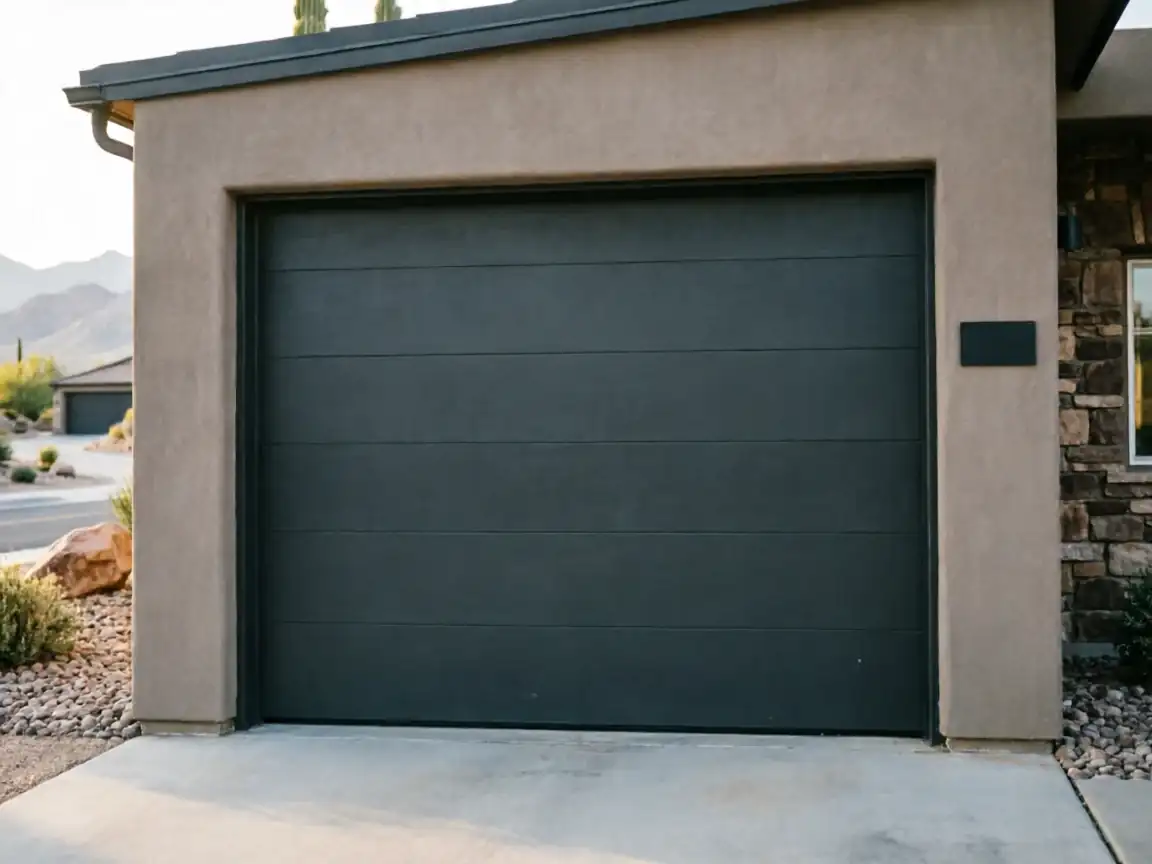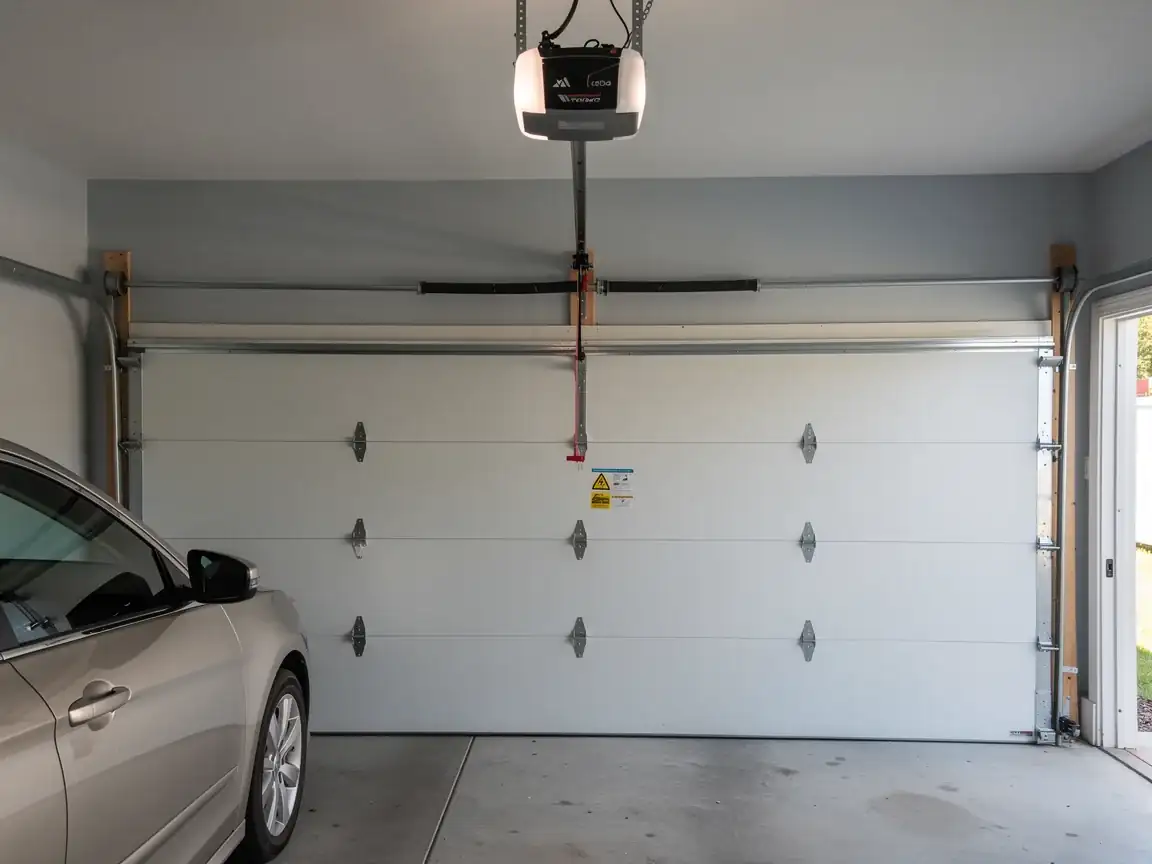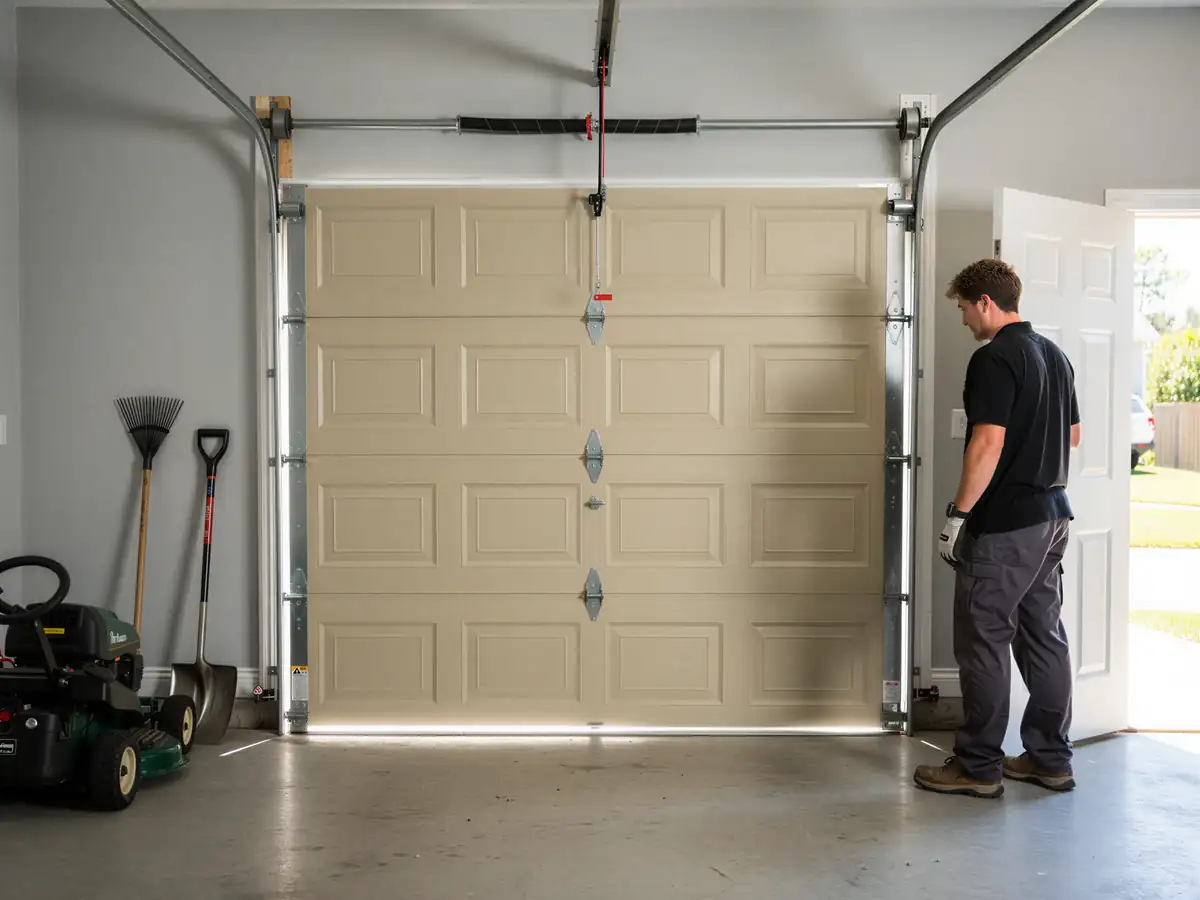
What You Are Seeing
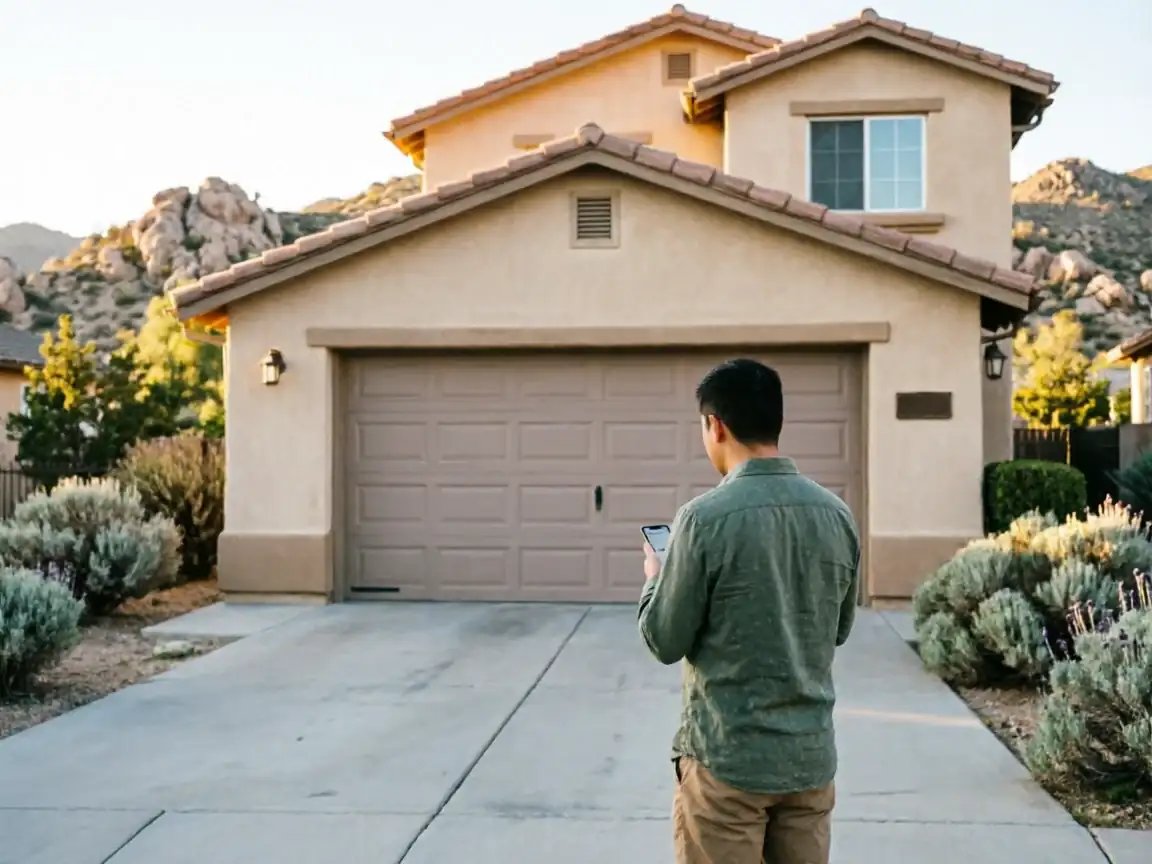
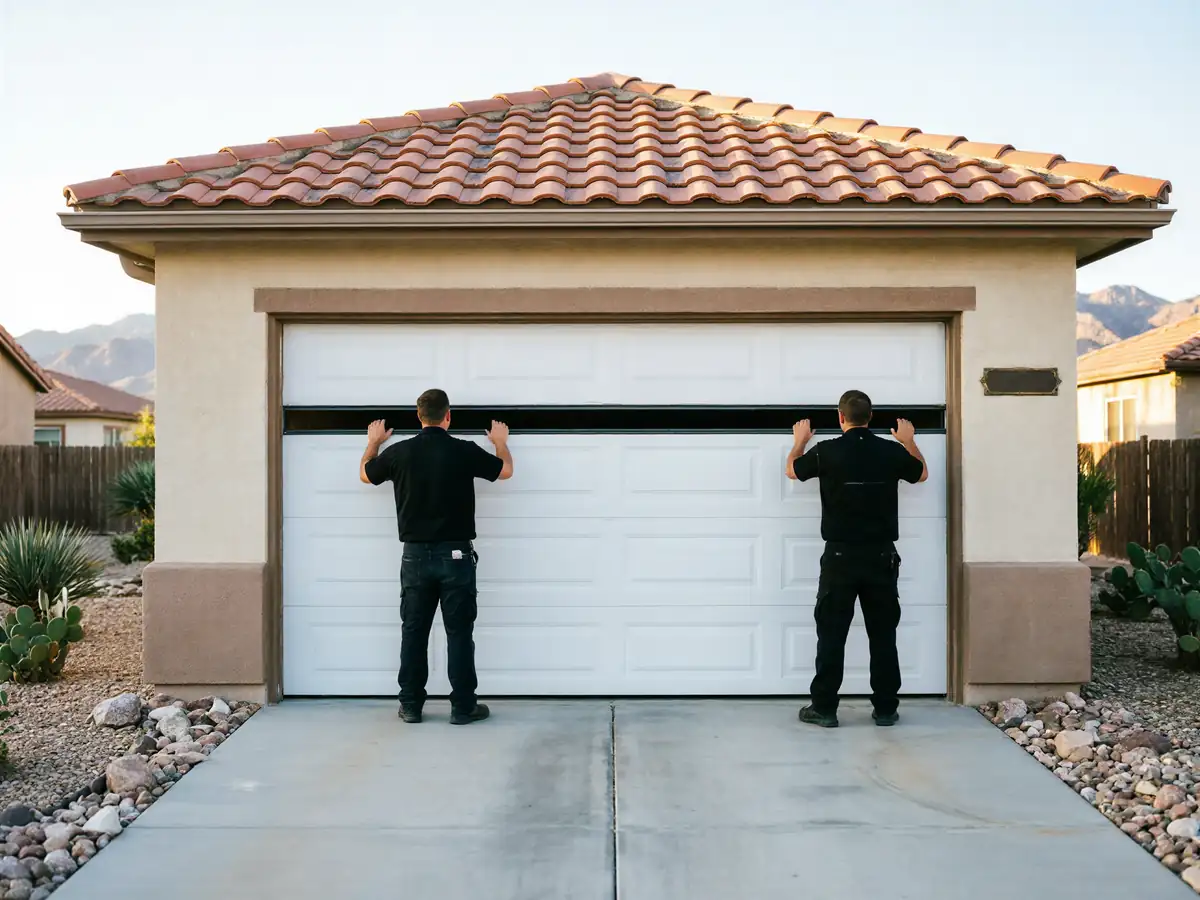
Most calls start the same way: the door won't open, or it opens partway and stops
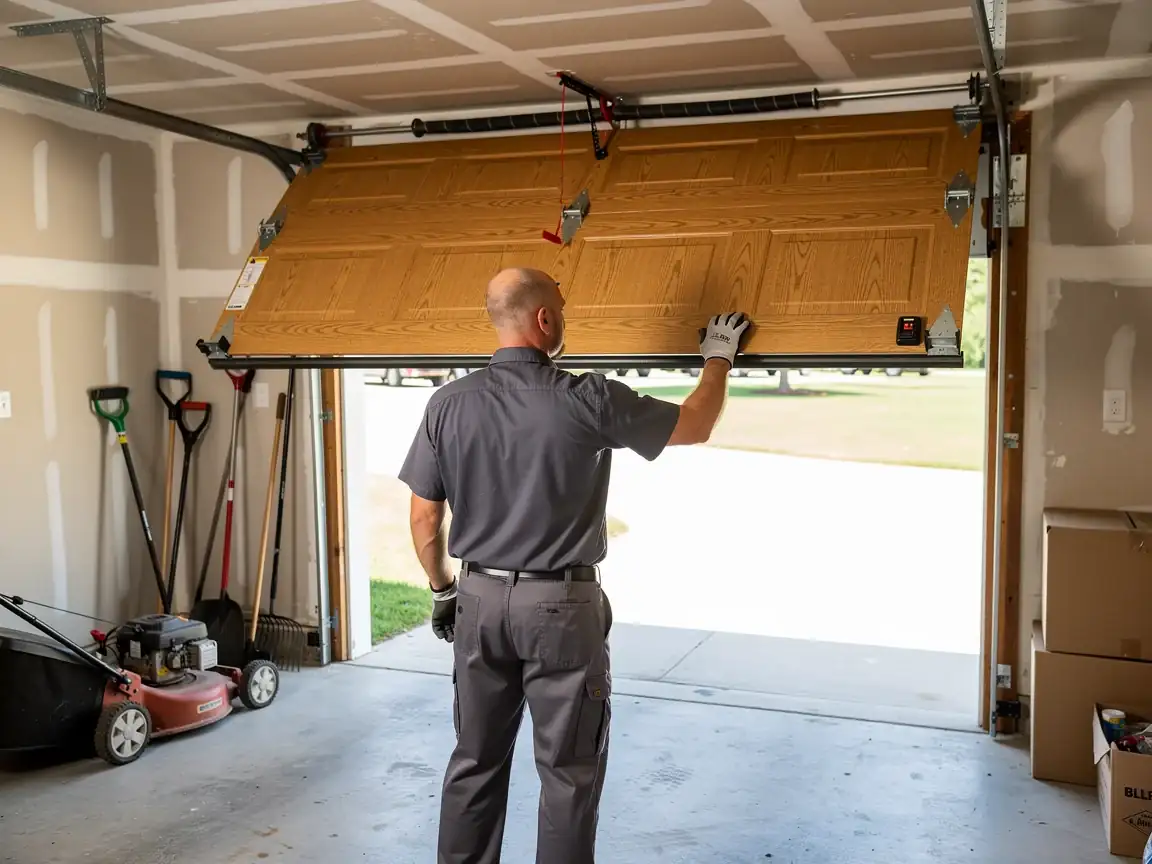
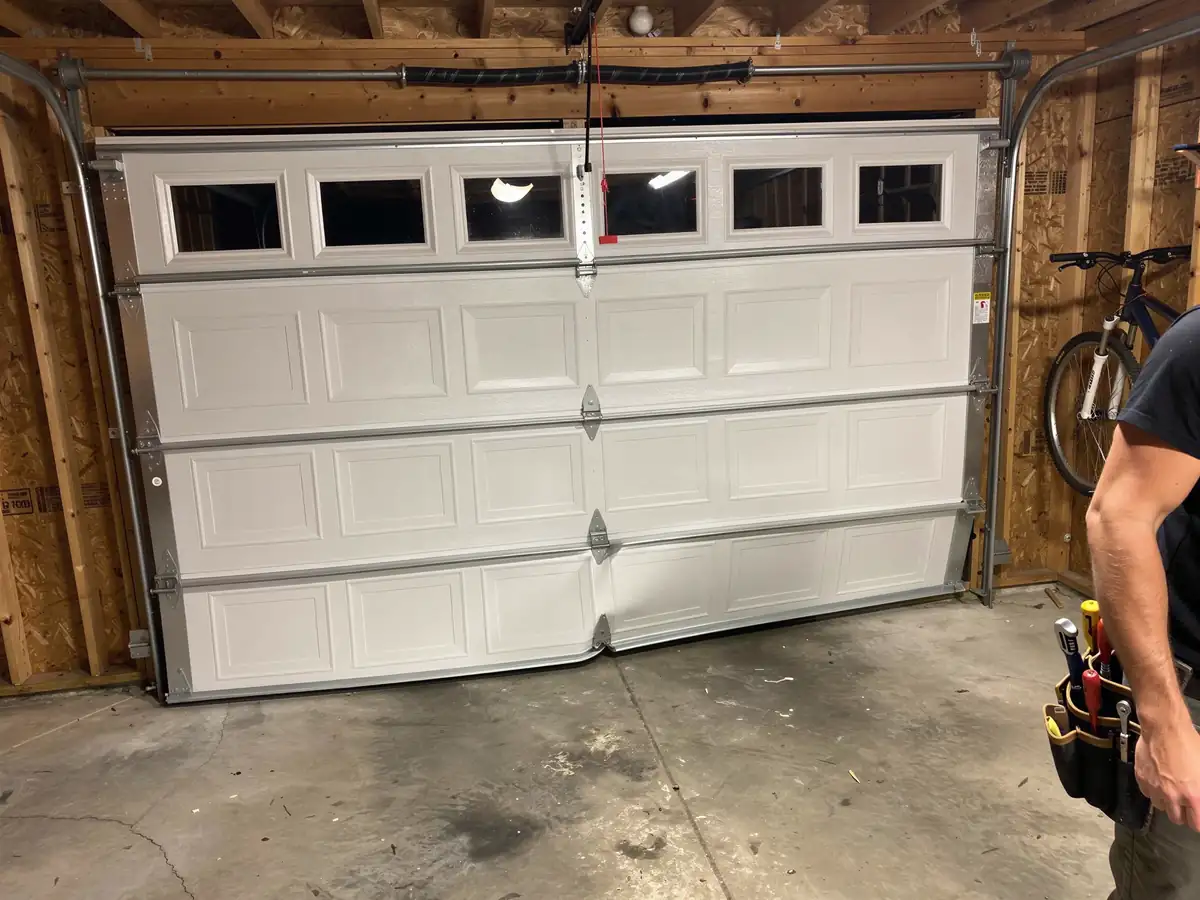
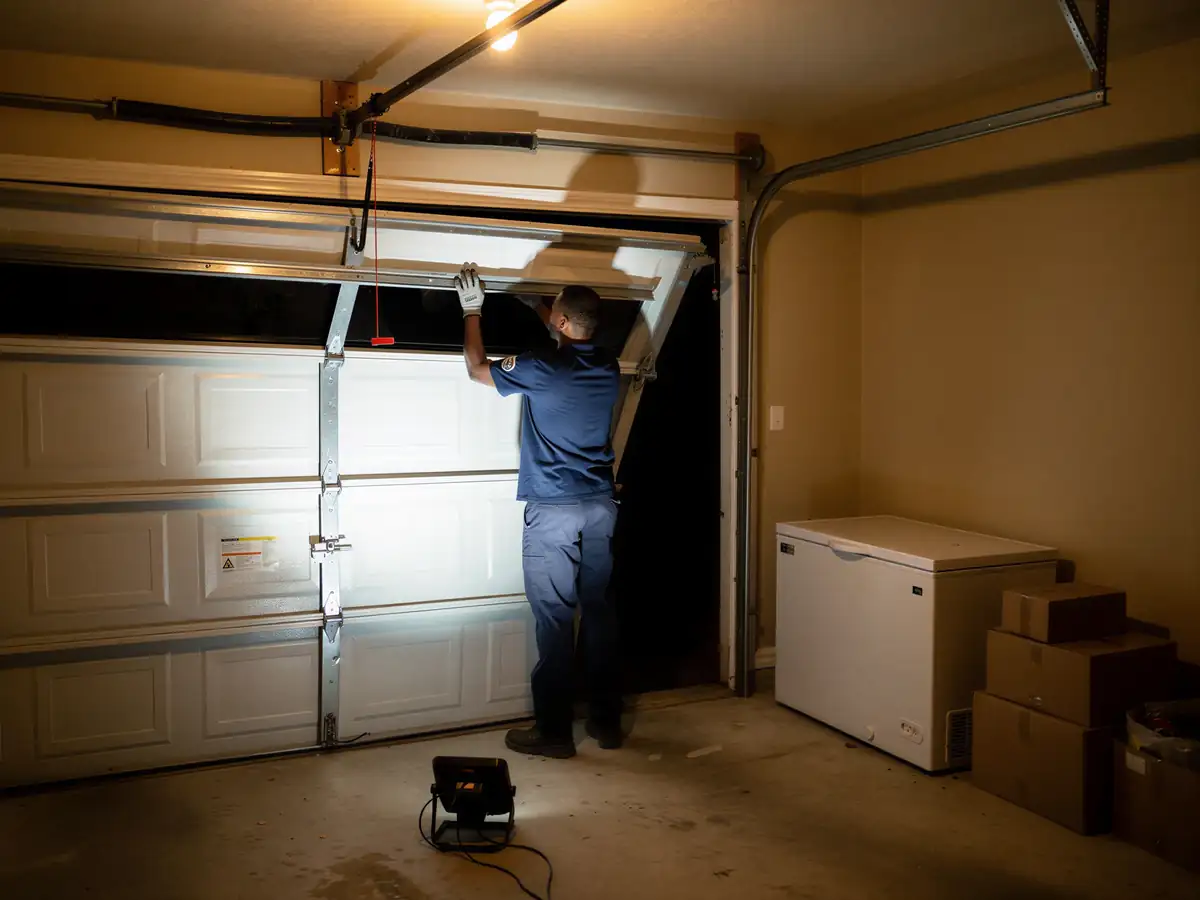
Sometimes there's a loud bang from the garage before anything quits - that's usually a torsion spring letting go. Other times the door looks fine but the opener strains, grinds, or reverses itself halfway up. On older sectional doors you might see a visible gap or sag at one corner, which usually means a cable has started to fray off the drum.
Fountain Hills homes mostly went up between 1985 and 1994
So the bulk of garage doors in town are pushing three to four decades of sun exposure on the same hardware. That's not a guess about your specific house - it's the pattern across the service area, and it shows up as springs that snap without warning, rollers that have gone from steel to plastic-and-gone, and openers whose circuit boards finally give out after a couple of decades of summer heat baking the garage.
If your door is slow to respond to the remote
Or the light on the opener blinks instead of running normally, that's usually a sensor or logic board issue rather than anything mechanical - worth mentioning before you assume it's the spring.
What Causes It Around Here
The climate here runs in the severe heat band, and that matters more for garage doors than people expect. Steel panels and torsion springs are rated for a temperature range, and repeated days of extreme heat push components through more expansion-and-contraction cycles per year than they'd see in a milder spot. That fatigues torsion springs years before the manufacturer's stated cycle count, especially on doors that were installed when the neighborhoods were first built out.
Across the roughly 8,109 households in the service area, most sit on original 1980s-90s builder-grade torsion hardware that nobody stocks in half sizes anymore. When a spring from that era fails, the replacement is rarely an exact match - wind direction, wire gauge, and drum size have all shifted since. That's part of why a repair sometimes takes longer than a homeowner expects: it's not the labor, it's sourcing hardware that fits a thirty-year-old frame.
Heat also does a number on lubrication and on opener gearing. Grease that's fine in a 70-degree garage turns thin and useless at 115, which accelerates wear on rollers and chain-drive gears. If your opener is original to the house, it's likely near the end of its service life regardless of how it sounds today.
What Is on the Truck
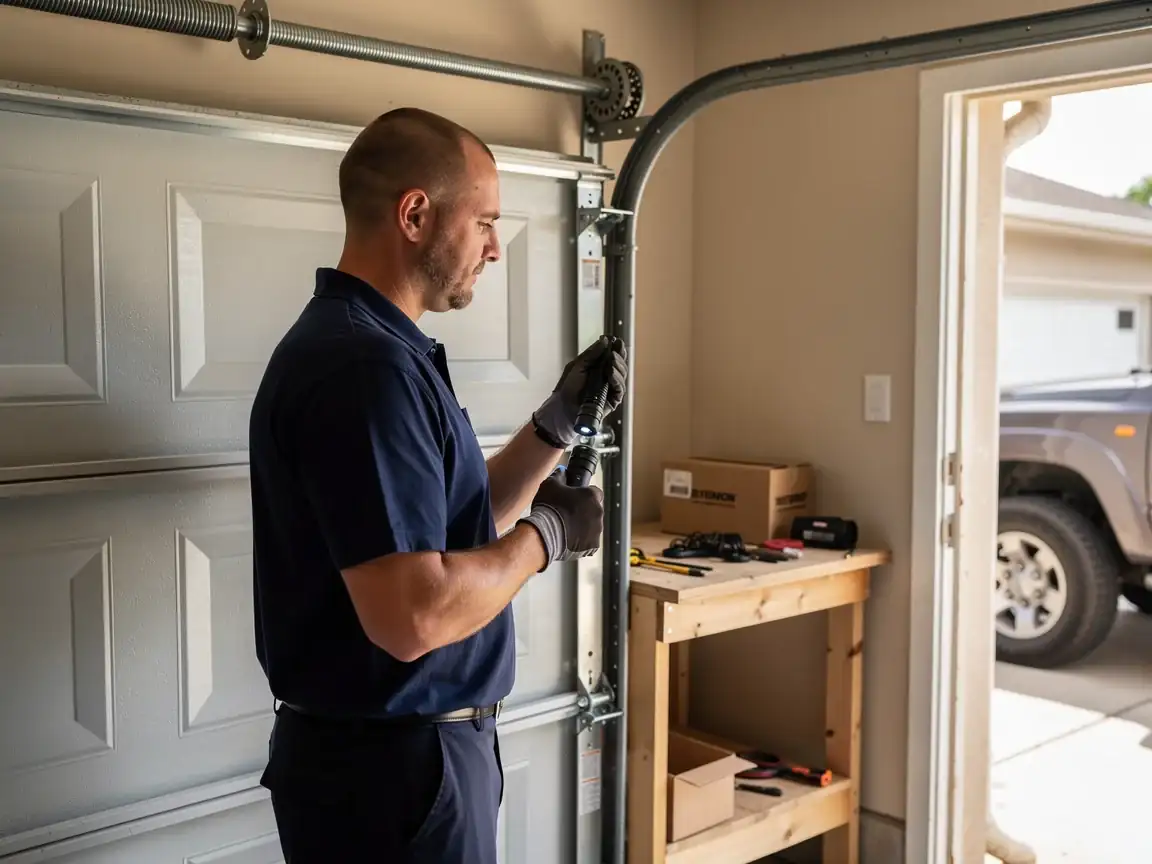
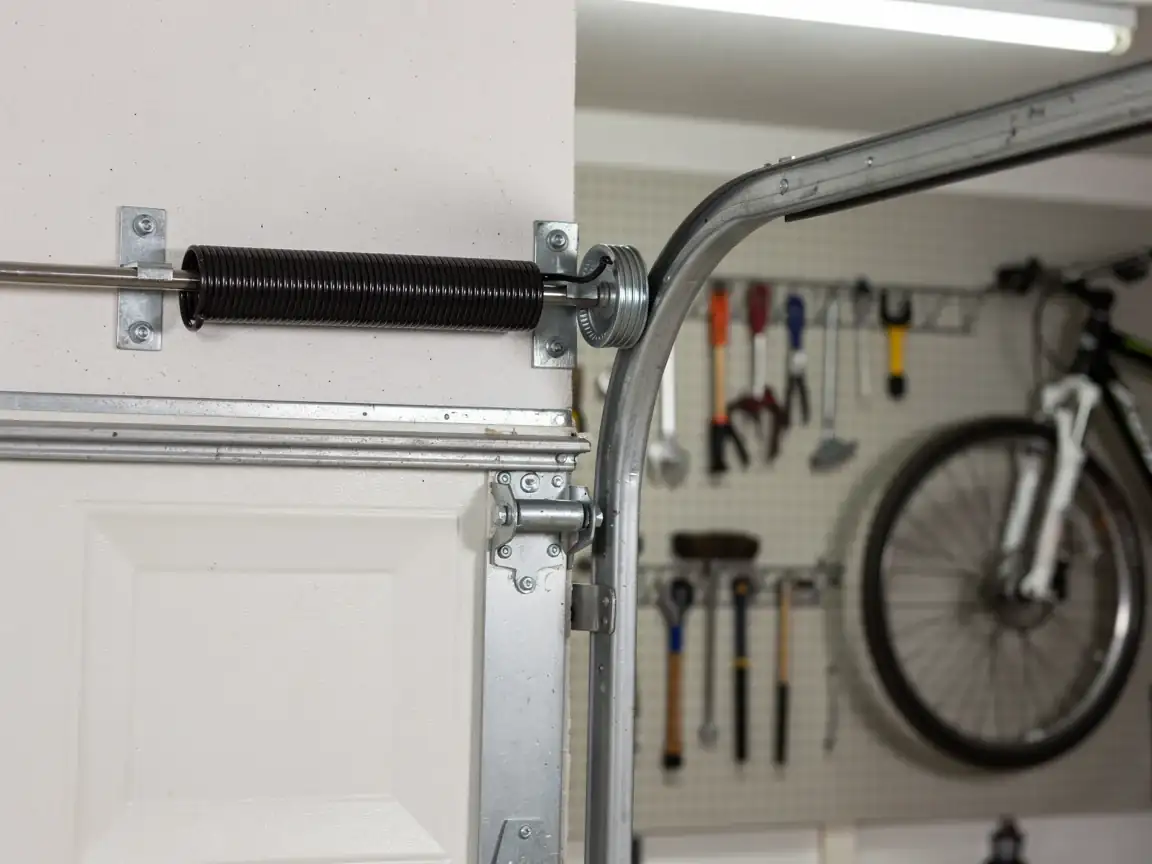
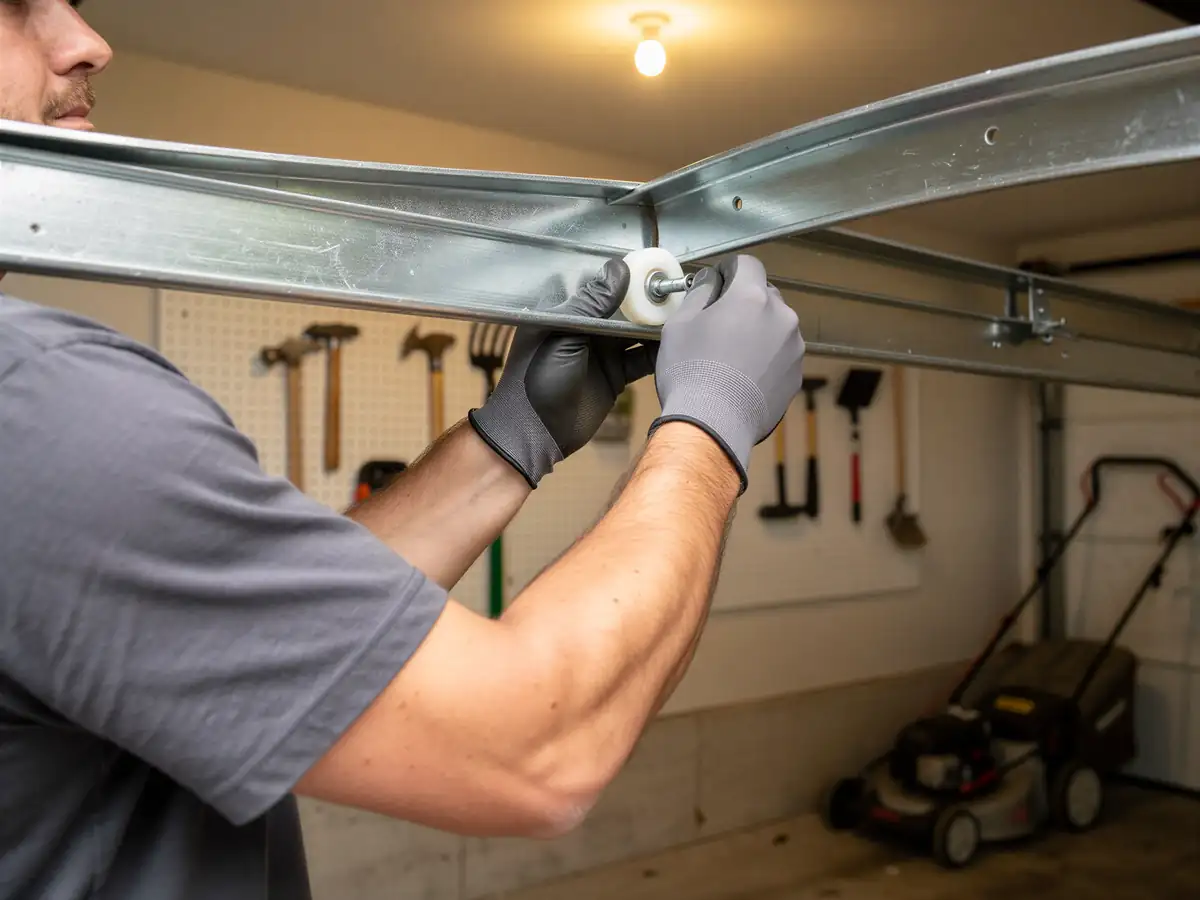
We carry a working range of torsion springs, extension springs, rollers (steel and nylon), cables, and the hinges and brackets that fail most often on doors from the 1980s and 90s building boom. We also stock common logic boards and safety sensors for the opener brands that turn up most in Fountain Hills and nearby homes.
What we don't carry is every obsolete spring wind and drum size that original builders used - some of those parts were phased out by the manufacturers themselves. When we hit one of those, we measure on site and either source the closest safe match or recommend replacing the full spring set so the door runs balanced on both sides instead of mismatched. That's the honest limitation: a 35-year-old torsion setup sometimes can't be patched with a single new spring, and pretending otherwise just sets up a second service call.
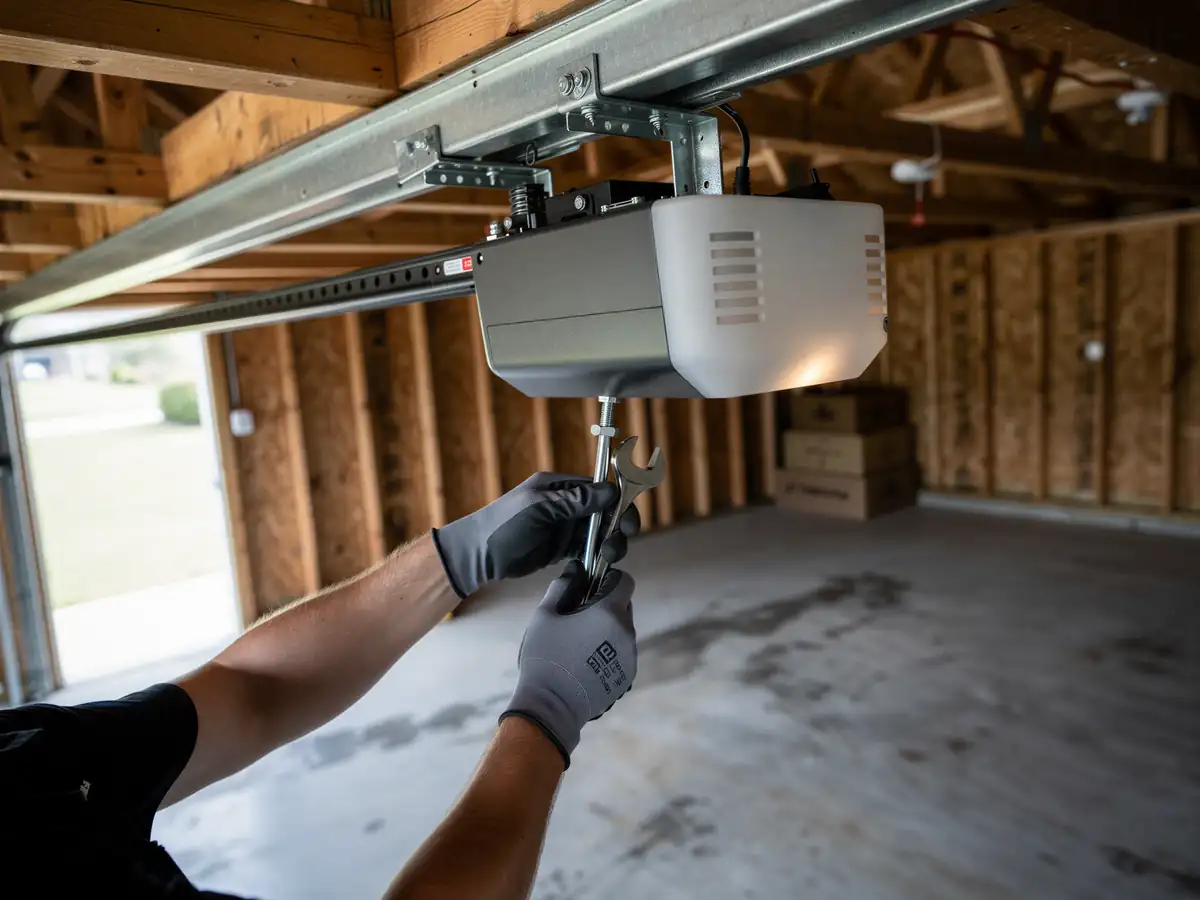
For openers, we carry replacement units outright when a board repair isn't worth the labor against a new motor. We'll tell you which situation you're in before we start work, not after.
What You Pay
Cost on a repair comes down to what's actually broken and what the door is built like
A single torsion spring job is a different scope than a full cable-and-drum replacement, and a two-car door costs more in parts than a single. Doors original to Fountain Hills's 1980s-90s construction sometimes need hardware we have to match or substitute, which can add to the job if an exact replacement spring isn't something we carry on the truck that day.
Given the median household income here runs around $141,331
We find most owners choose a full, correctly matched repair over a cheap patch that fails again in a year - replacing both springs on an aging torsion bar rather than just the broken one, for instance, since the second one is usually close behind it. We'll give you the actual number for your door before any work starts, based on what we find once we're looking at it, not a number pulled from a phone call.