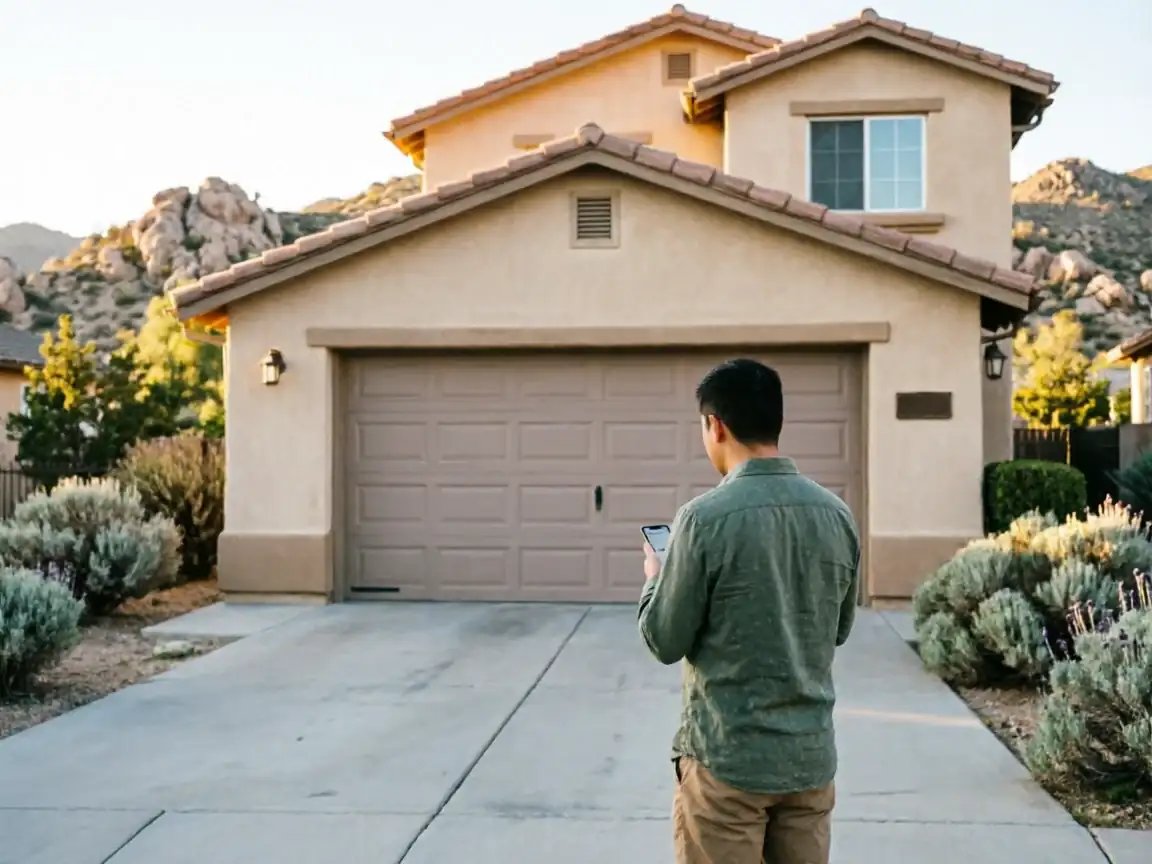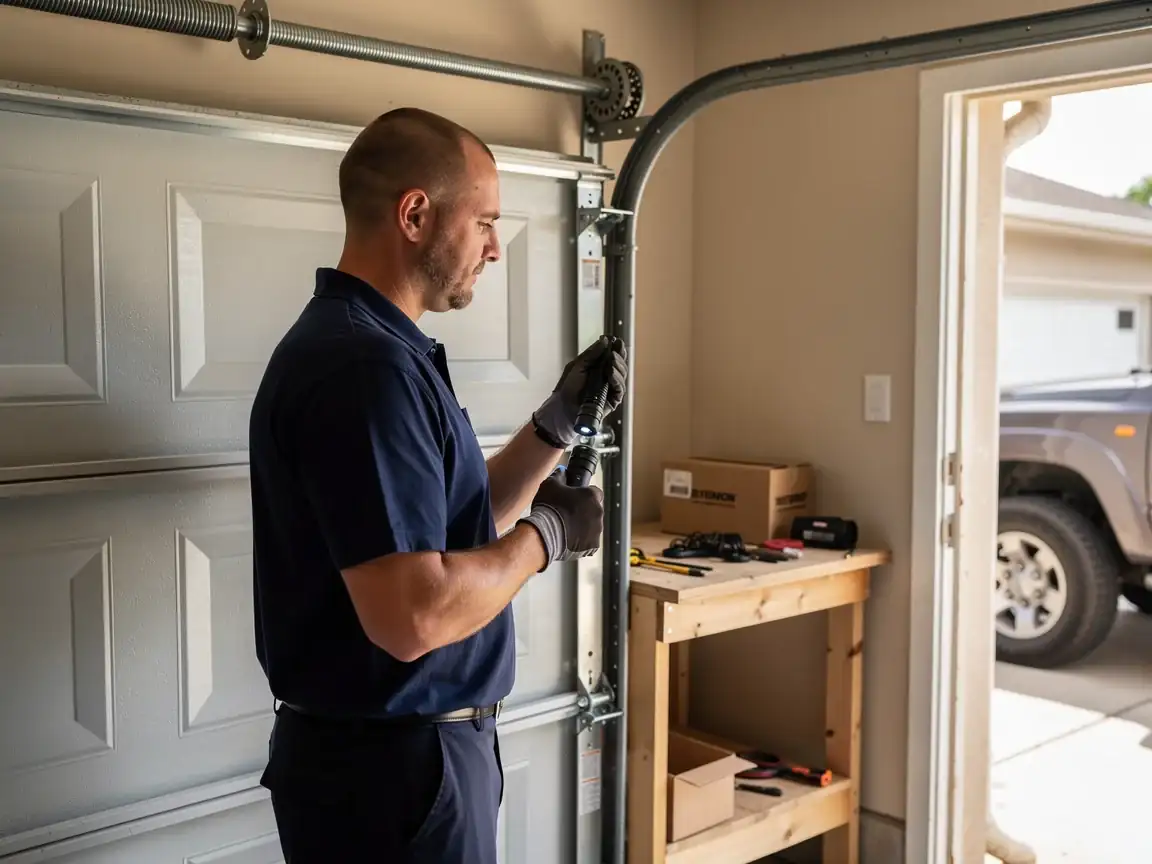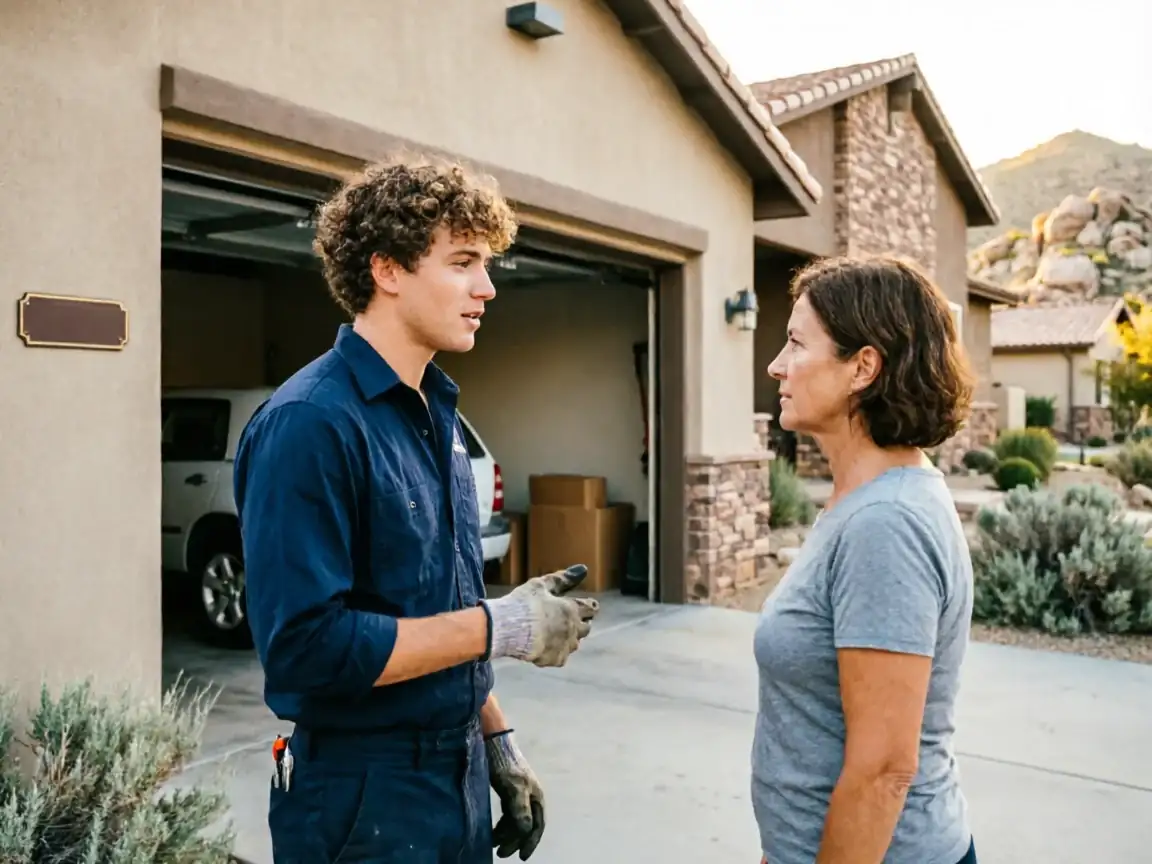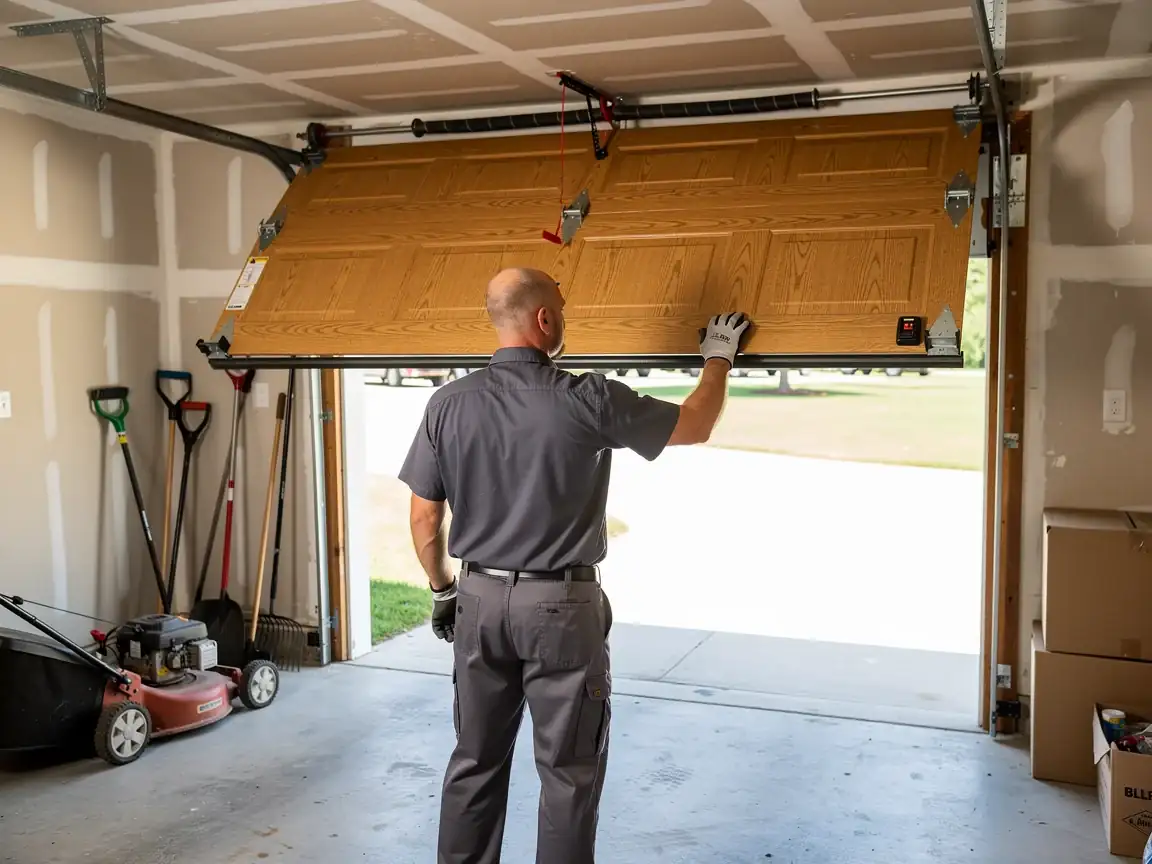
What You Are Seeing
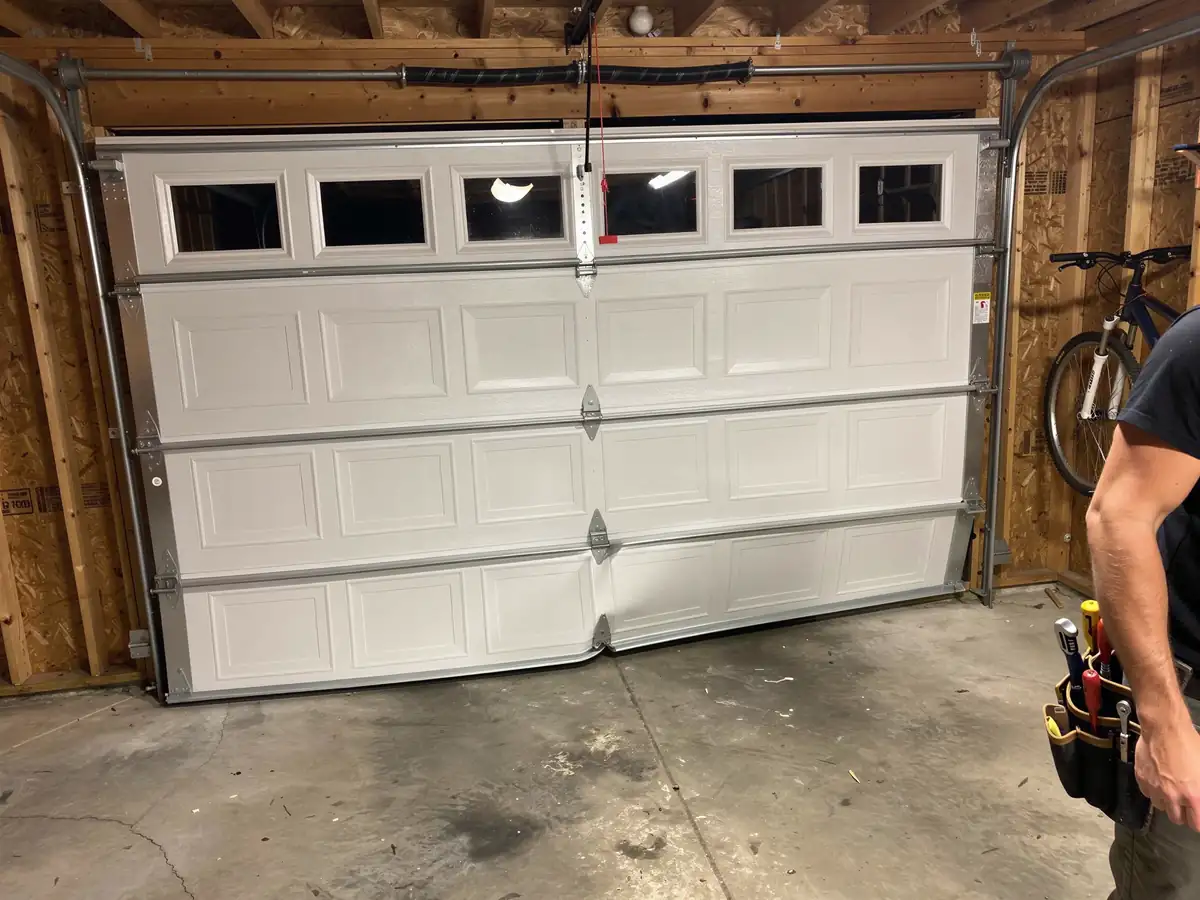
A door that's off track usually shows itself in one of a few ways
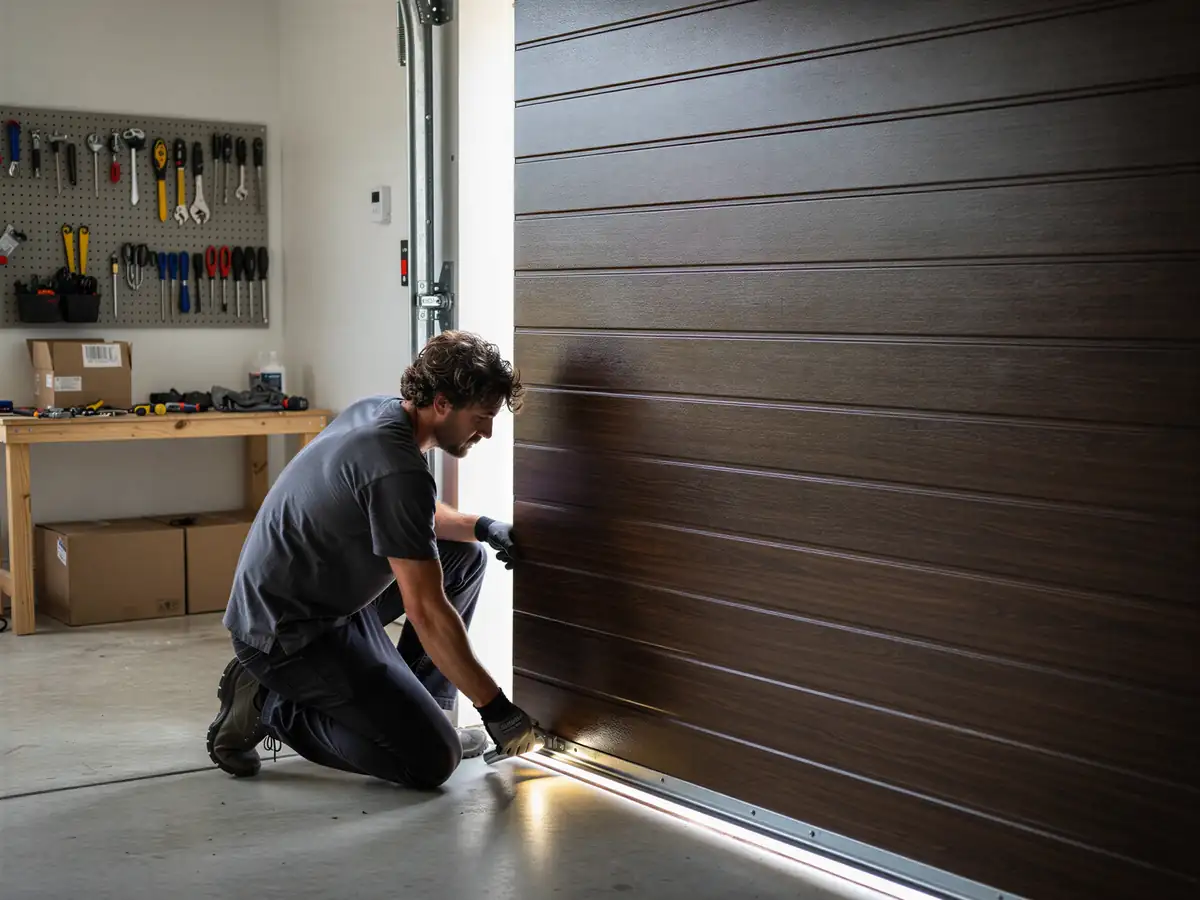
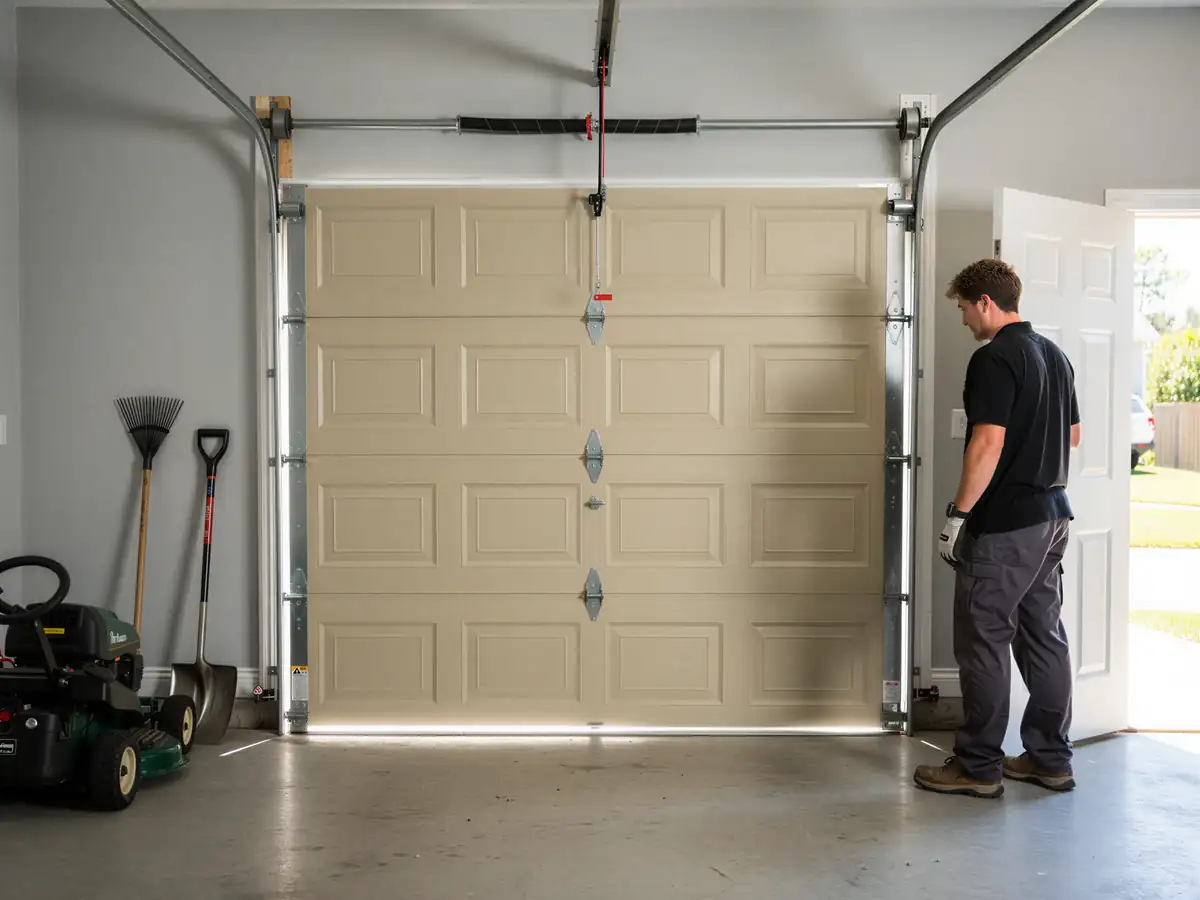
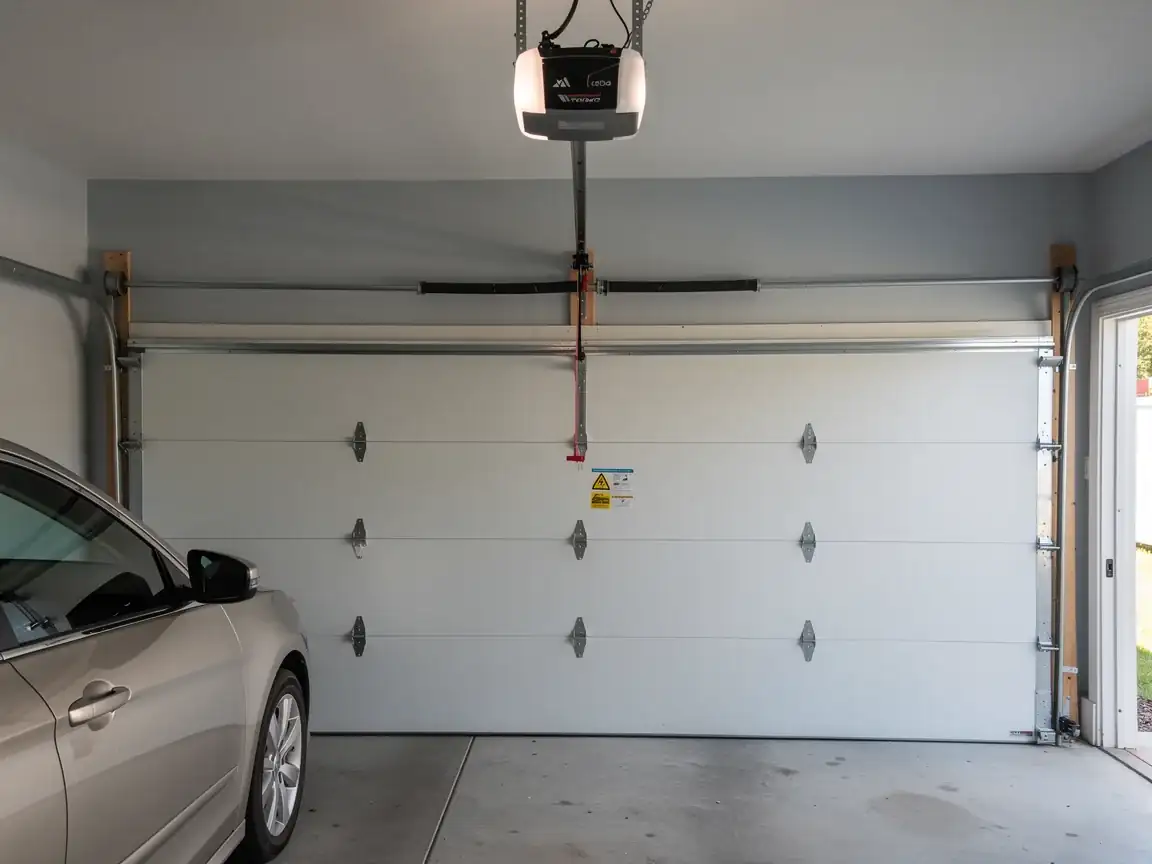
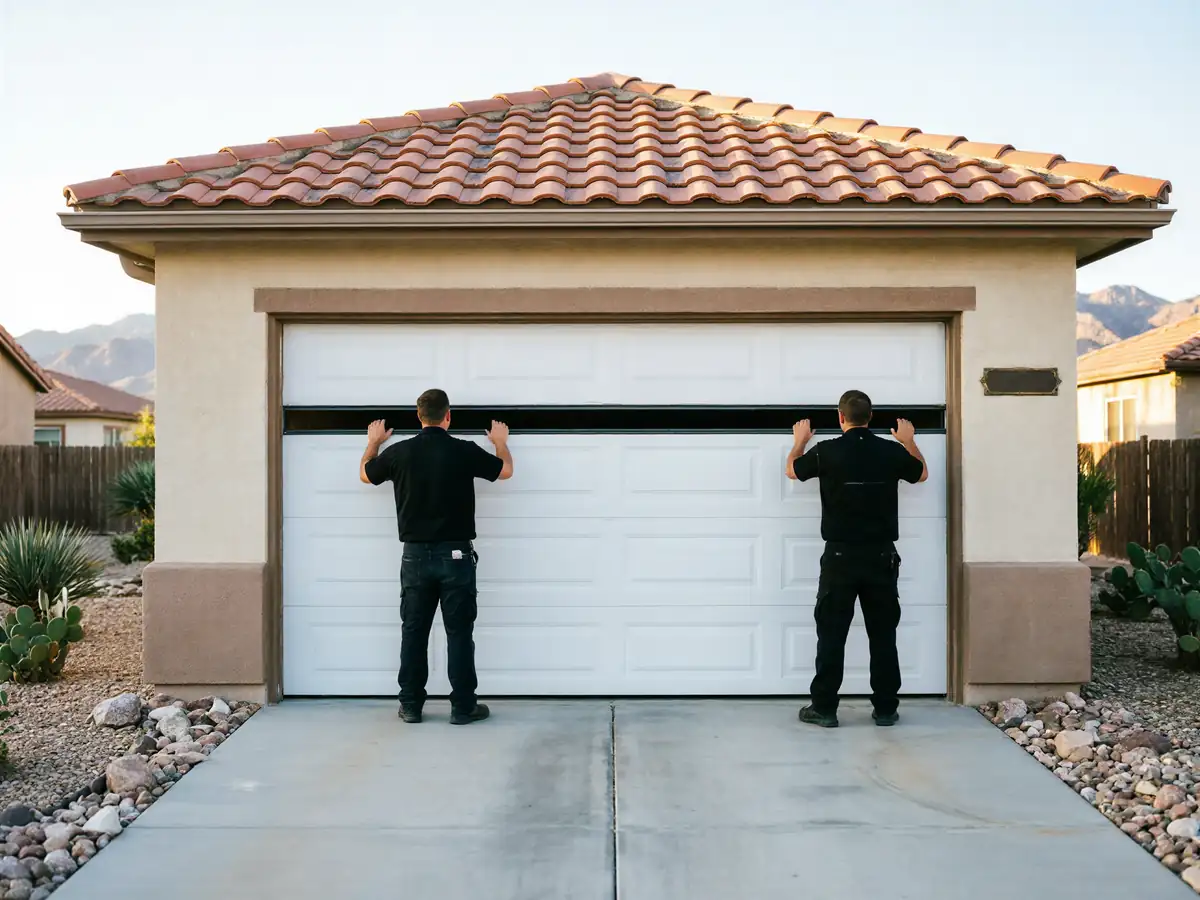
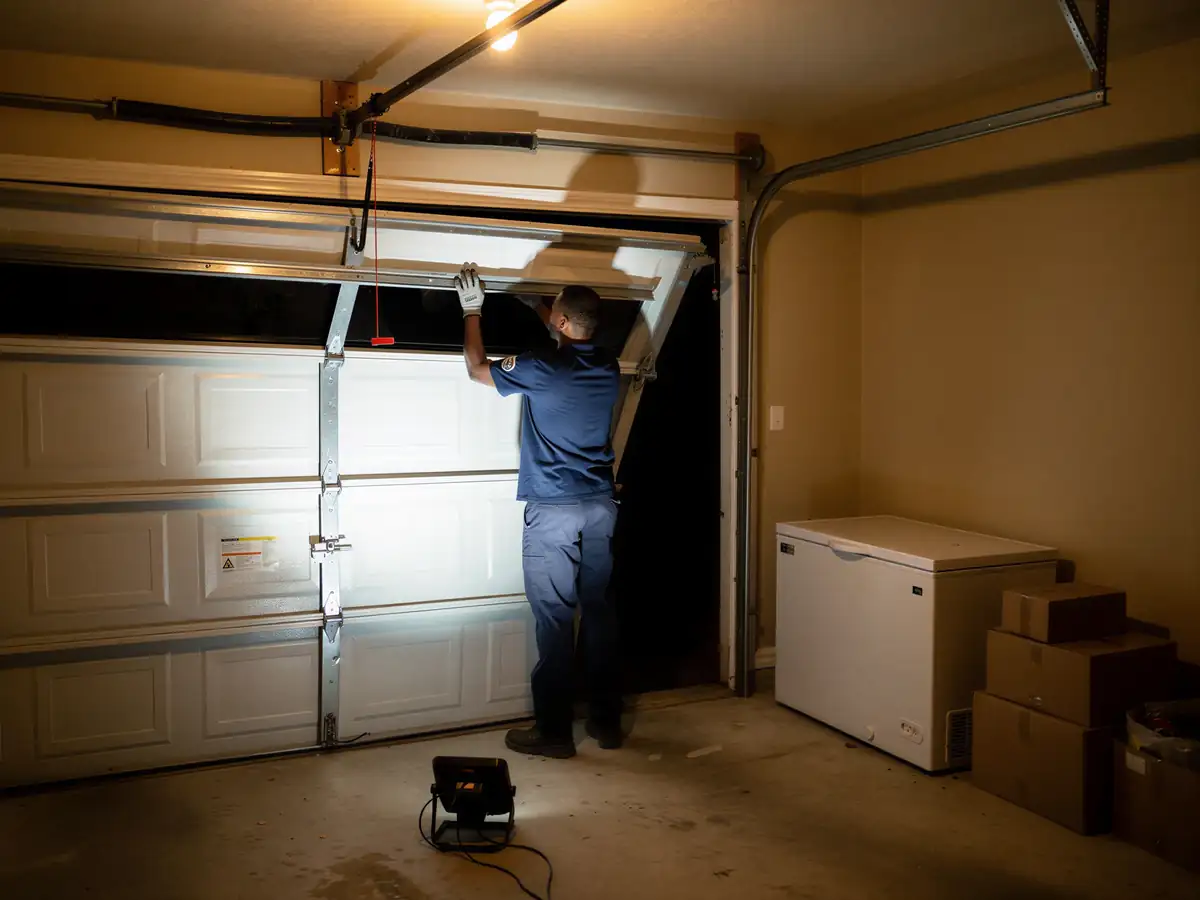
The panel hangs crooked in the opening, one side rides higher than the other, a roller has popped clean out of the rail, or the door flat-out stopped halfway and won't move either direction without grinding. Sometimes you'll see the track itself bent or pulled away from the wall bracket. Other times the track looks fine and the problem is a roller or cable that let go.
Homeowners across this area
From the streets near to the flatter ground down toward - call it the same thing: 'my door jumped the track.' What they're describing can be a simple roller fix or it can mean the door came down on a bent track under its own weight, which is a different job entirely.
Don't try to force it back by hand
And don't keep hitting the opener button hoping it'll seat itself. A door off track is under spring tension even when it looks still, and pushing it can snap a cable or drop the whole panel. If the door won't move at all, leave it where it is and call - that's the safest state for it to sit in until someone looks at the hardware.
What Causes It Around Here
Most of the housing stock in this service area went up between 1985 and 1994, with 1989 as the median build year across the three main developed pockets. That means a lot of garage doors out here are running original or first-replacement track and roller hardware from that era - galvanized steel track, steel rollers, the kind of setup that was standard thirty-some years ago but wasn't built with today's heavier insulated panels in mind.
Pair that hardware age with a severe heat climate band, and you get a specific failure pattern: steel track brackets expand and the fasteners back out slightly over years of summer cycling, nylon rollers that were never rated for this kind of sustained heat get brittle and crack, and track alignment that was fine at install drifts out of square as the framing around it moves with the seasons. None of that shows up as a sudden event - it shows up as a door that's been running a little rough for months and then one day jumps the rail.
We see it more in houses on original hardware than in anything that's been upgraded, which tracks with how much of the stock here is still running what it shipped with.
What Is on the Truck
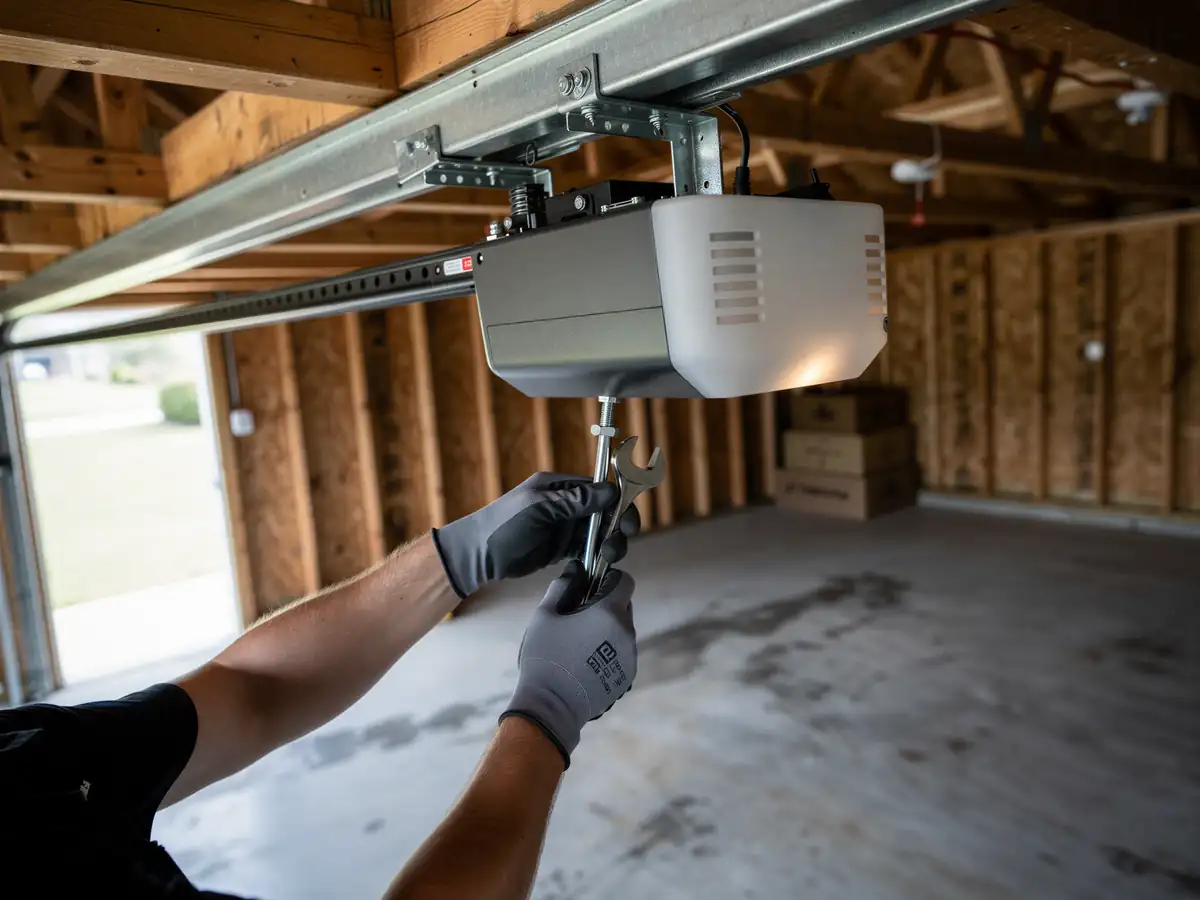
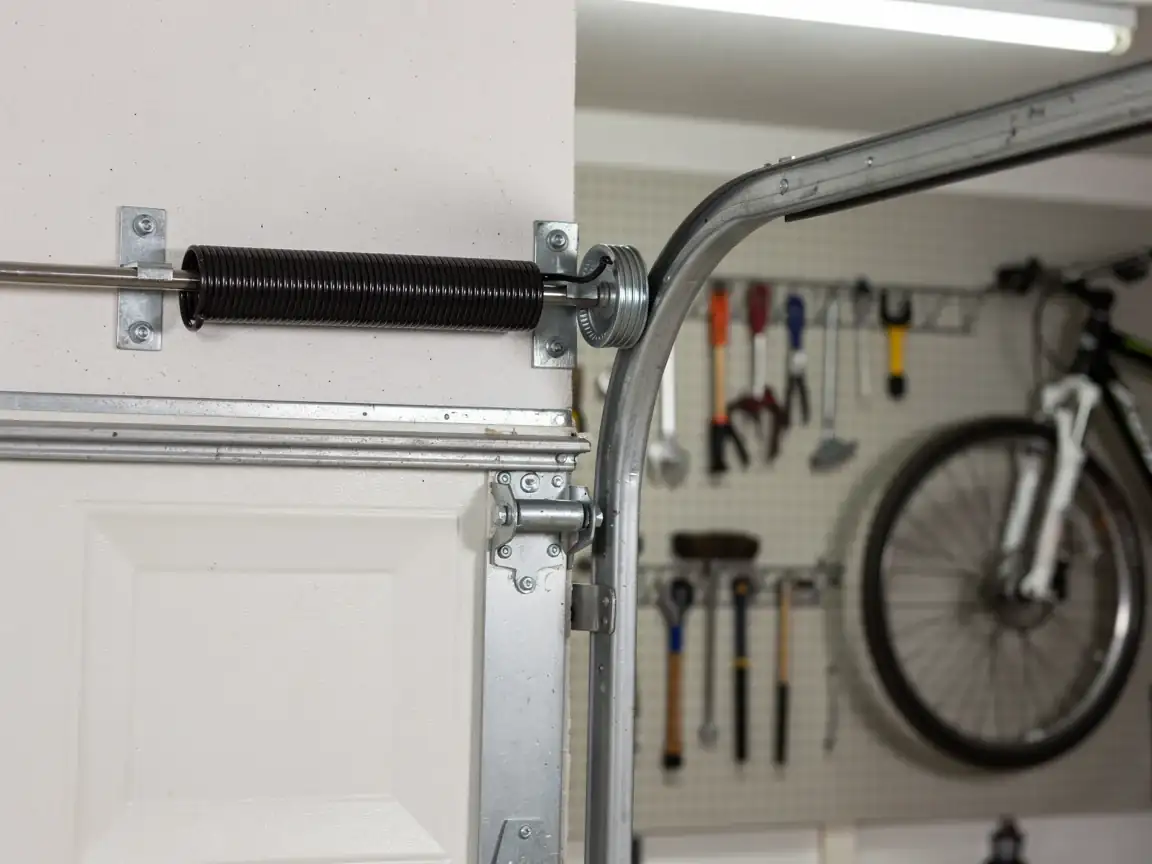
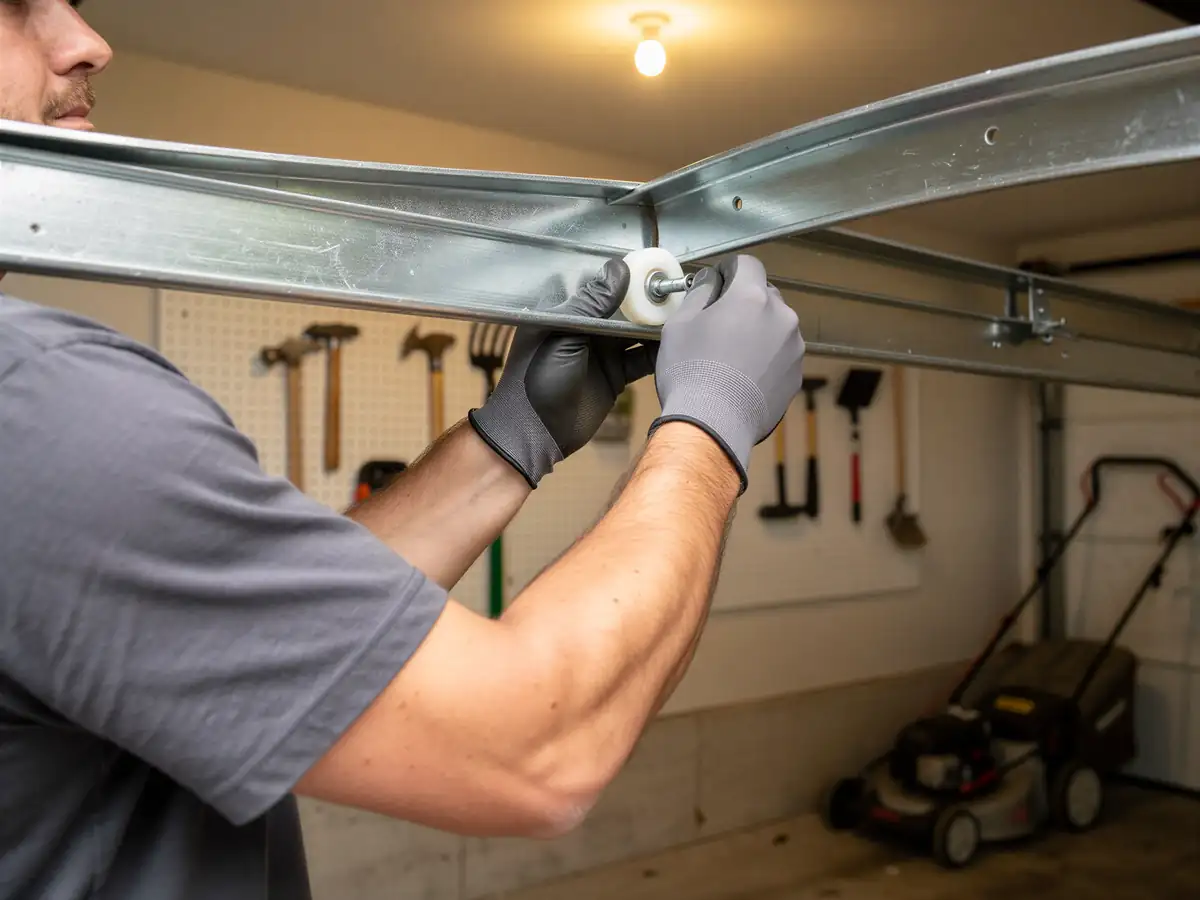
For an off-track call we carry replacement rollers in both nylon and steel, section track in standard widths, track brackets and fasteners, and cable for both sides of the door since one side rarely fails without the other side being close behind. We also carry spring-related hardware, because a door that's jumped track sometimes did so because a cable or spring let go first, not the other way.
What we don't carry on a standard call is a replacement door panel. If the track pulled hard enough to crack or bow a panel - which happens on older steel doors more than newer insulated ones - that part has to be ordered, and the job becomes a two-visit repair: stabilize and secure the door on the first visit, panel swap once the part's.
Most off-track calls we get across this area, from the ridge lines near down to the lower ground toward get resolved on the first visit with track, rollers, and cable from the truck. The ones that don't are usually older steel doors where the panel itself took the damage.
What You Pay
We don't post a flat number for this because off-track repairs aren't one job
A popped roller on an otherwise straight track is a short visit, while a bent track with a cracked bracket and a cable that needs replacing is a longer one with more parts. What we can tell you is the factors that move the number: how many rollers need replacing, whether the track itself needs to come off and be re-set or fully swapped, and whether the cable or spring system is involved.
Household incomes across this service area run well above the state median
And we price the work the same regardless of what street it's on - the job determines the cost, not the neighborhood. We'll give you the number before we start, not after.
One honest note: if your door is original hardware from the 1989-ish era and it's jumped track more than once
Patching it a third time usually costs more over a year than replacing the track and rollers once. We'll tell you straight which side of that line your job falls on.