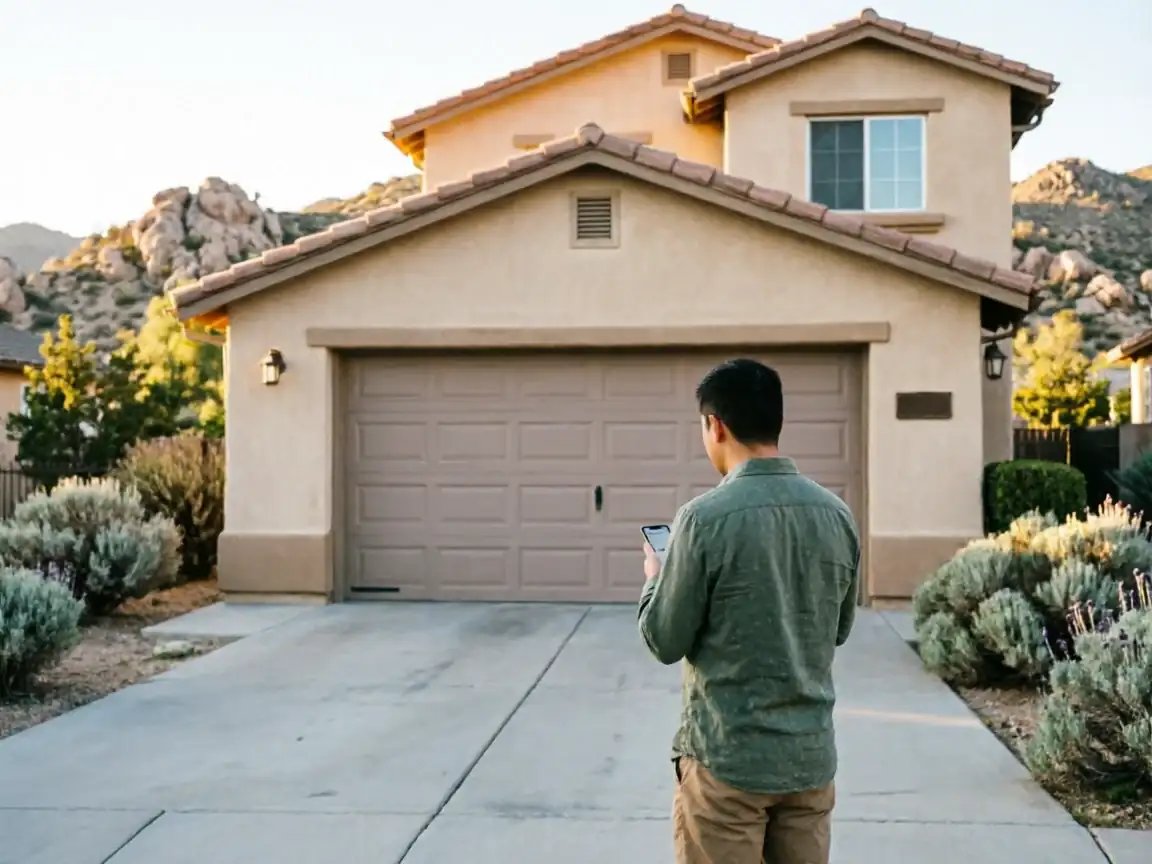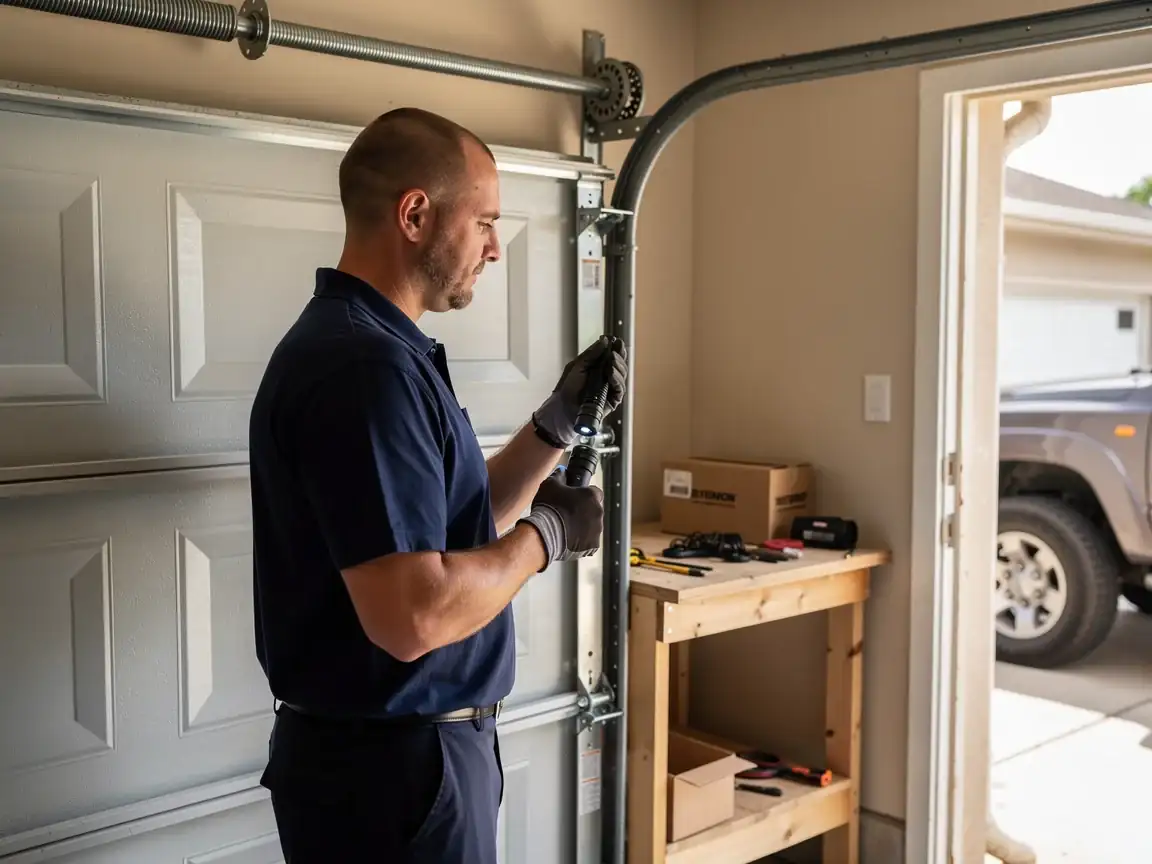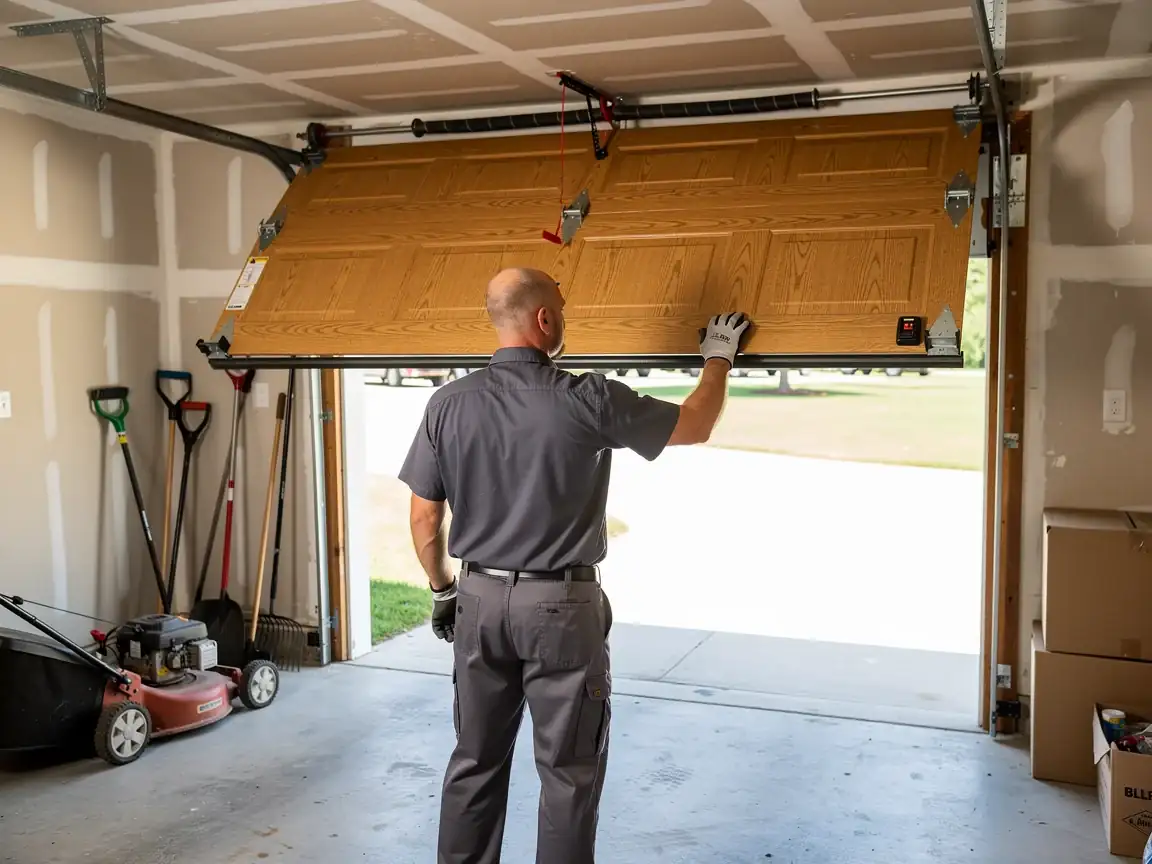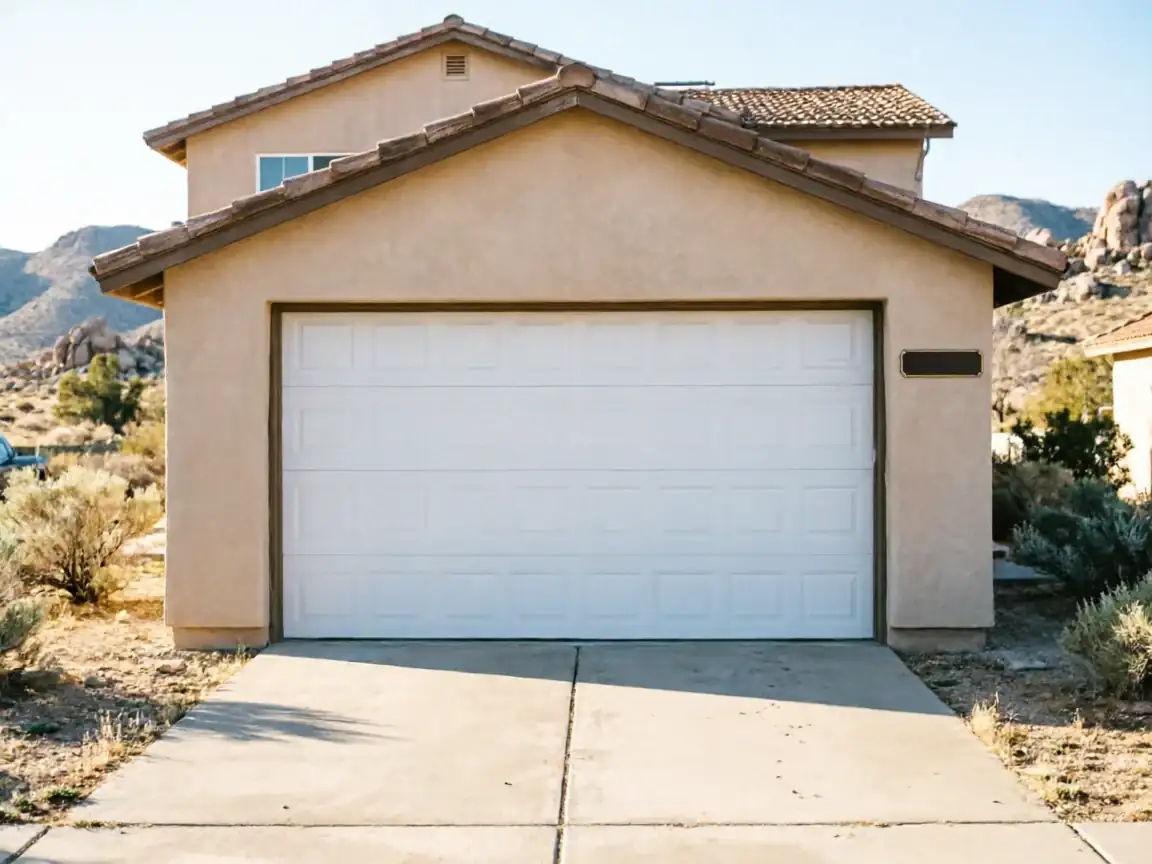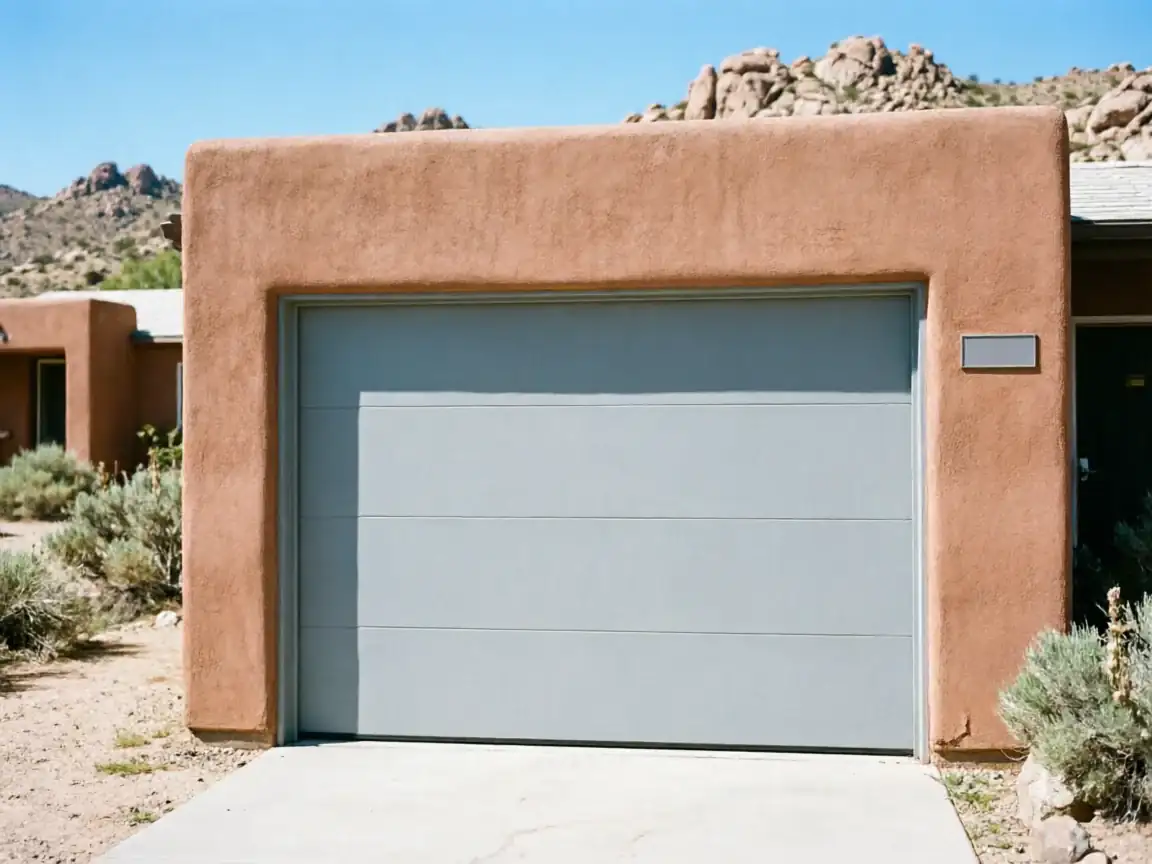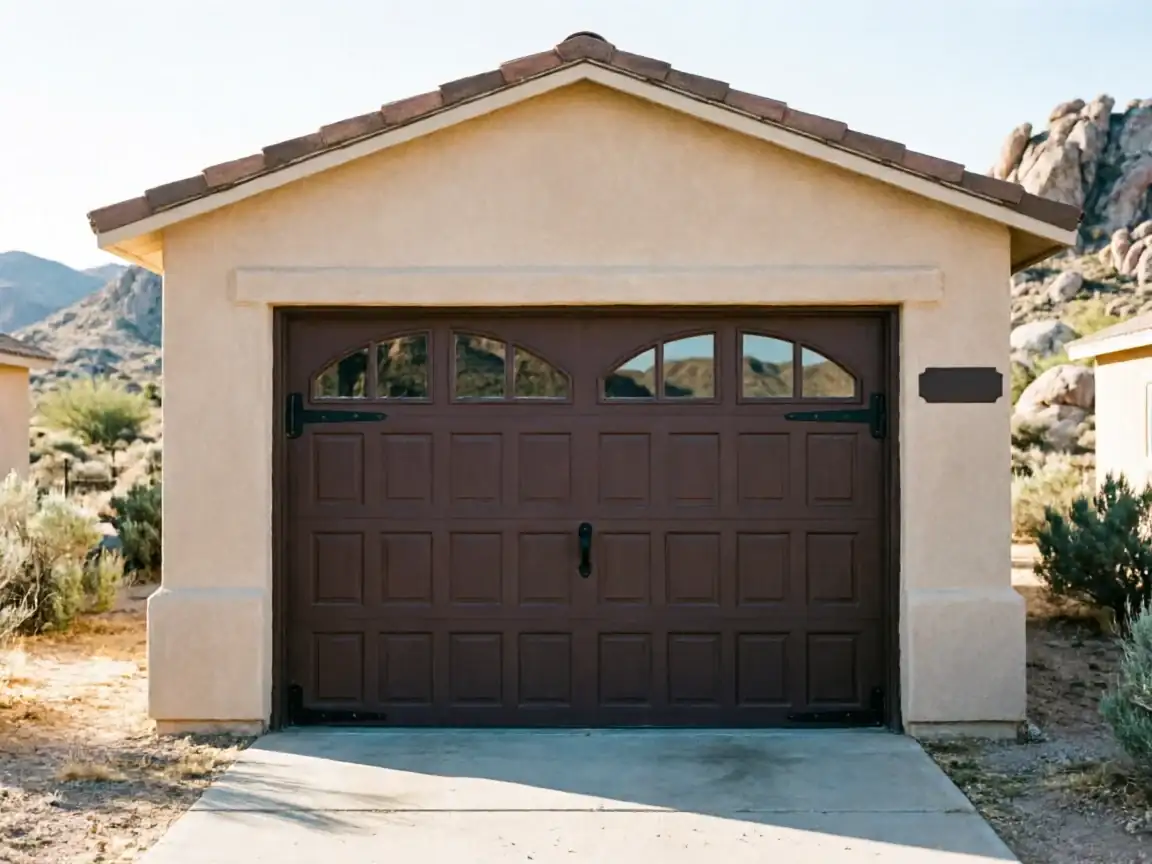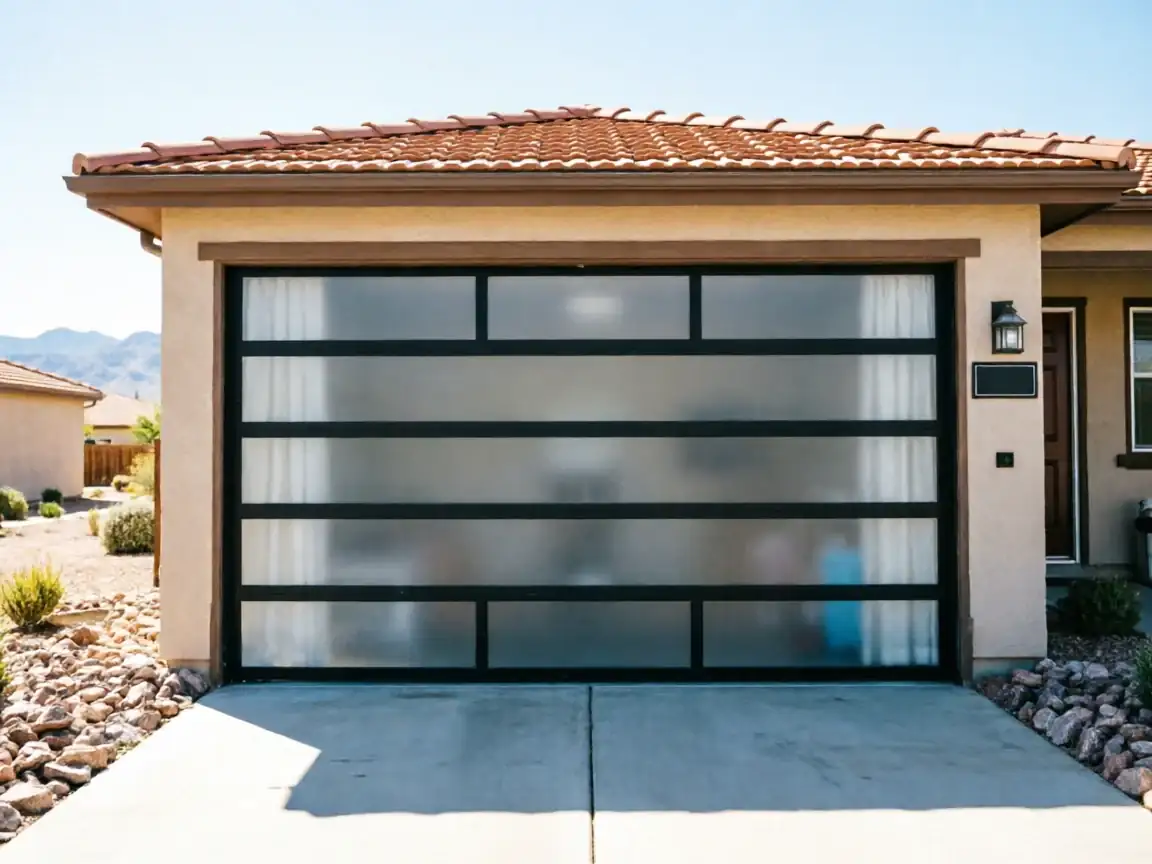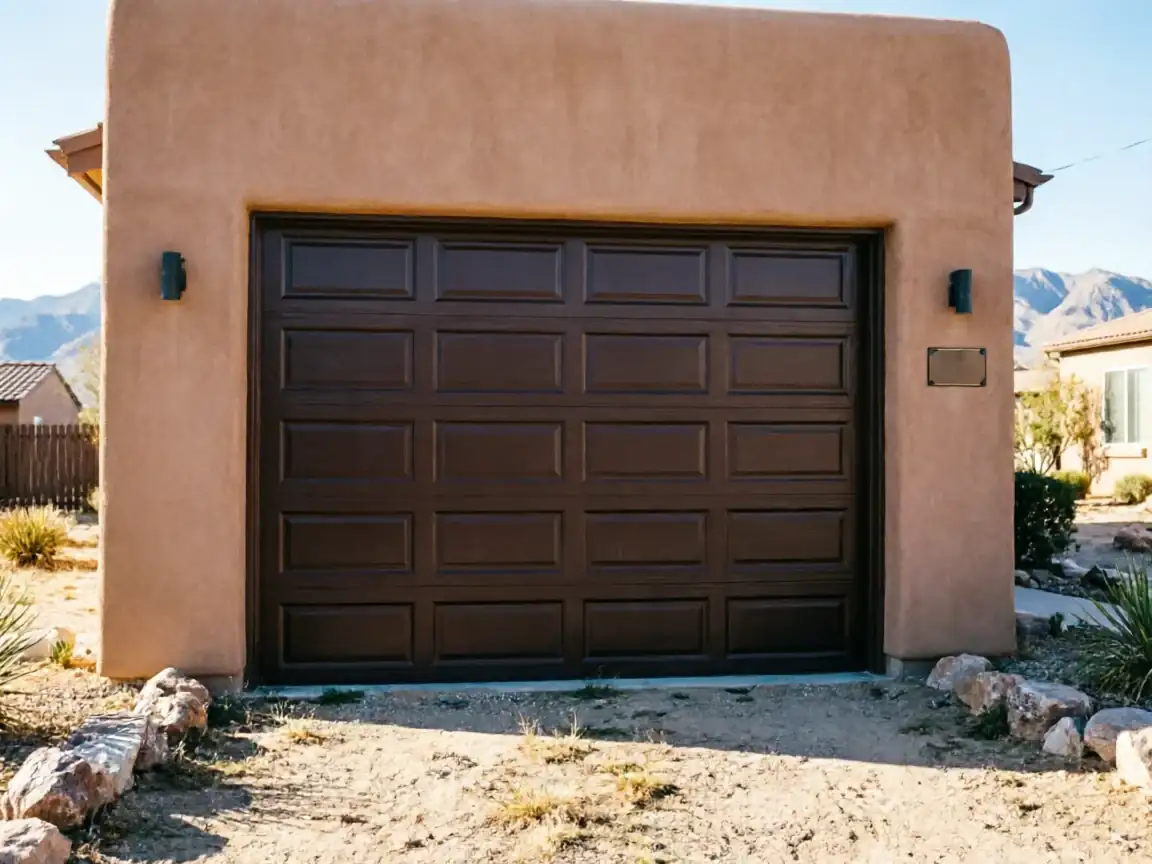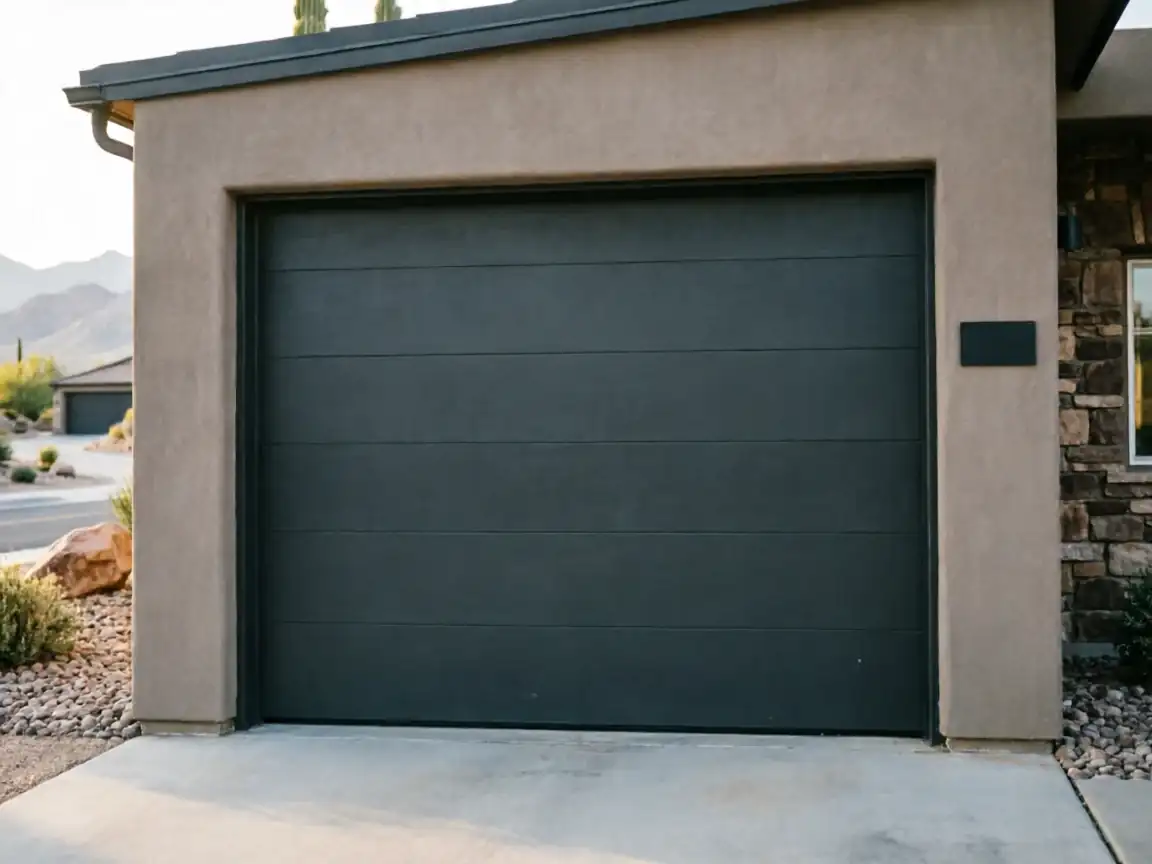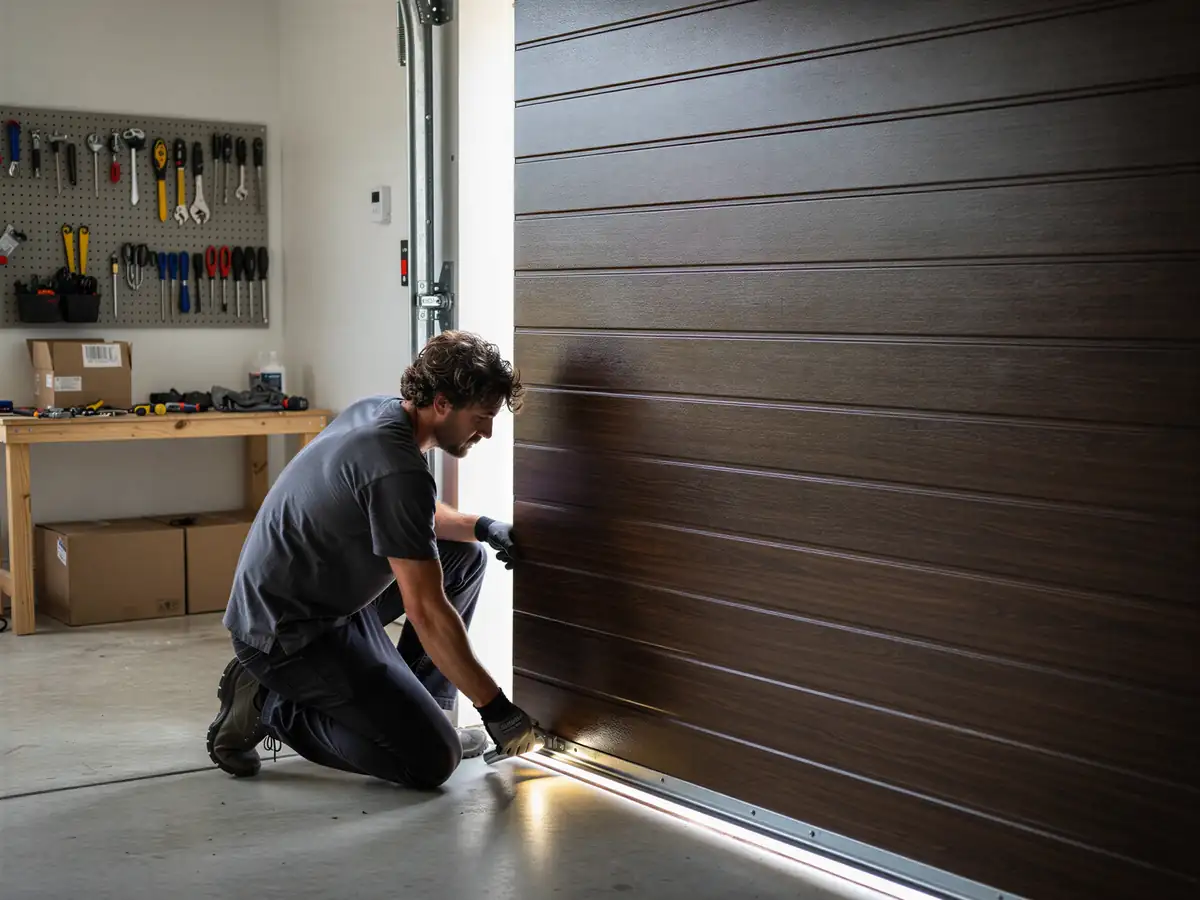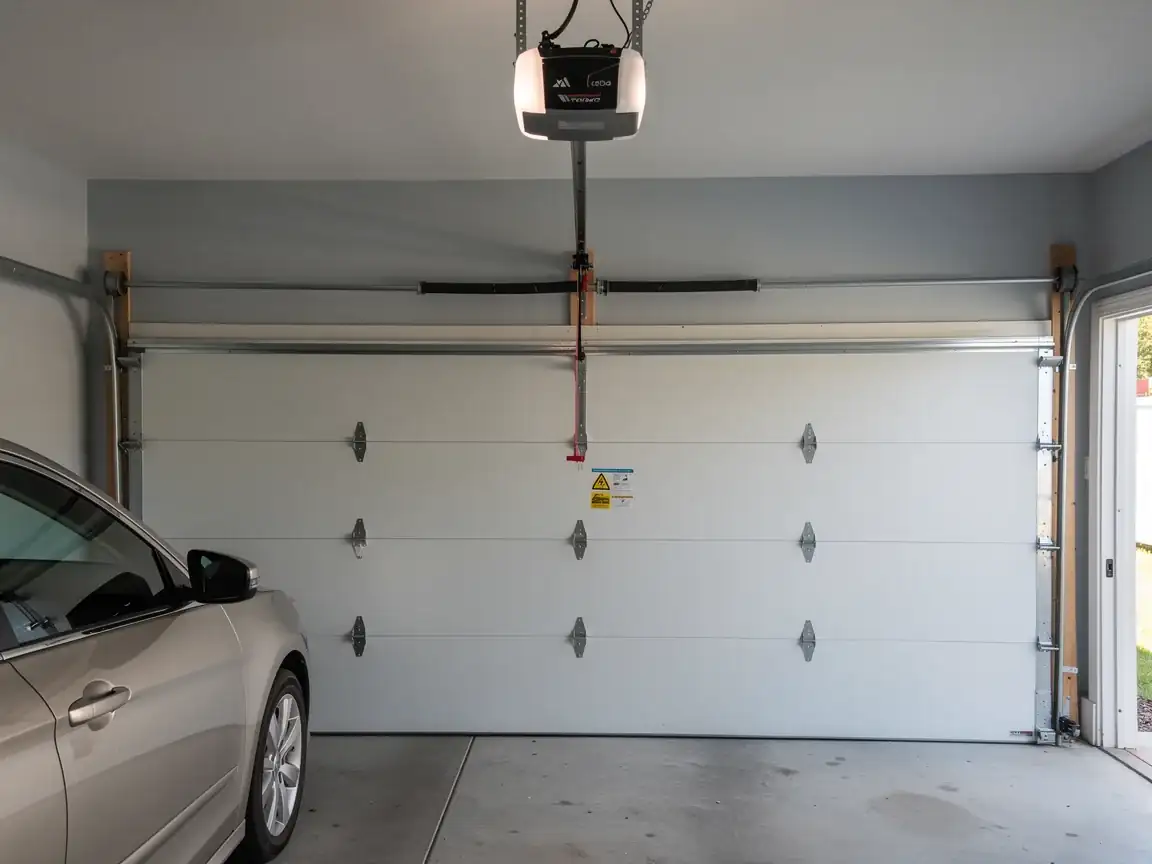
What You Are Seeing
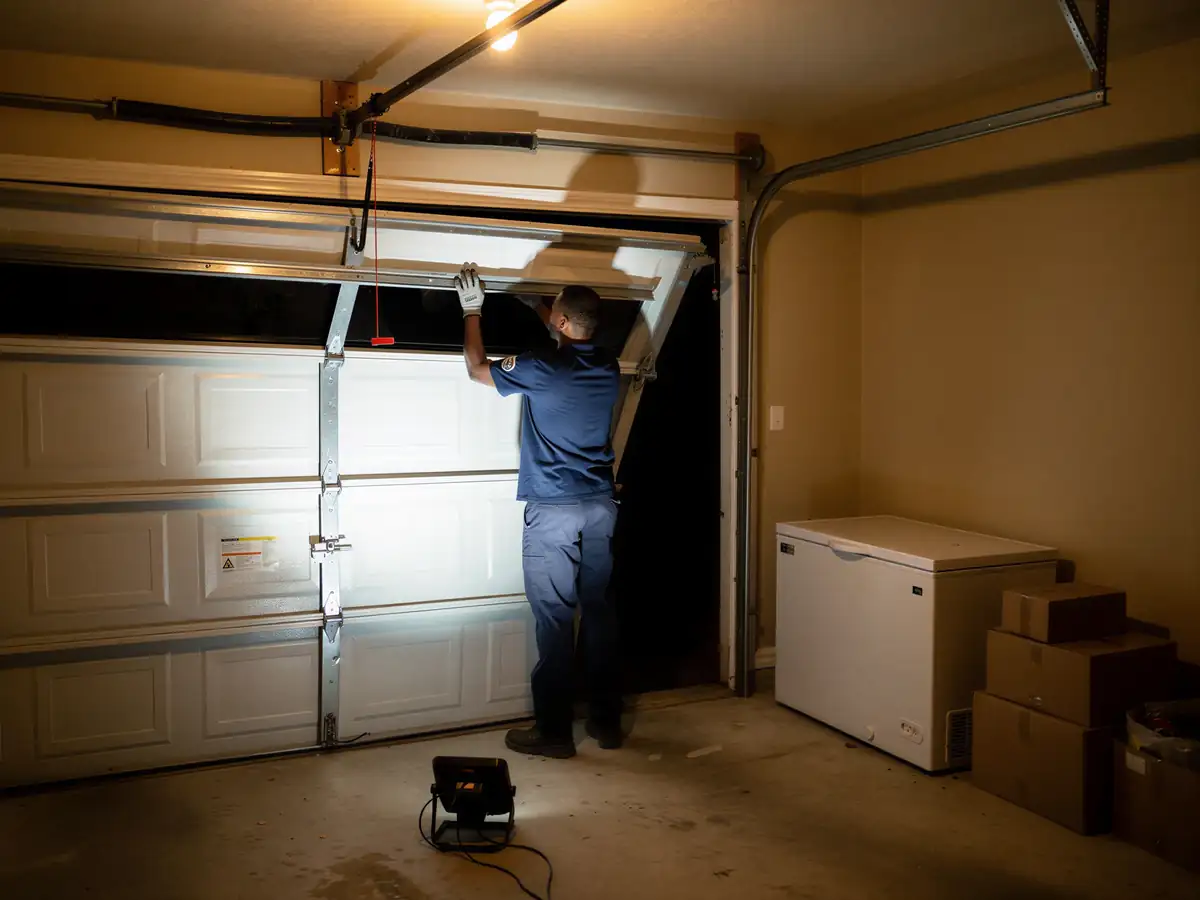
If you're looking at installation instead of another repair, you already know the signs
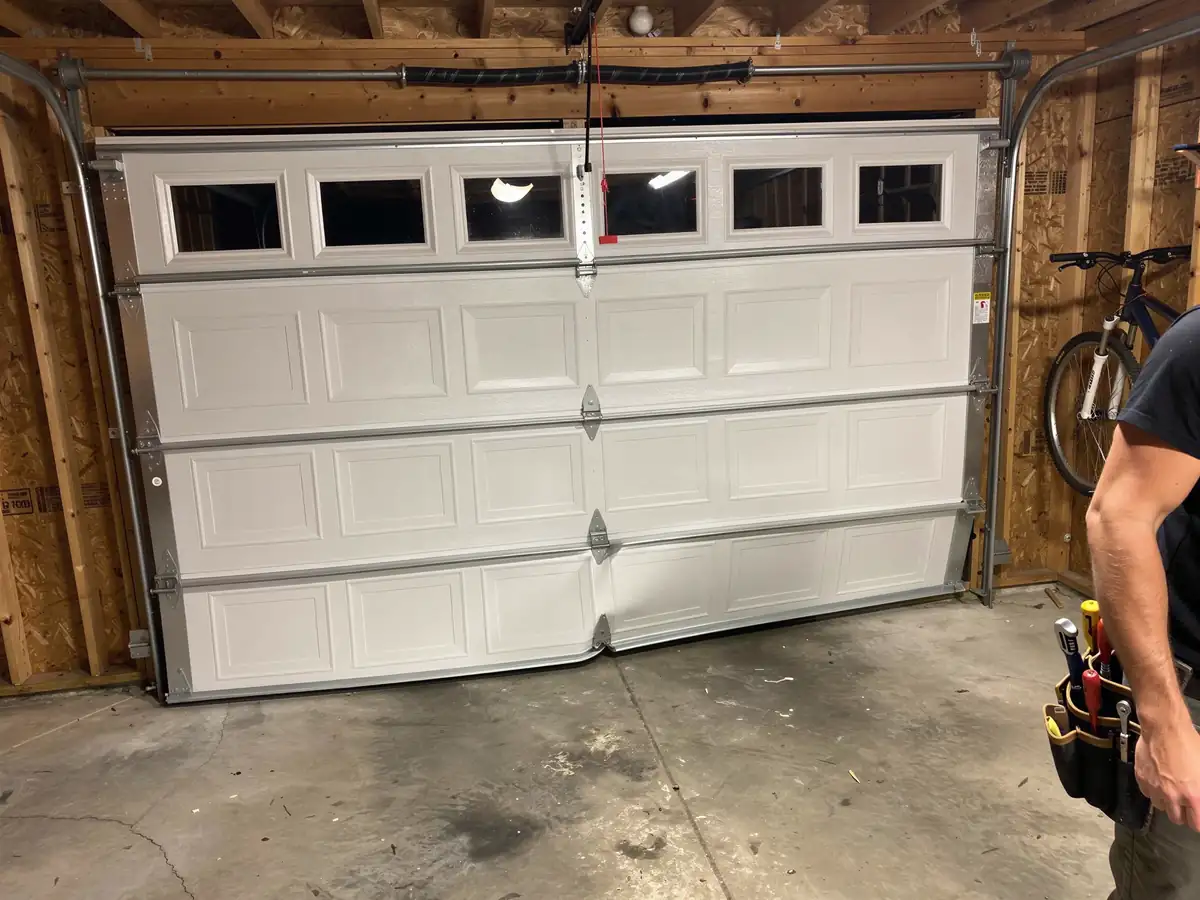
The door is heavier to lift by hand than it used to be. The opener strains and groans partway up the track. Daylight shows at the bottom corners even with the weatherstrip replaced twice. The panel face has gone chalky or started to bow in the afternoon sun, and the paint won't hold a second coat.
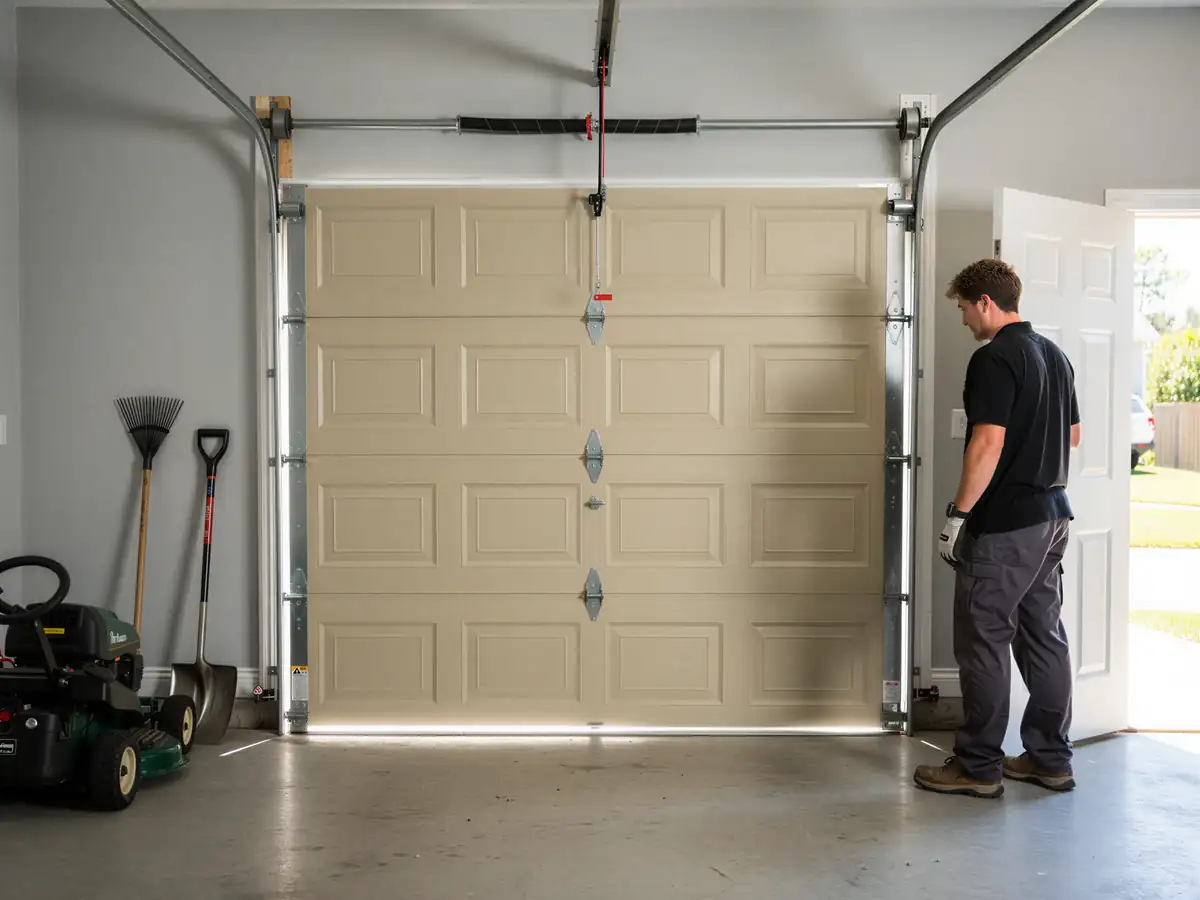
Most of what we're called out to look at in Fountain Hills is the original door that came with the house
A lot of this town's housing was built between 1985 and 1994, and that means a lot of garages still have a builder-grade steel door from that era: single layer, no insulation, a spring sized for a lighter panel than what's on it now after years of sag and warp. At some point patching stops making sense and a new door is the cheaper call over the life of the opener and the springs.
We'll tell you straight if a repair will hold for another few years
Or if you're about to pay for a new torsion spring on a door that's going to need replacing anyway within a season or two.
What Causes It Around Here
Two things drive install calls in this town more than anything else: the age of the housing stock and the heat. The 1985-1994 build wave across Fountain Hills put up a lot of doors from the same handful of manufacturers, in the same gauge of steel, sized for the same spring specs. That stock is now 30-plus years old, and steel doesn't age the same way in a severe heat climate as it does somewhere mild.
A door that sits closed and baking most of the day cycles through daily expansion and contraction that a cooler climate door never sees. Over three decades that fatigues the seams, the hinges, and the factory finish faster than the service life the door was rated for. Uninsulated panels from that era also transfer heat straight into the garage, which is its own problem if the space is used for anything beyond parking.
This isn't unique to one side of town. We see the same failure pattern whether the job is close to down near because the build era and the climate are doing the damage, not the street.
What Is on the Truck
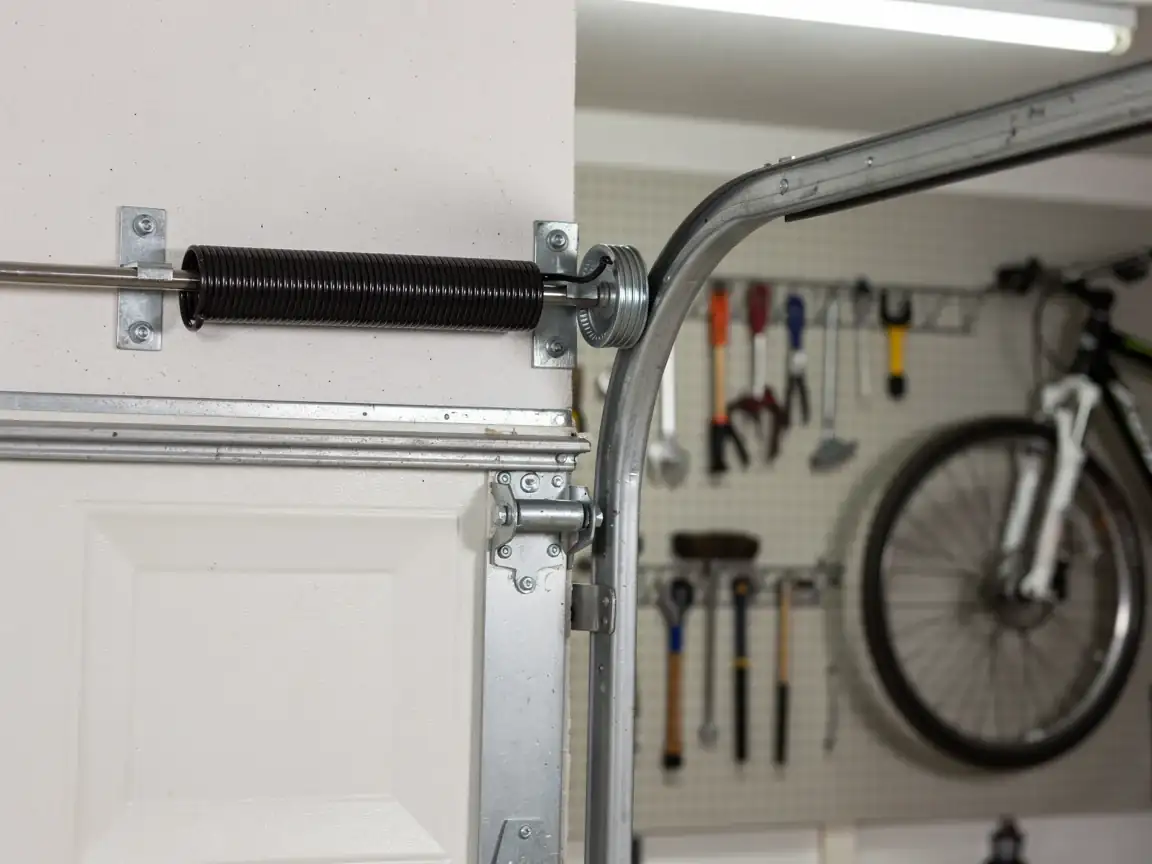
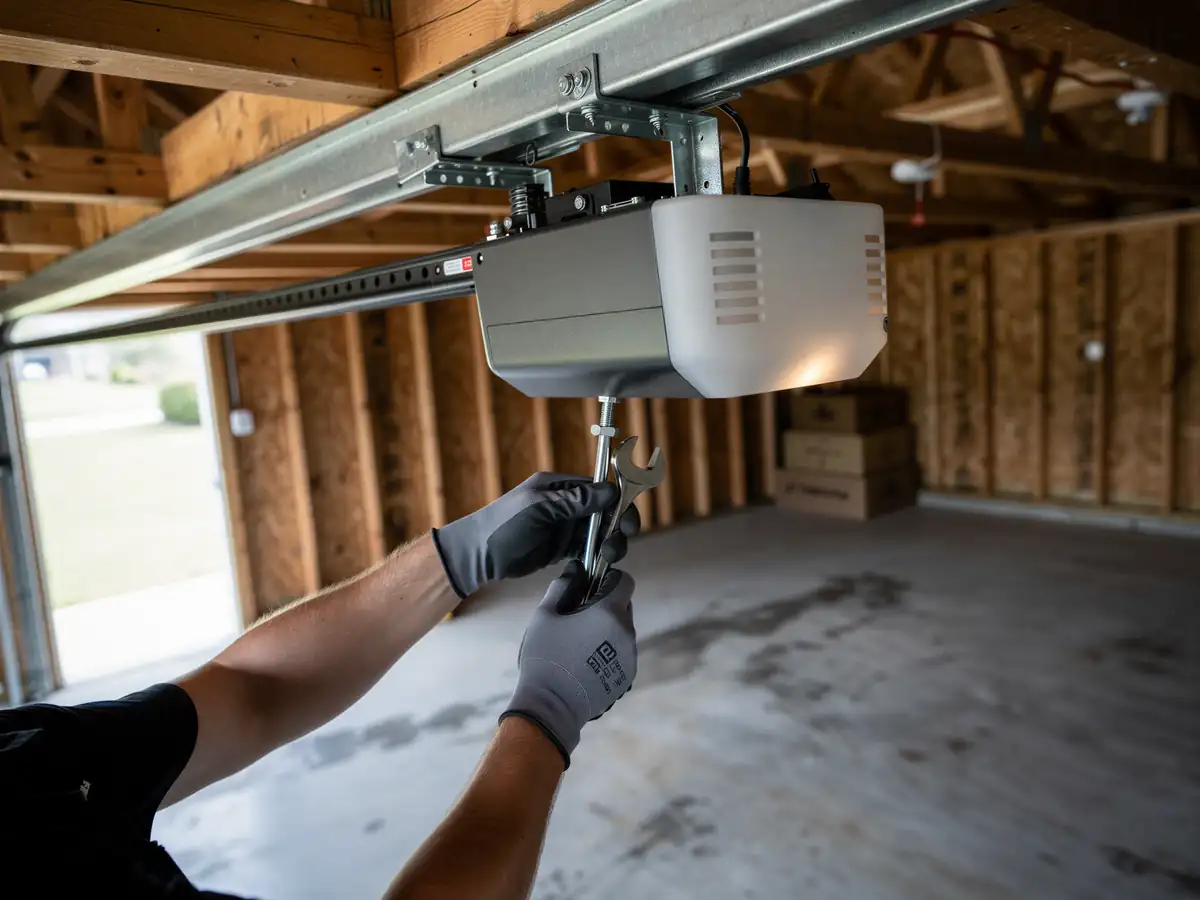
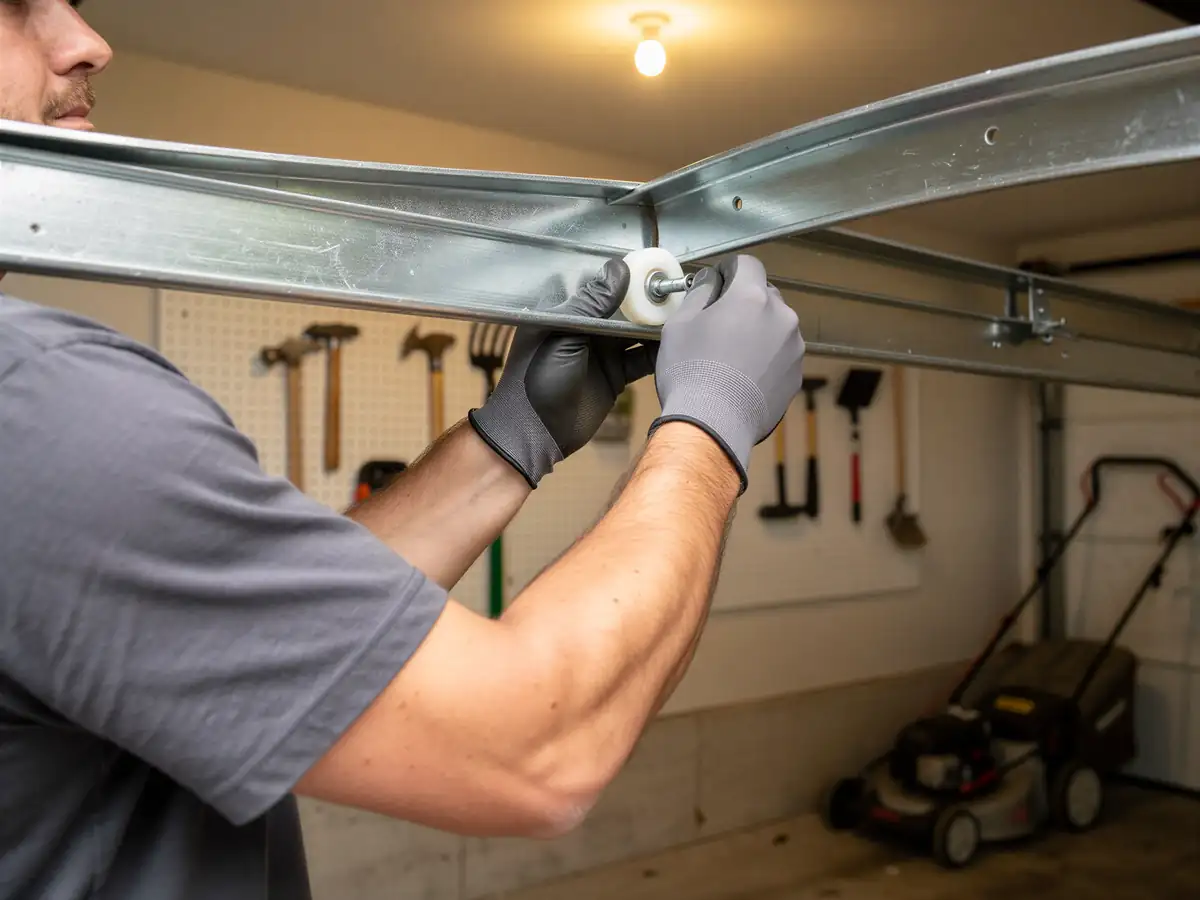
For installs we carry insulated steel doors in the sizes and track configurations that match what's already framed into most Fountain Hills garages, plus torsion springs sized for the heavier insulated panel rather than the thin original. Openers go in with heat-rated gearing, since a standard-duty unit run on a hot garage ceiling wears out its gears faster than the same unit in a cooler climate.
What we don't carry on the truck is custom wood-look composite or a specialty color panel outside the standard line. Those have to be special-ordered from the manufacturer, and that lead time is real; if you want a non-standard look, plan on waiting for the door rather than expecting a same-week install. We'd rather tell you that up front than quote a date we can't hit.
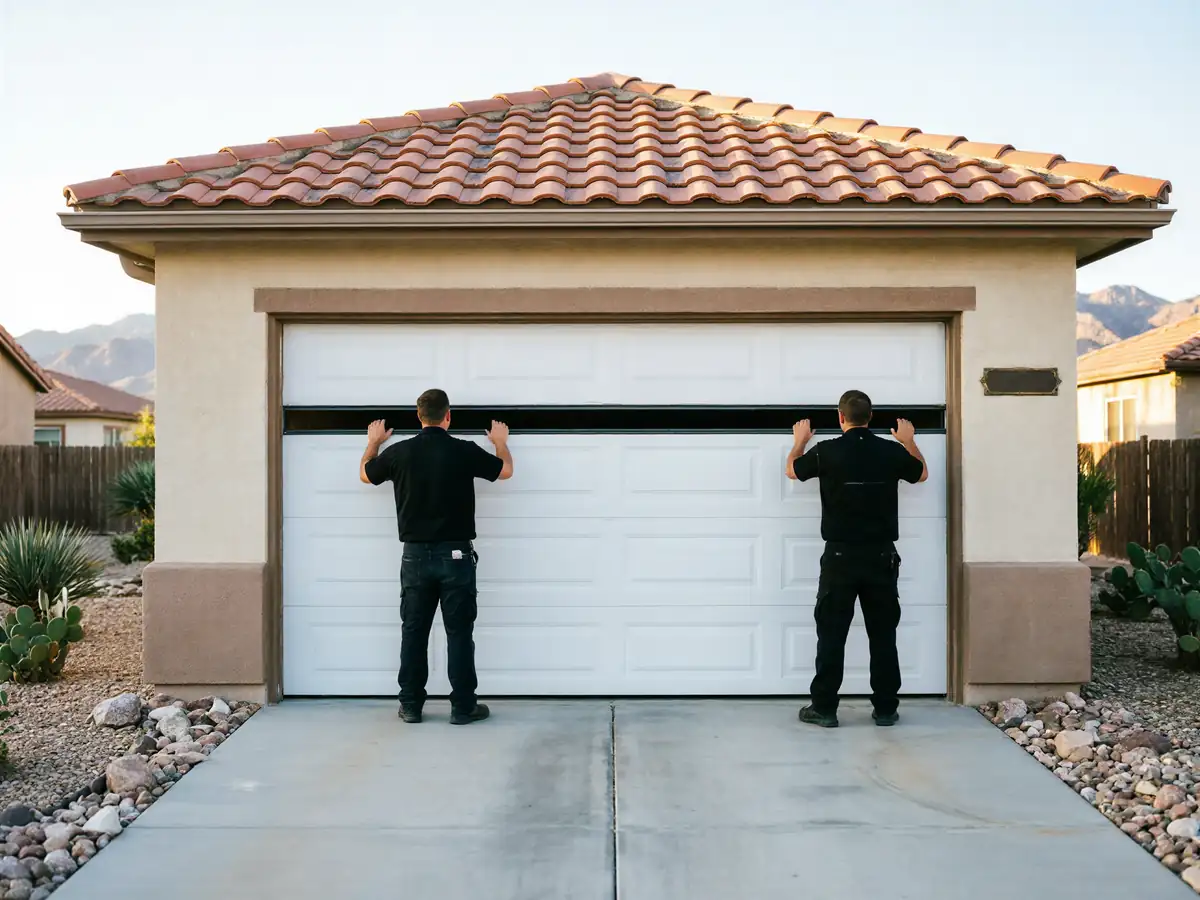
For a straight swap - same size opening, standard insulated steel panel, standard opener - we can usually get it scheduled and done in one visit. Anything custom adds the order wait on top.
What You Pay
We don't post a flat number here because door size, insulation level, and opener choice change the job enough that a fixed price would be wrong for most houses
What we can tell you is what moves the number: single versus double door, standard steel versus a heavier insulated panel, and whether the opener is being replaced at the same time as the door.
Fountain Hills runs a higher household income than a lot of nearby areas
And in practice that shows up as more owners choosing the better-insulated panel and the quieter belt-drive opener rather than the base option, since the garage often sits right next to living space that needs to stay cool. That's a choice, not a requirement - the standard door does the job and costs less up front.
Ask us for a number against your actual opening and the panel you want
Not a range pulled off a website. We'll walk the garage, measure, and quote the real door going on the real track.