Can You Do This Yourself
Rio Verde is a small place, around 1,288 households
So the range of things that go wrong on any given street is narrower than you'd think. That's the good news. The bad news is that a stuck or broken door at 9pm doesn't care how many houses are on the block.
- 1,288 households
There's a short list of things worth trying before you call anyone
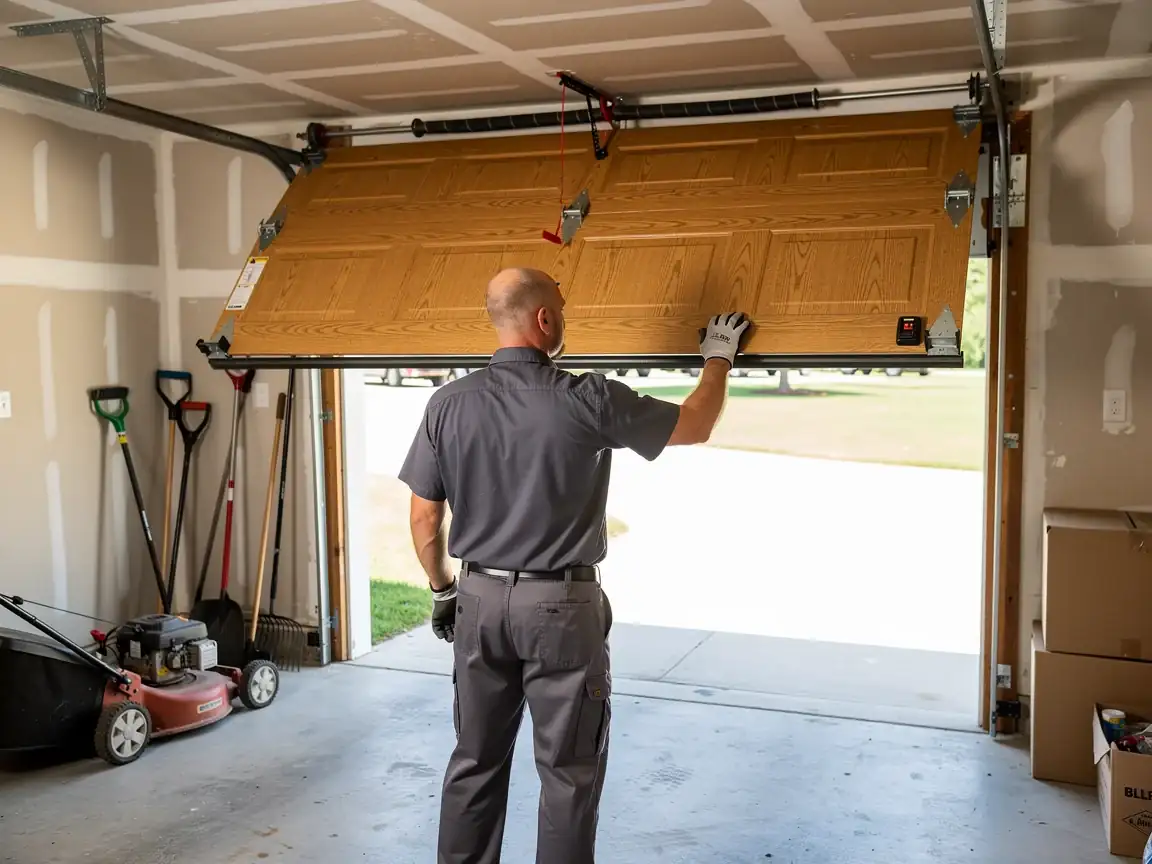
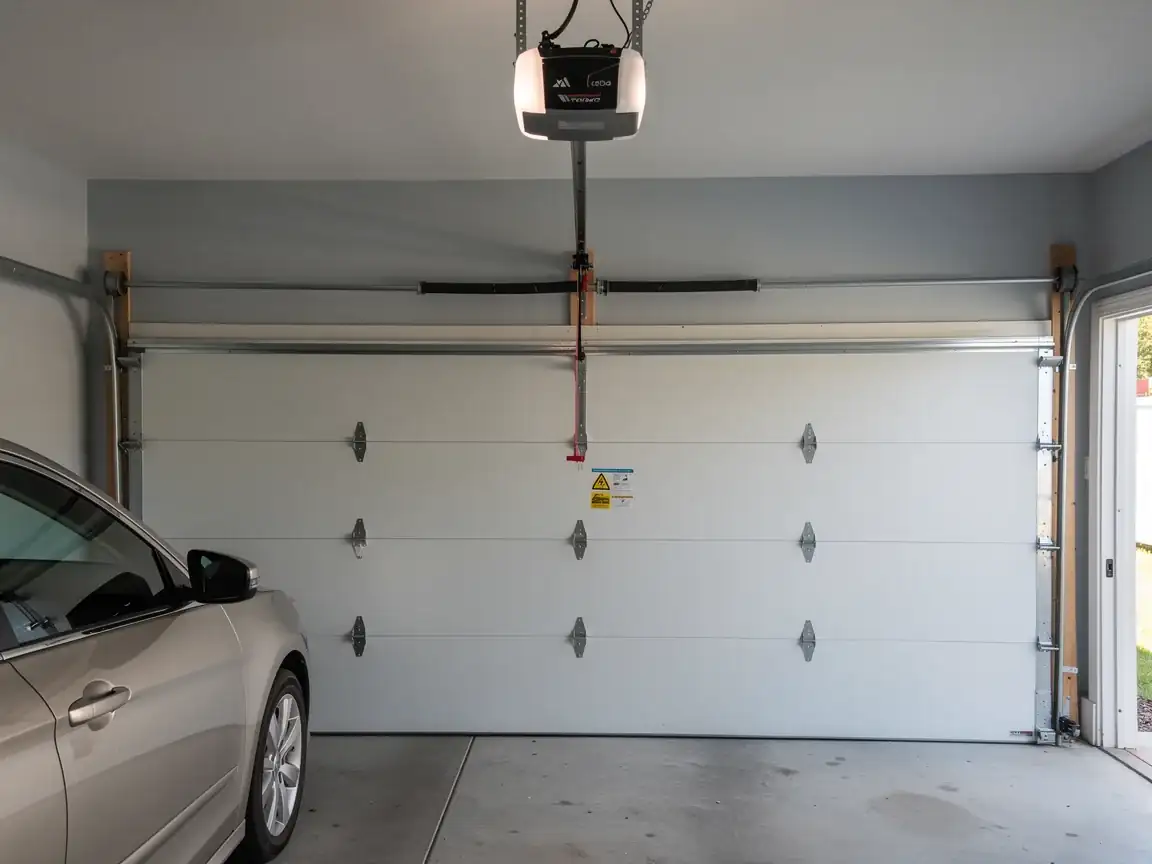
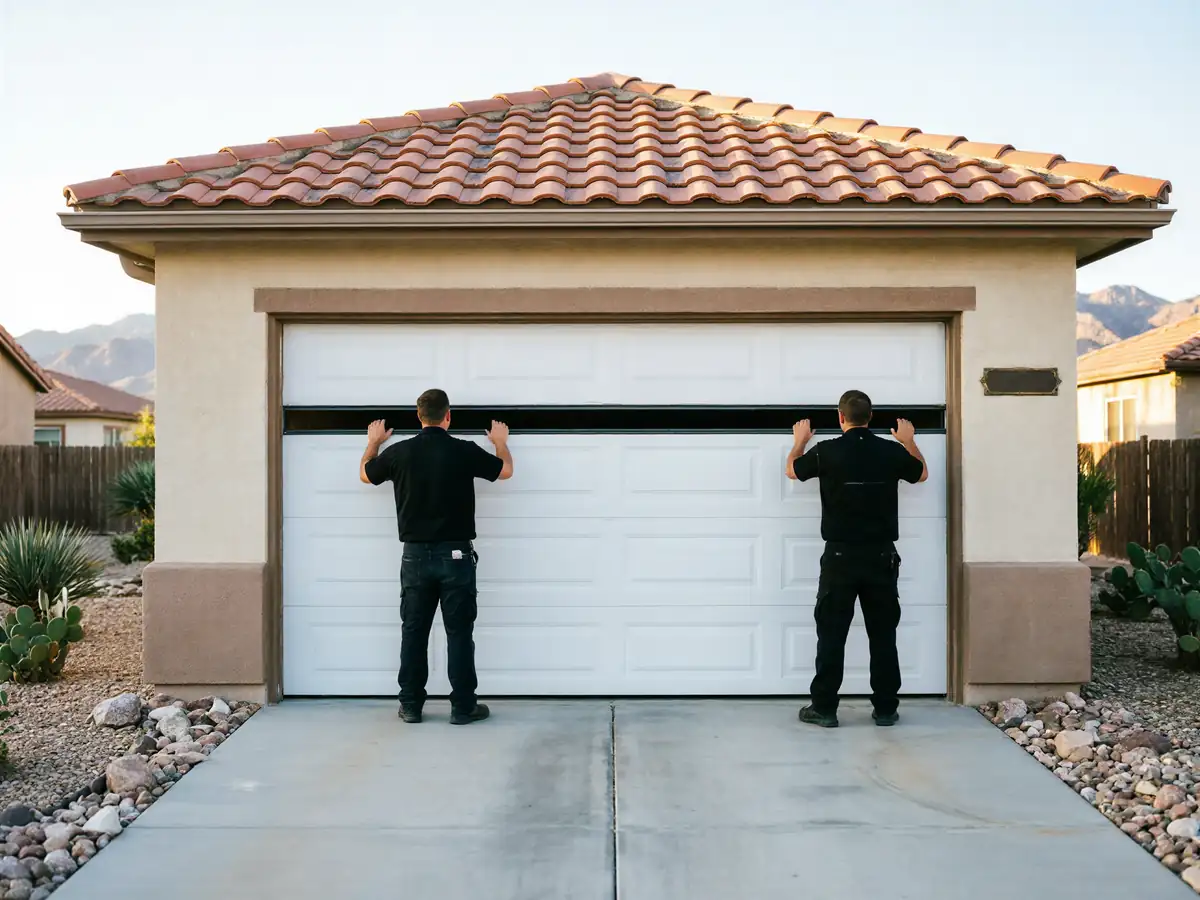
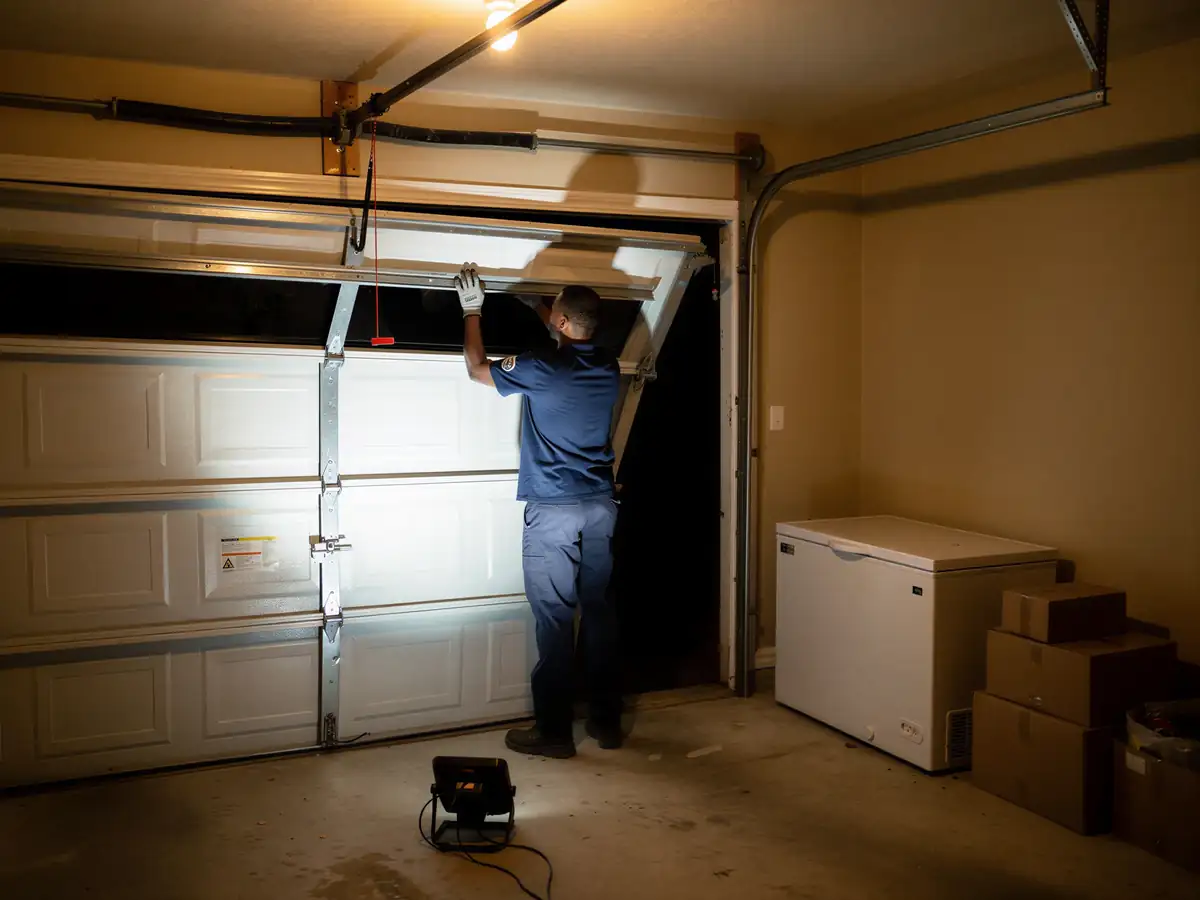
If the door won't open with the remote, pull the manual release cord and see if it lifts by hand with reasonable effort. If it lifts easy and stays up, the problem is probably the opener, not the door itself. If it's heavy, fights you, or drops the second you let go, stop. That's spring tension, and a torsion spring under load has enough stored energy to break a wrist or worse. Leave it closed, leave the release cord alone, and don't try to prop it.
We should say this plainly
We work out of Fountain Hills and drive the roughly 9 miles out to Rio Verde for every call. There's no branch here, no truck parked around the corner. If you need a door closed and secured tonight, that drive is part of the job, not a delay we can shortcut.
- 9 miles
What You Are Seeing
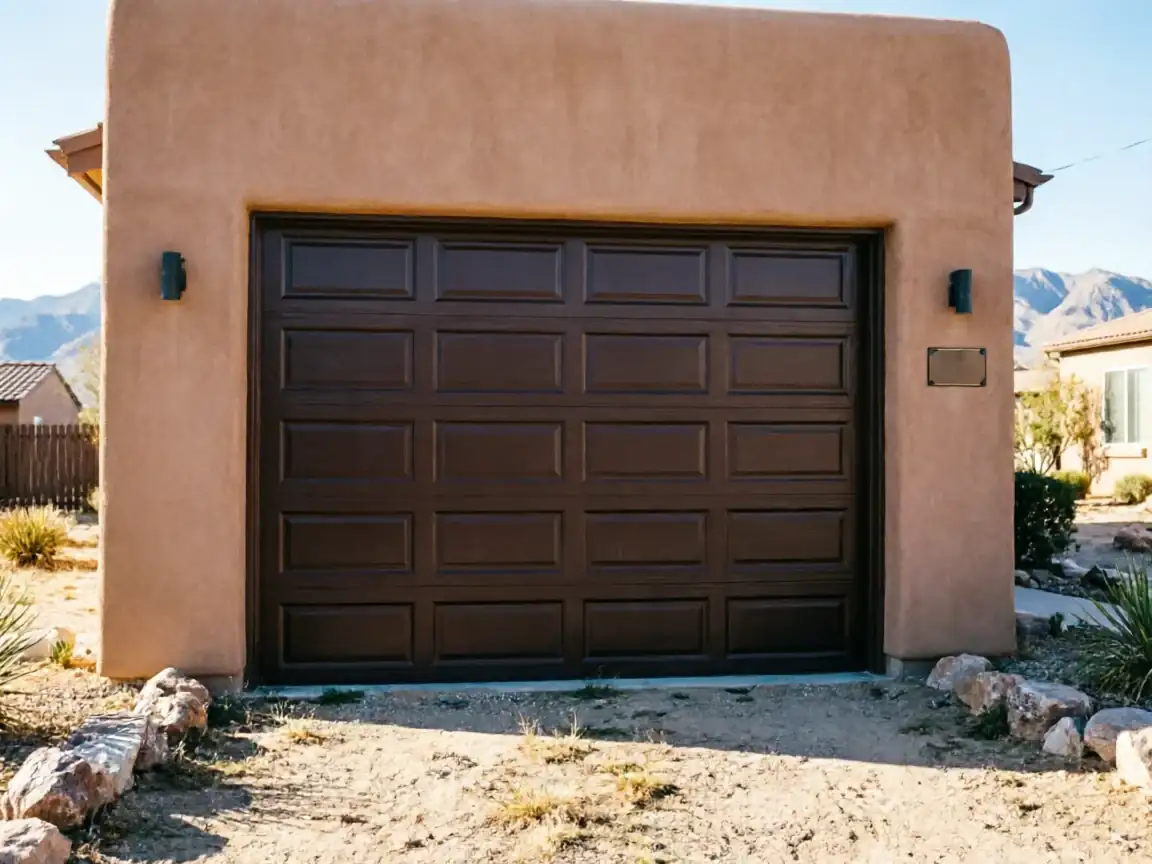
Most houses in Rio Verde went up around 1994, which puts the hardware squarely in the early rolling-code opener era and galvanized torsion spring territory. That matters here more than in neighborhoods built a decade either side, because a 30-year-old spring and a 30-year-old circuit board are both approaching the end of their expected life at roughly the same time.
The heat band this area sits in is severe, and that's the part people underestimate. A garage that sits at 120-plus degrees in July doesn't just make the springs hot - it cycles them through expansion and contraction every single day the door runs, which fatigues the coil faster than a mild climate ever would. Nylon rollers crack and go oval-shaped from the same heat exposure, usually a year or two before anyone notices the noise they're making.
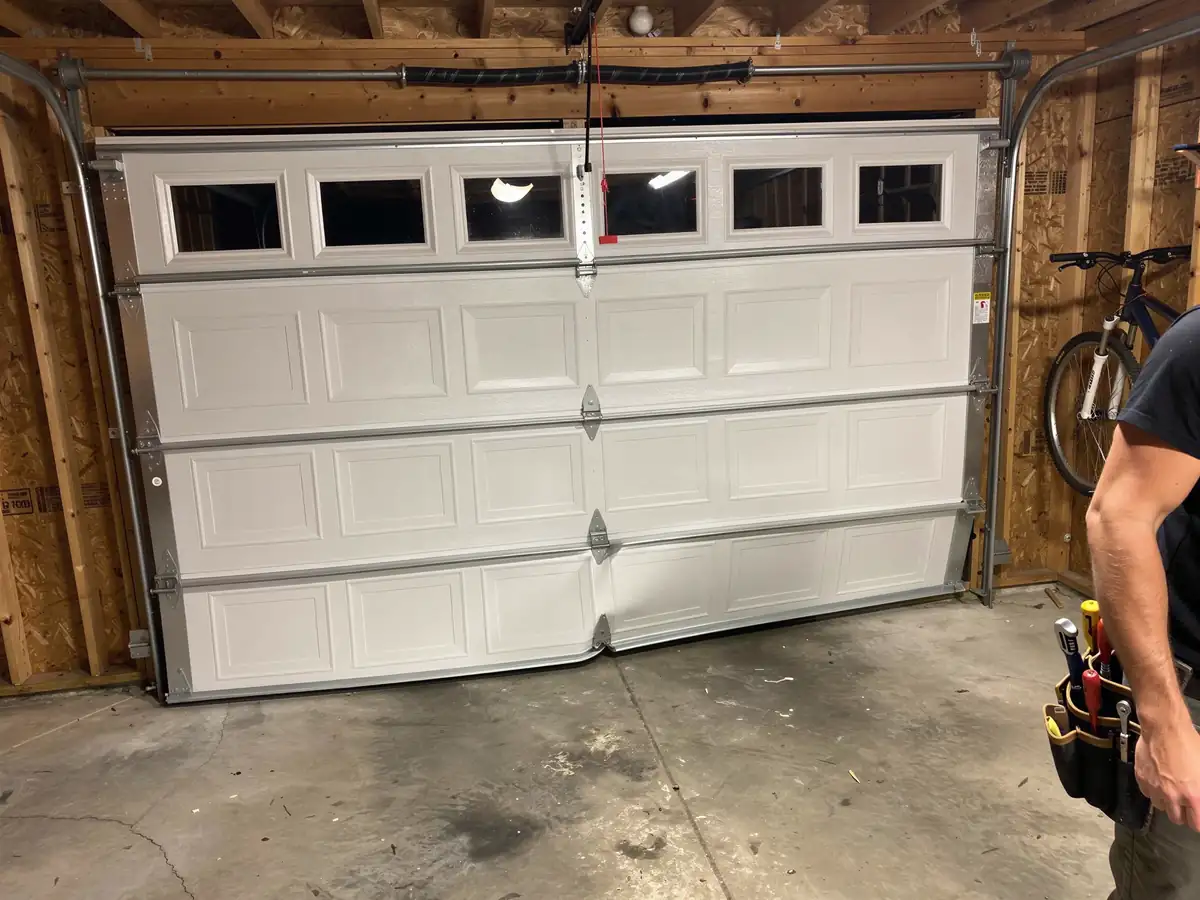
So what you're actually seeing, on a 1990s-built door in this climate, tends to be one of two things: a torsion spring that snaps clean (loud, sudden, door won't budge) or an opener logic board that just stops responding to the remote and the wall button both, even though the motor hums. Track misalignment shows up too, but it's almost always a symptom of one of those two, not the root cause.
What the Fix Involves
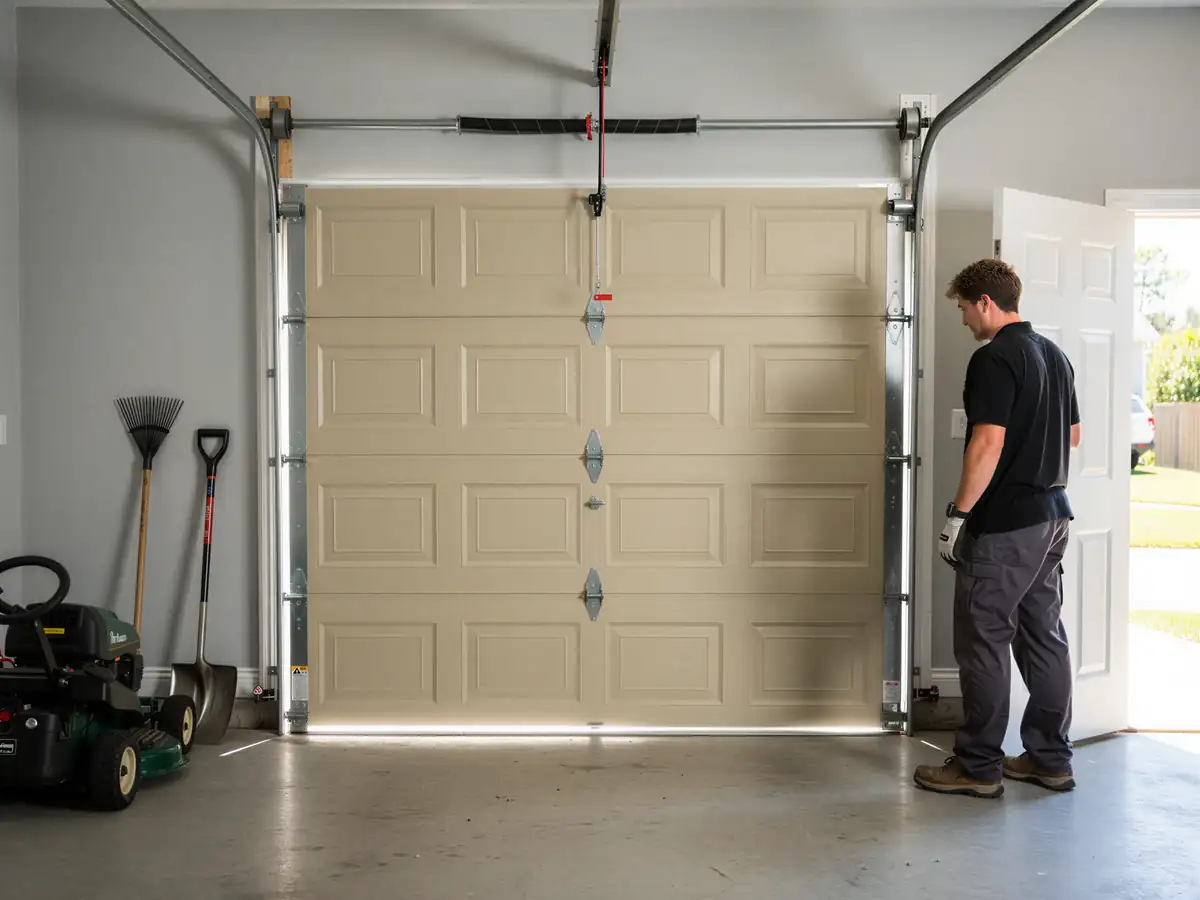
A broken torsion spring on a door this age gets replaced as a pair, even if only one side failed - the other is on the same clock and leaving it mismatched throws the balance off and wears the opener harder than it should. We measure wire size, inside diameter, and wind length against the door weight rather than guessing off the old spring's label, since labels fade and get repainted over.
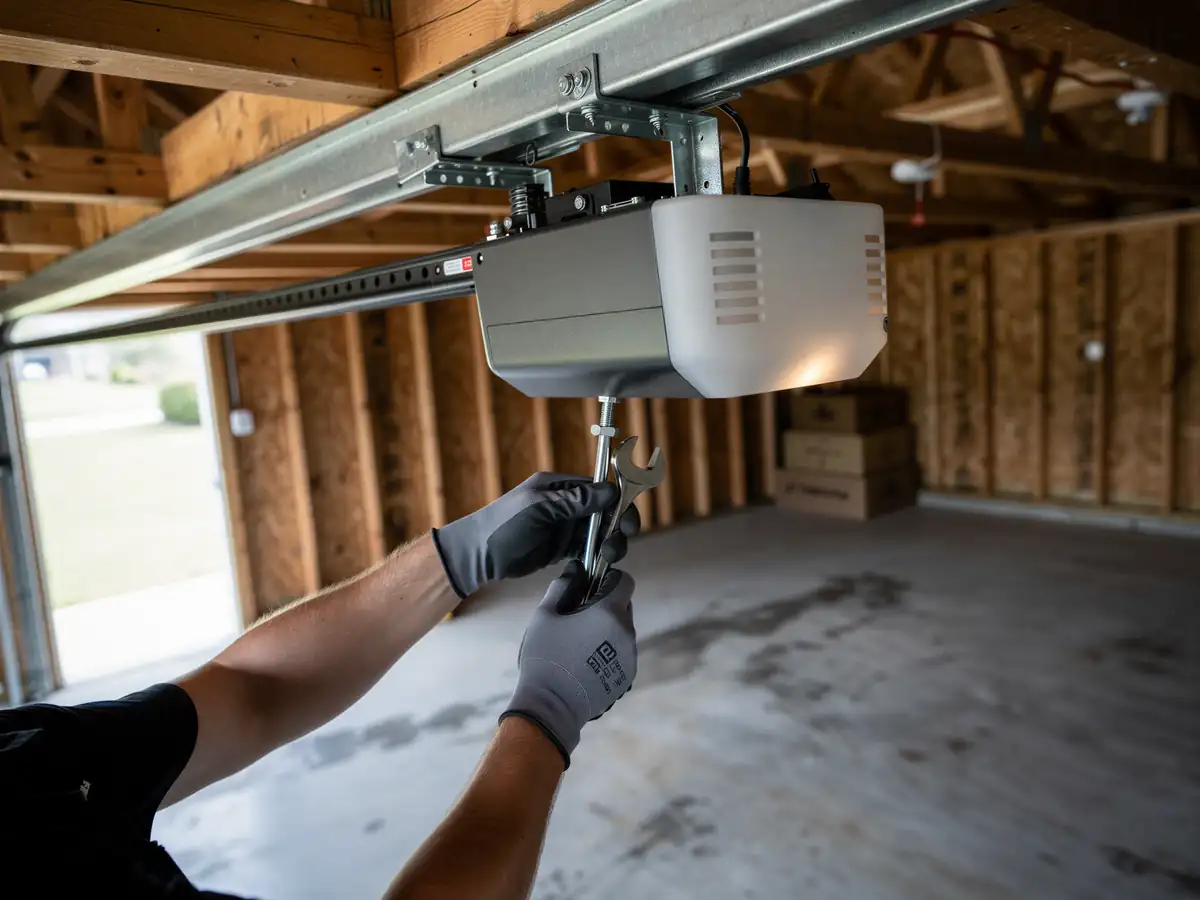
An opener that hums but won't respond usually means the logic board has failed, not the motor. On units from the early-to-mid 1990s, that board is sometimes no longer made. When that's the case, the honest fix is a full opener replacement rather than hunting for a part that doesn't exist anymore - we'll tell you straight if that's where you've landed instead of charging for a diagnostic that ends the same way.
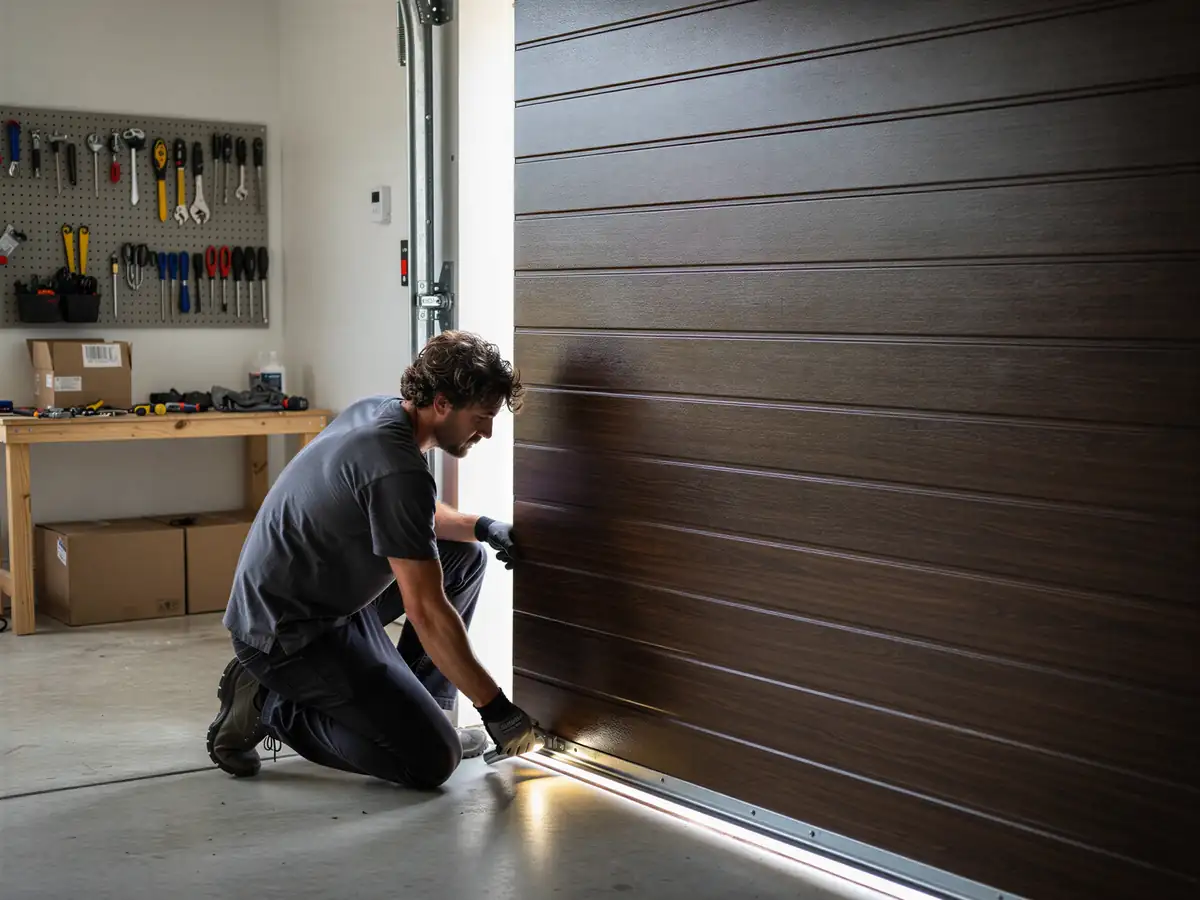
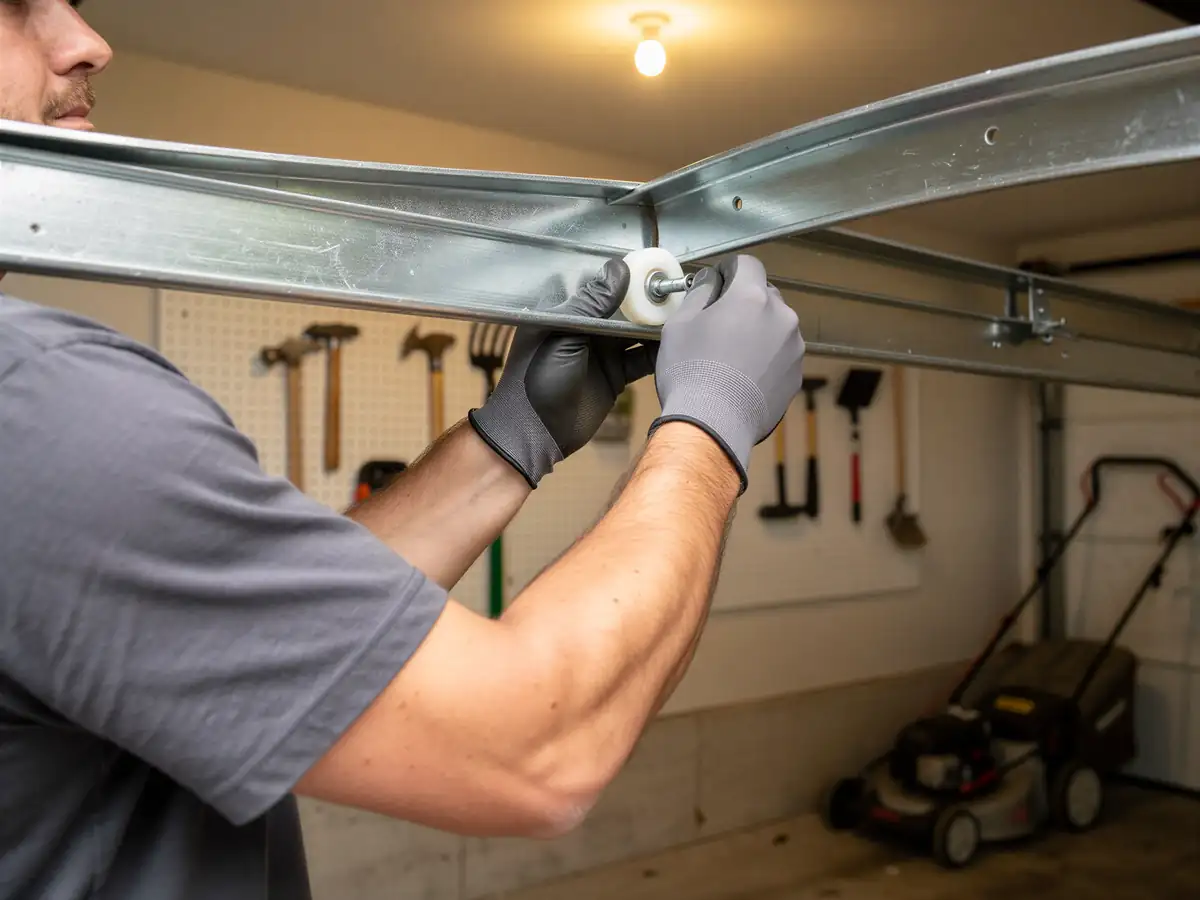
Track and roller work is more straightforward: realign the track, swap cracked rollers for nylon ones rated for high heat, and check the cable drums for fraying while everything's apart. None of this is exotic work. It's maintenance that got deferred because the door kept working right up until it didn't.
Time on the Job
Figure on the drive first
It's 9 miles each way from Fountain Hills, so that's part of any call to Rio Verde before a wrench comes out. Once we're on site, a spring replacement on a double door usually runs under two hours. An opener swap takes longer if the old mounting bracket or rail doesn't match the new unit's hardware, which happens more often on houses from the 1994 era than on newer builds.
- 9 miles
We won't pretend to be a drop-in, round-the-clock operation out here
We're a Fountain Hills company covering Rio Verde as part of the territory, not a shop with a counter you can walk up to. If a part needs ordering - which happens on older opener logic boards more than on springs - that's a second visit, not a same-day fix, and we'll say so up front rather than stringing out a first appointment.