Can You Do This Yourself
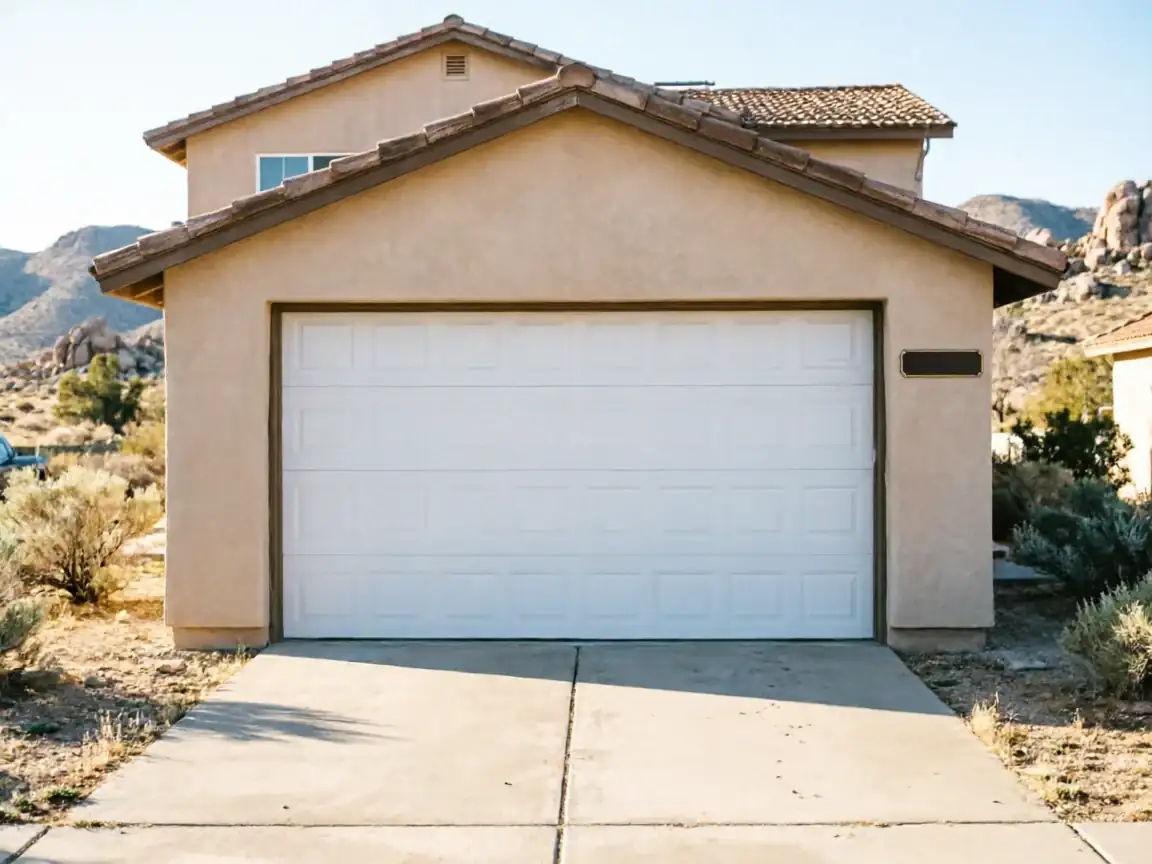
Rio Verde's housing stock centers on 1994
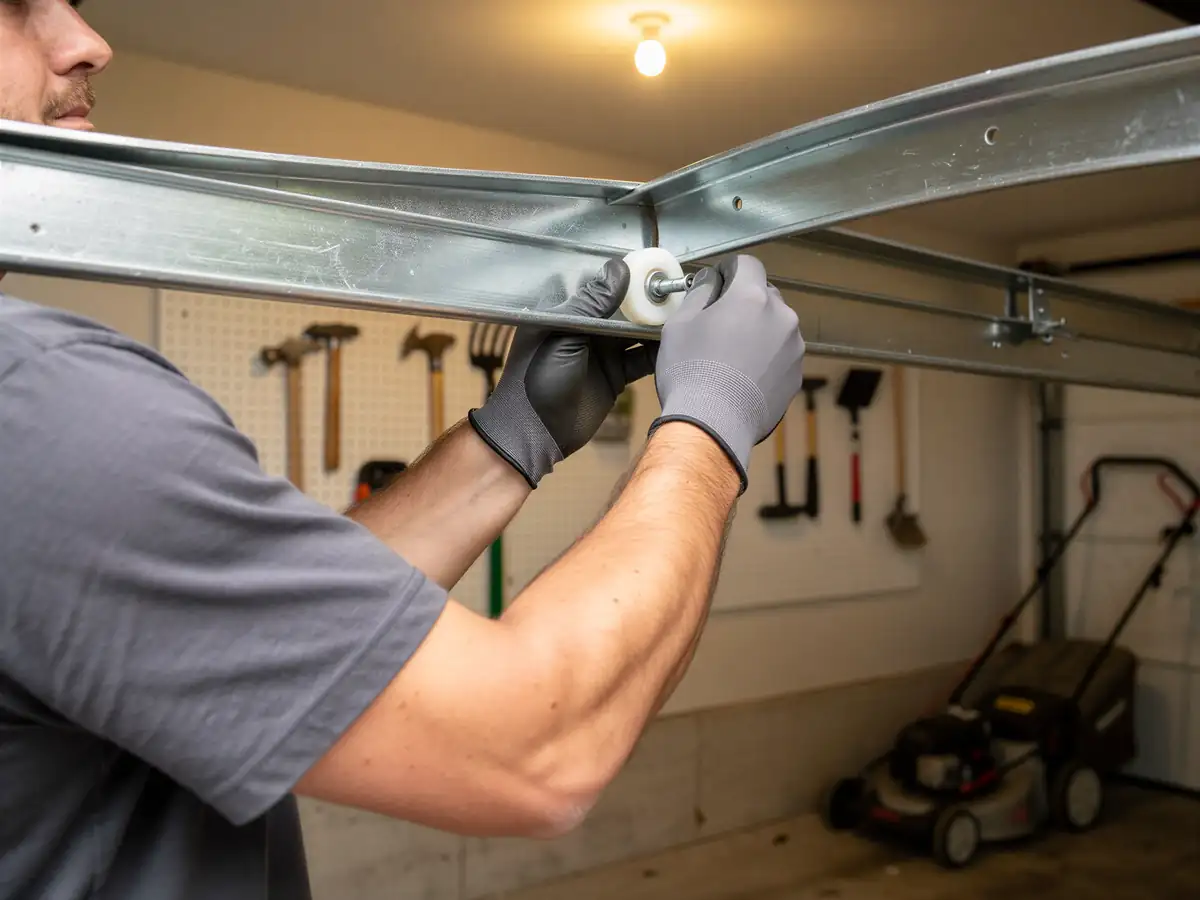
Which puts most garage doors here at roughly three decades old. If the rollers are original, they're original steel on steel pins, and after thirty summers of heat-band conditions they're the part most likely to still be stock from the day the house was framed. Swapping a roller on one side isn't hard on paper: release tension from the track, pull the hinge pin, slide the old roller out, slide the new one in. The part most homeowners get wrong is doing it with the door under spring tension, or working on a door where one bent track is masking a second problem down the line.
We'll say plainly what we don't do
We don't recommend DIY spring work on these doors, full stop, and we won't walk anyone through it over the phone. Rollers are a different category of job than springs, lower risk, but a bent track or a roller that's seized in its hinge can still pinch a hand fast. If you've got basic tools and the door isn't fighting you, nylon rollers are a reasonable weekend job. If the track is bent or the door is binding, that's a call, not a project.
We travel out from Fountain Hills to cover Rio Verde, about 9 miles off
So this isn't a same-hour drop-in kind of neighborhood. Plan the call, don't wait for an emergency.
- 9 miles
What You Are Seeing
With roughly 1,288 households in Rio Verde and most of the housing stock dating to the same mid-90s window, the roller wear pattern tends to show up around the same age across the area rather than being scattered randomly. Classic signs: the door rattles or shudders partway through its travel, one side seems to hang up for a second before catching, or you hear a grinding or clicking sound that tracks with the roller position rather than the opener motor.
Steel rollers from a 1994 build don't fail quietly. The bearing dries out, the roller develops a flat spot from years of the same resting position, and the track edge starts showing a groove where metal has worn against metal. In the heat band this area sits in, the grease that lubricated those original rollers has broken down and reformed into a hard residue more than once over thirty years, which accelerates wear faster than it would in a milder climate.
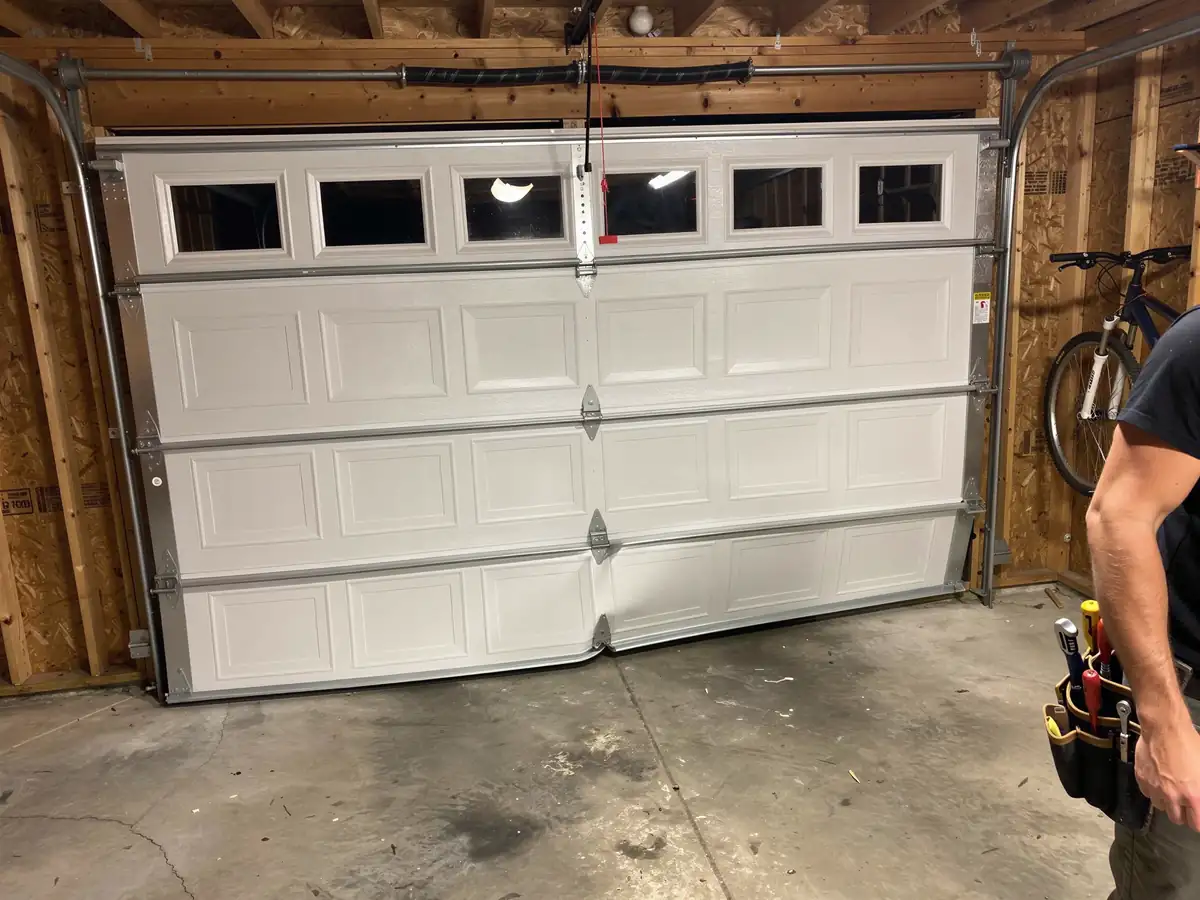
What you're not seeing, usually, is the track itself bending from roller wear alone - that takes a harder impact or years of a roller riding badly off-center. If the noise is loud but the door still opens smooth and square, it's very likely rollers. If the door visibly rocks or one panel sits crooked in the frame, that's worth a second look before anyone orders parts.
What the Fix Involves
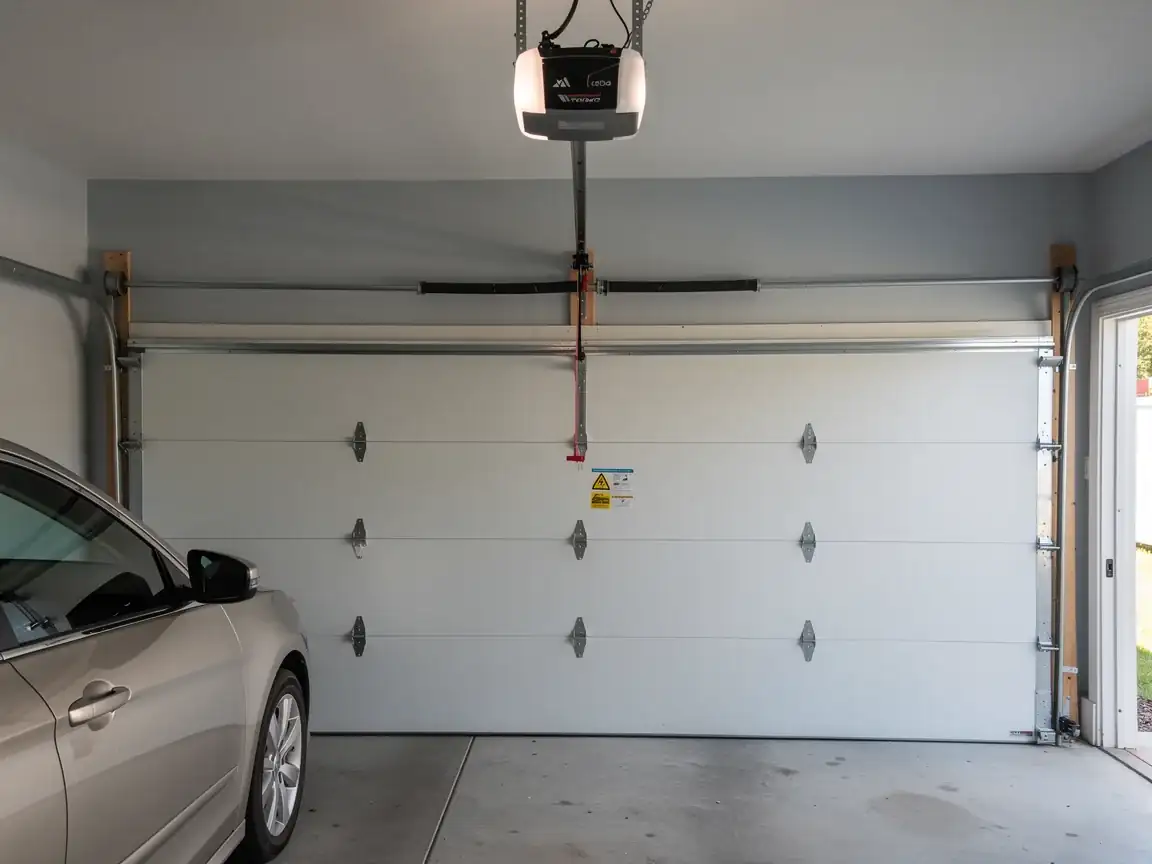
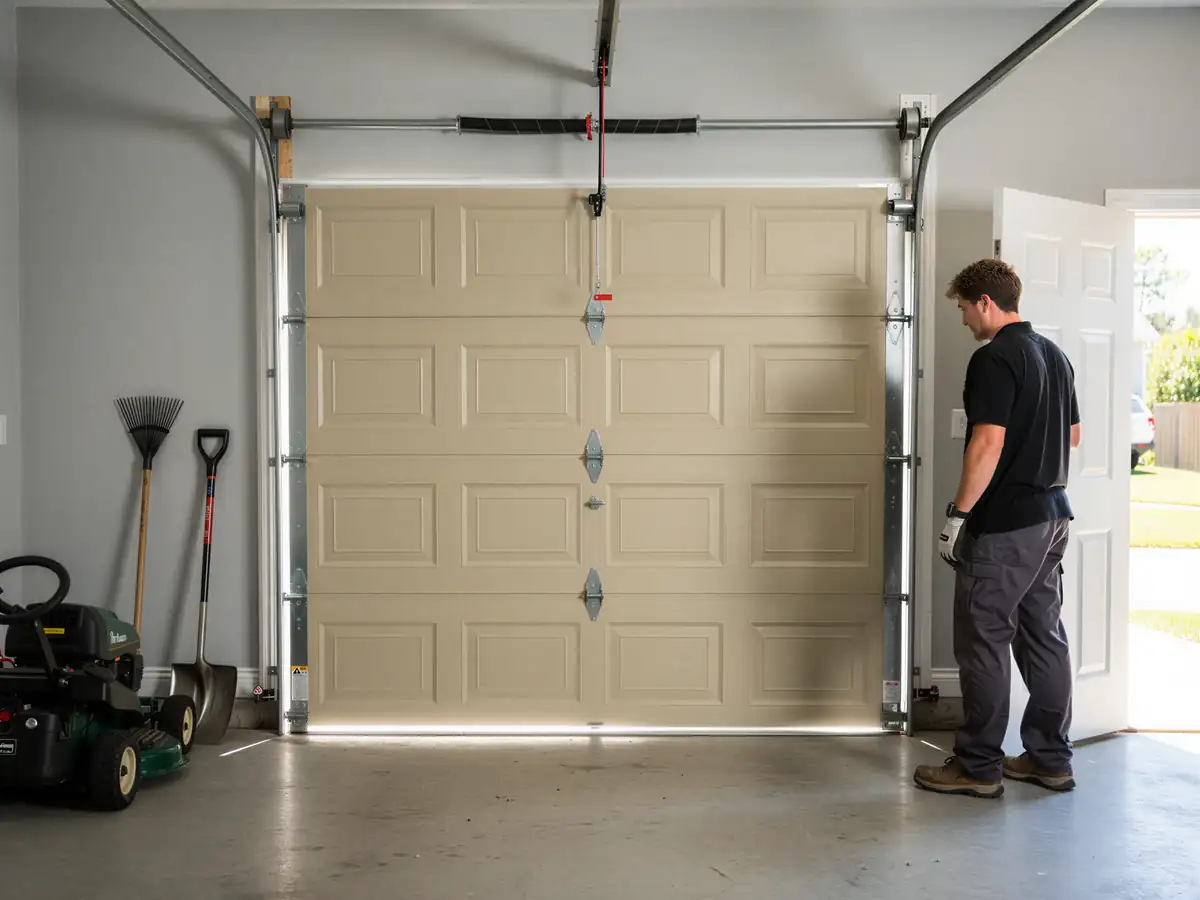
Full roller replacement on a double door with original 1994-era hardware usually means ten or more rollers across both tracks, plus the hinges they ride in if those have worn oval rather than round. Nylon rollers with sealed bearings are the standard swap now - quieter, and they don't need the periodic grease that steel rollers did, which matters in a climate band that bakes lubricant out fast.
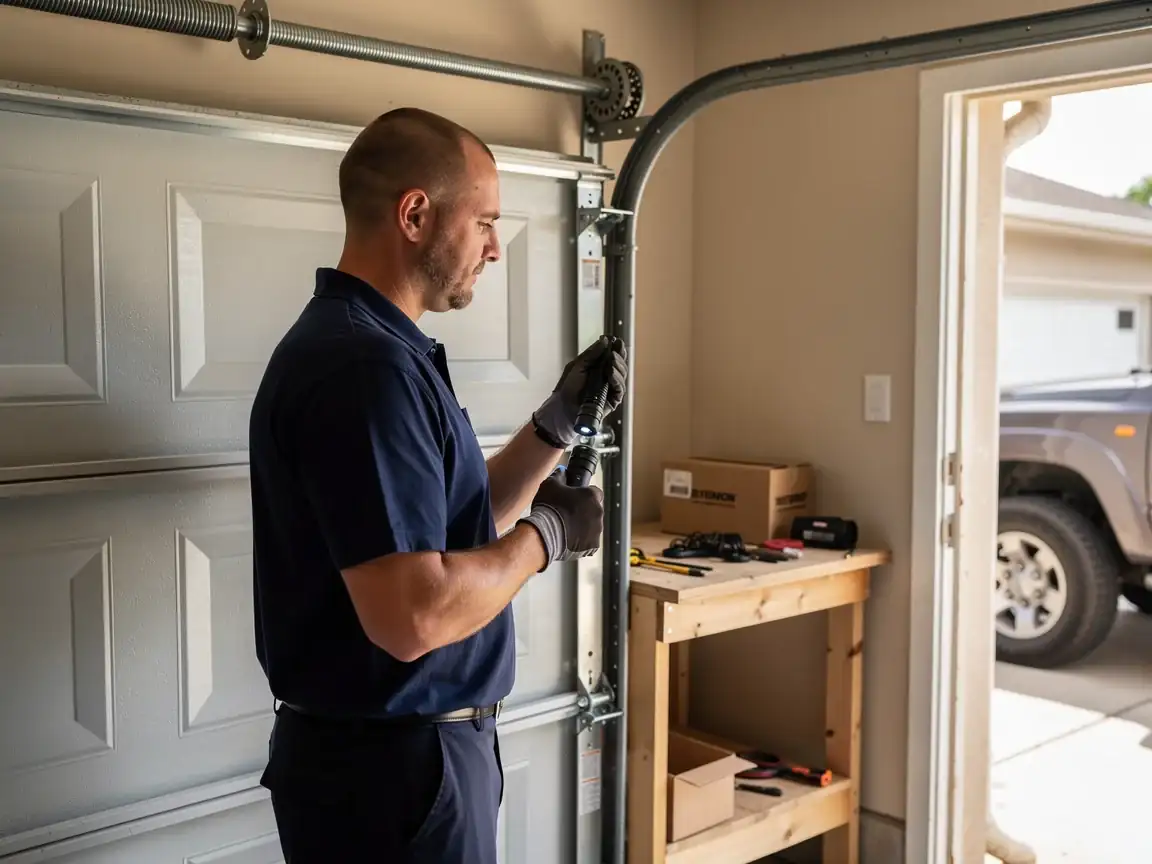
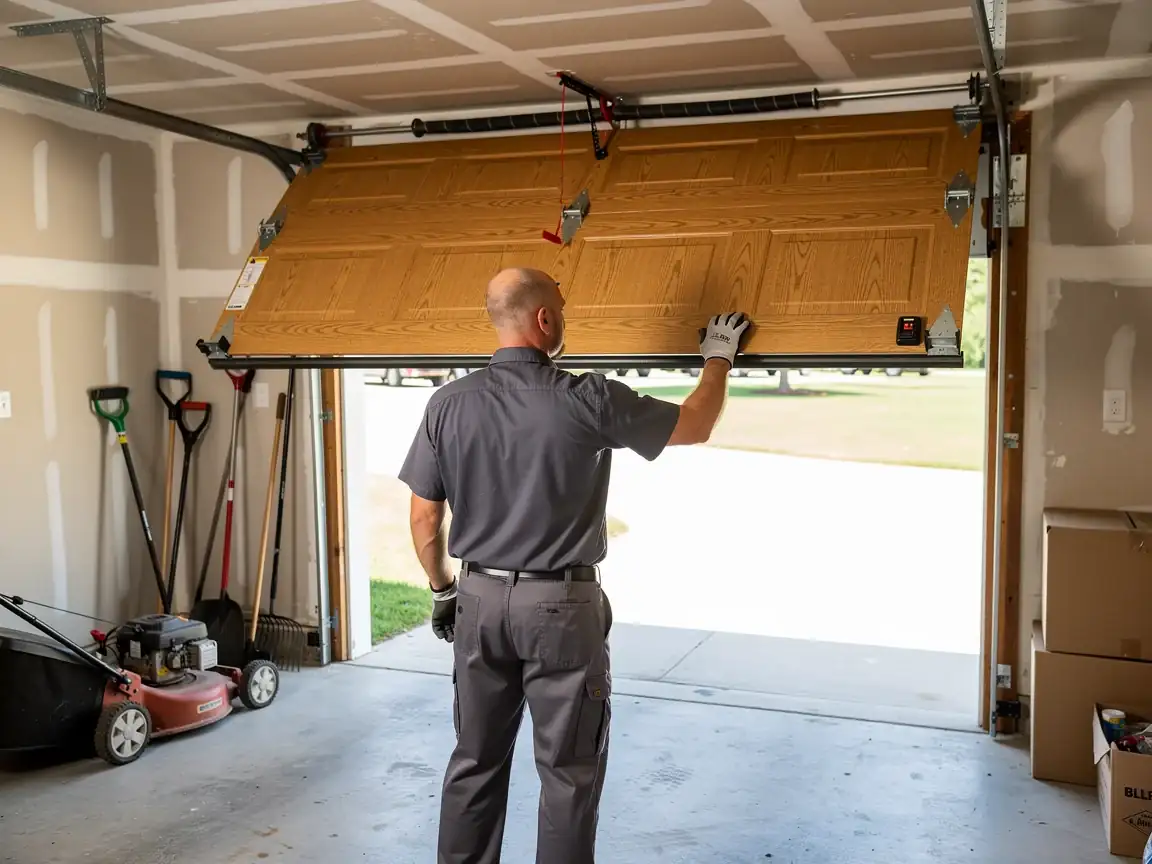
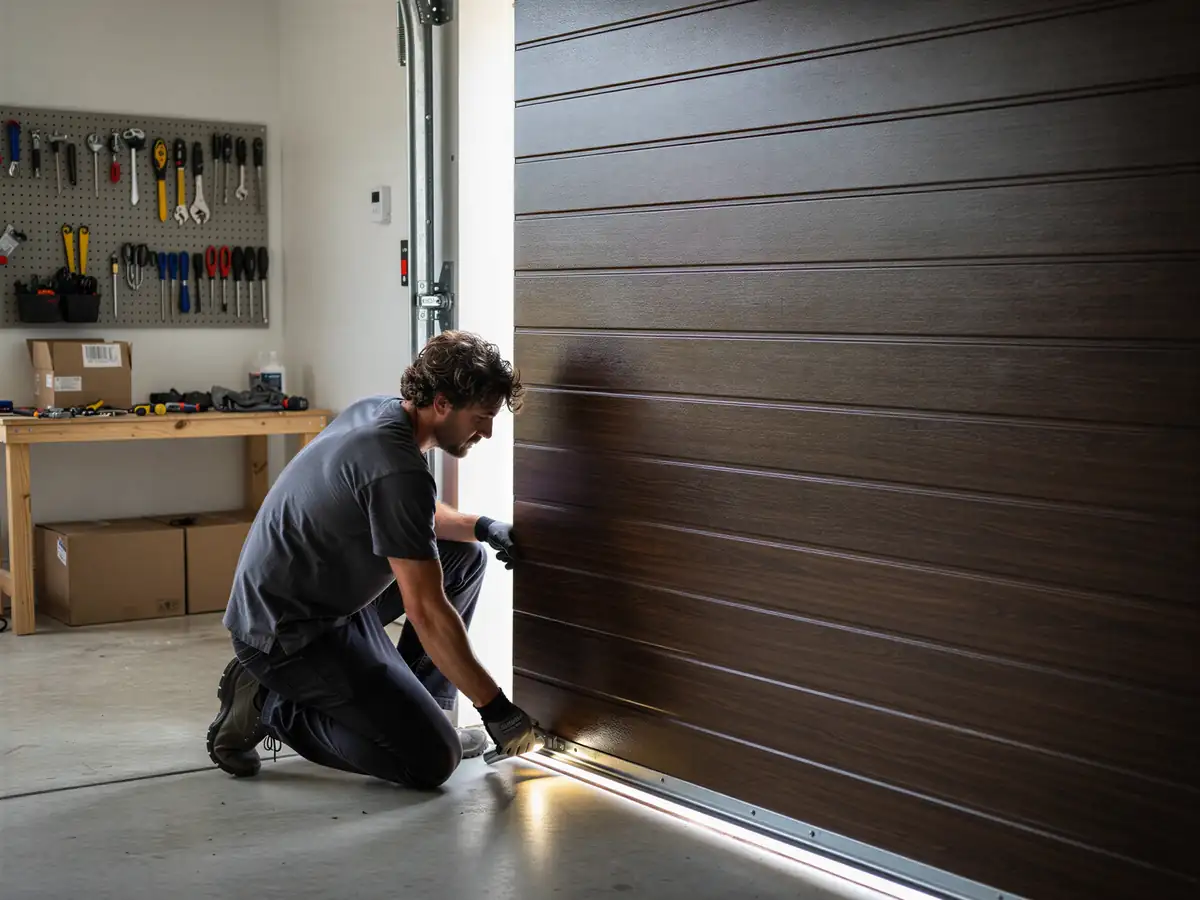
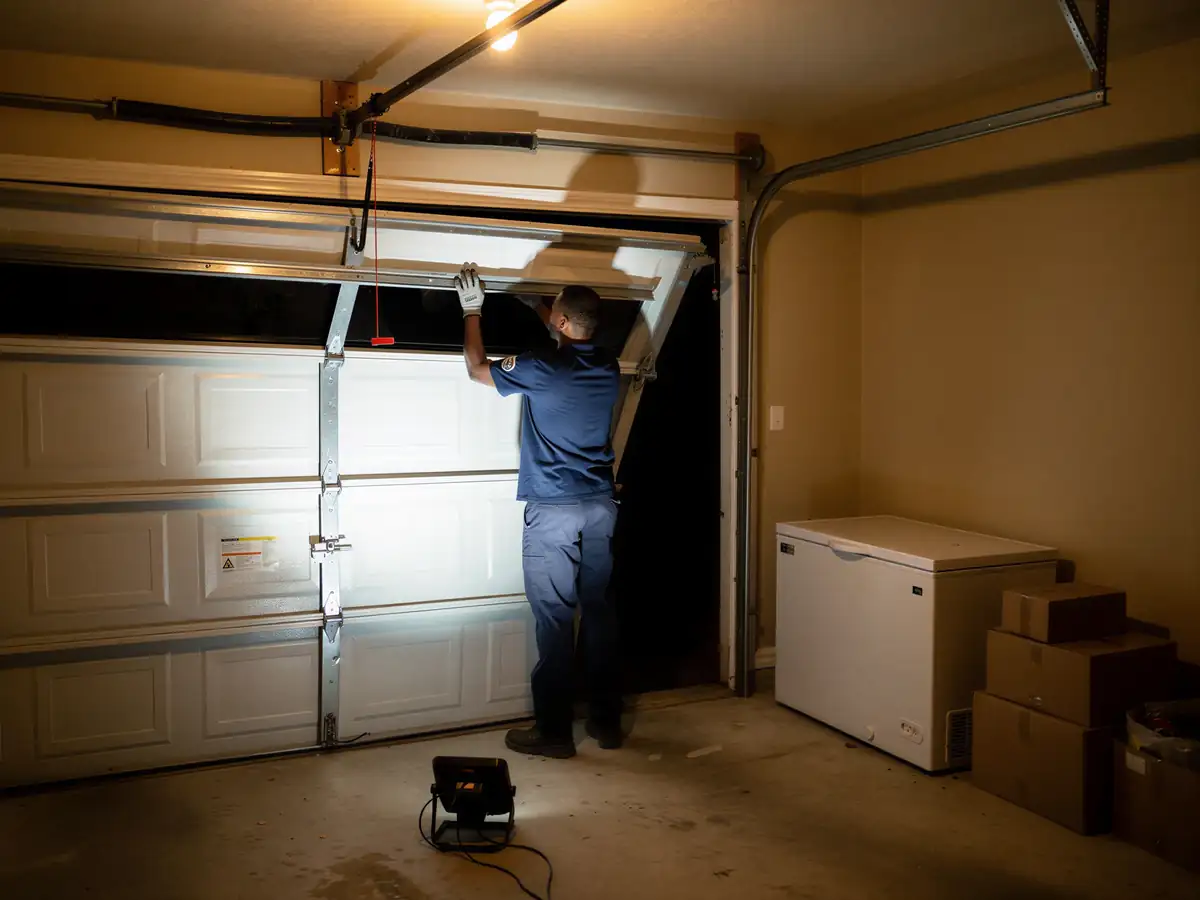
The job itself: release the door's spring tension, remove the hinges one at a time working from the bottom up so the door stays supported, pull each old roller, fit the new one, reset the hinge, and check the track alignment as you go. On original hardware this age, it's common to find the bottom roller brackets have more wear than the mid-door ones, since they carry more of the door's weight on the way down.
Here's the honest limit: if the track itself is bent or rusted through rather than just worn, rollers alone won't fix the rattle, and swapping rollers into a bad track is a short-term patch at best. We'll tell you straight if that's what we find rather than sell you a roller job that won't hold.
Time on the Job
A straightforward roller replacement on one door
With the track intact, is typically a controlled, single-visit job. With Rio Verde sitting about 9 miles out from our Fountain Hills base, factor the drive into when you book, not into the repair time itself once we're on site.
- 9 miles
What extends the visit
Finding a bent track once the old rollers come out, hinges that are worn enough to need replacing alongside the rollers, or an opener that's been compensating for roller drag and needs a sensor or force adjustment after the door moves freely again. None of that is unusual on hardware this age - a door running on its original rollers since 1994 has likely never had the track checked for square, because nothing forced the issue until now.
We size up the job on arrival rather than quoting roller count sight unseen
Since the number of worn rollers varies house to house even within the same build year.