Can You Do This Yourself
Swapping a single panel sounds simple until you're staring at a door built around 1994 with a style nobody's made in decades
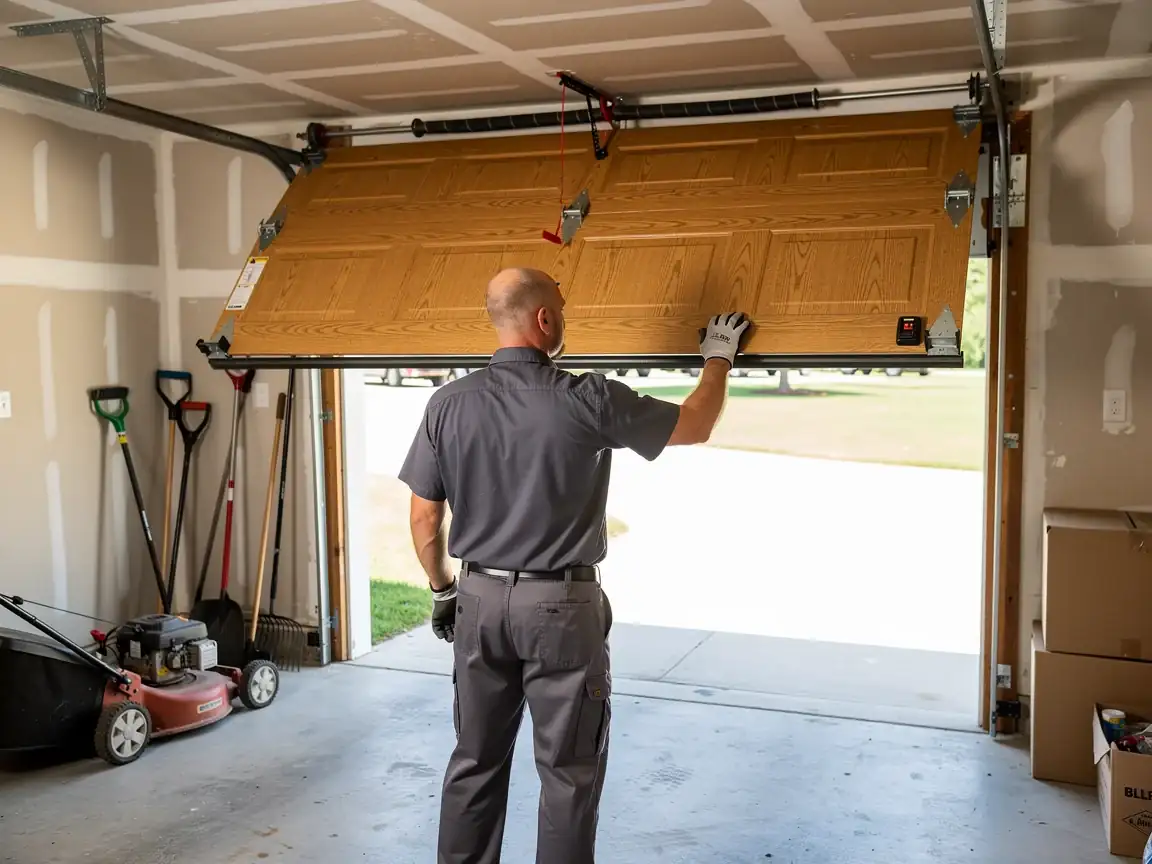
You can unbolt a damaged panel and bolt in a new one if the hinges line up and the color isn't glaringly off, but matching a 30-year-old steel panel to the three it's sitting next to is the part that trips people up. Paint fades differently depending on sun exposure, and a mismatched panel looks worse than the dent you started with.
The honest limitation
If your door's manufacturer discontinued that panel profile, we can't always get an exact match. Sometimes the right call is replacing the whole door section instead of chasing a part that doesn't exist anymore. We'll tell you straight if that's where you're headed rather than ordering something that won't fit right.
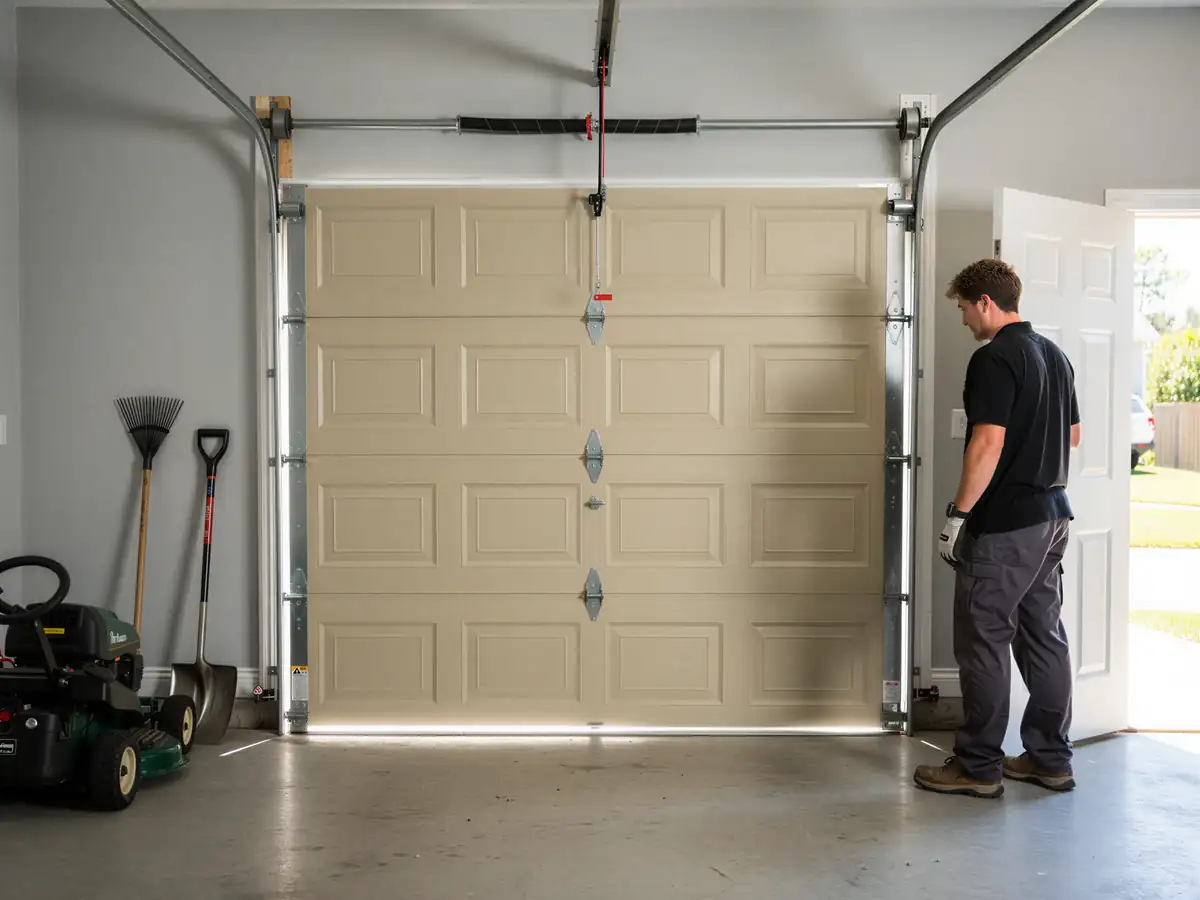
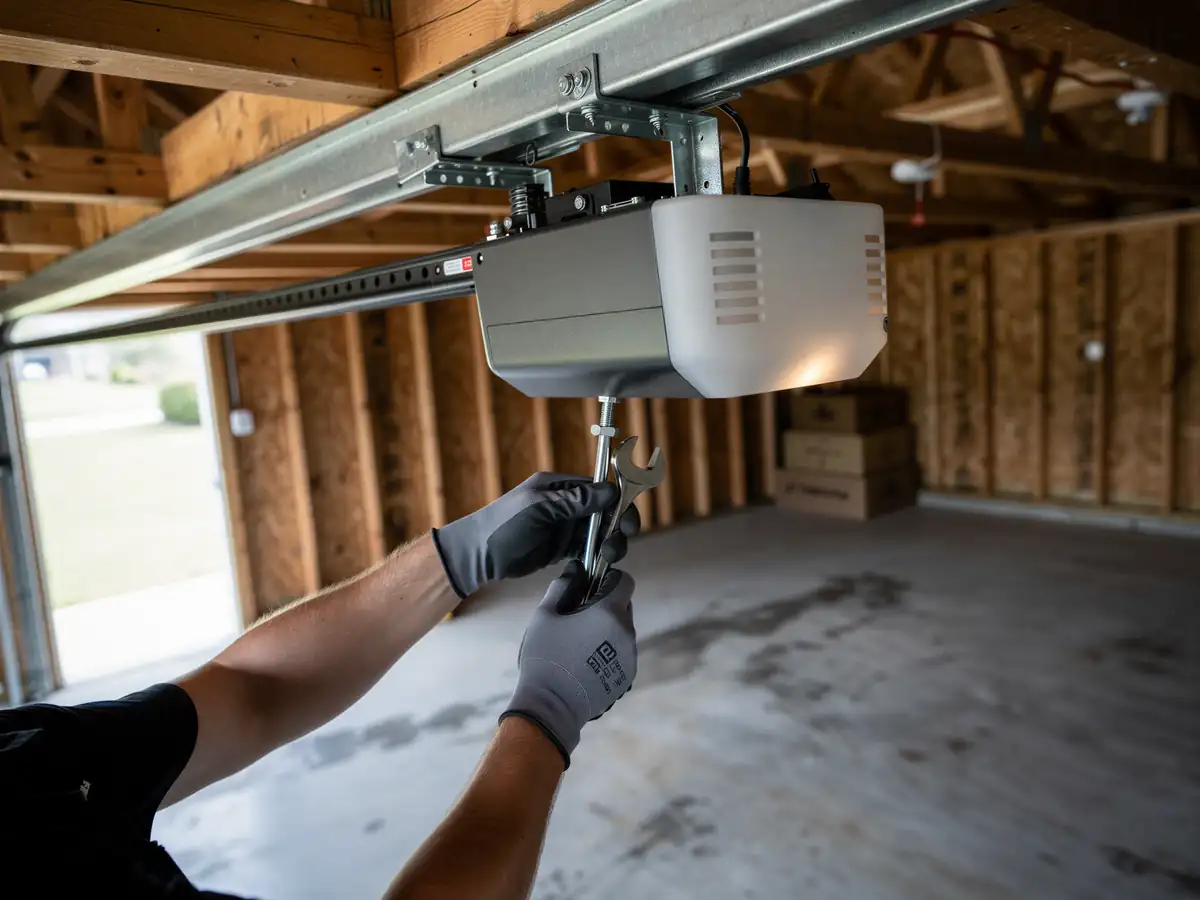
What you shouldn't do yourself is touch the spring or cable system while the panel's off
Especially on a double door. That's a different job and a different risk, and it's not where panel work should turn into a trip to urgent care.
What You Are Seeing
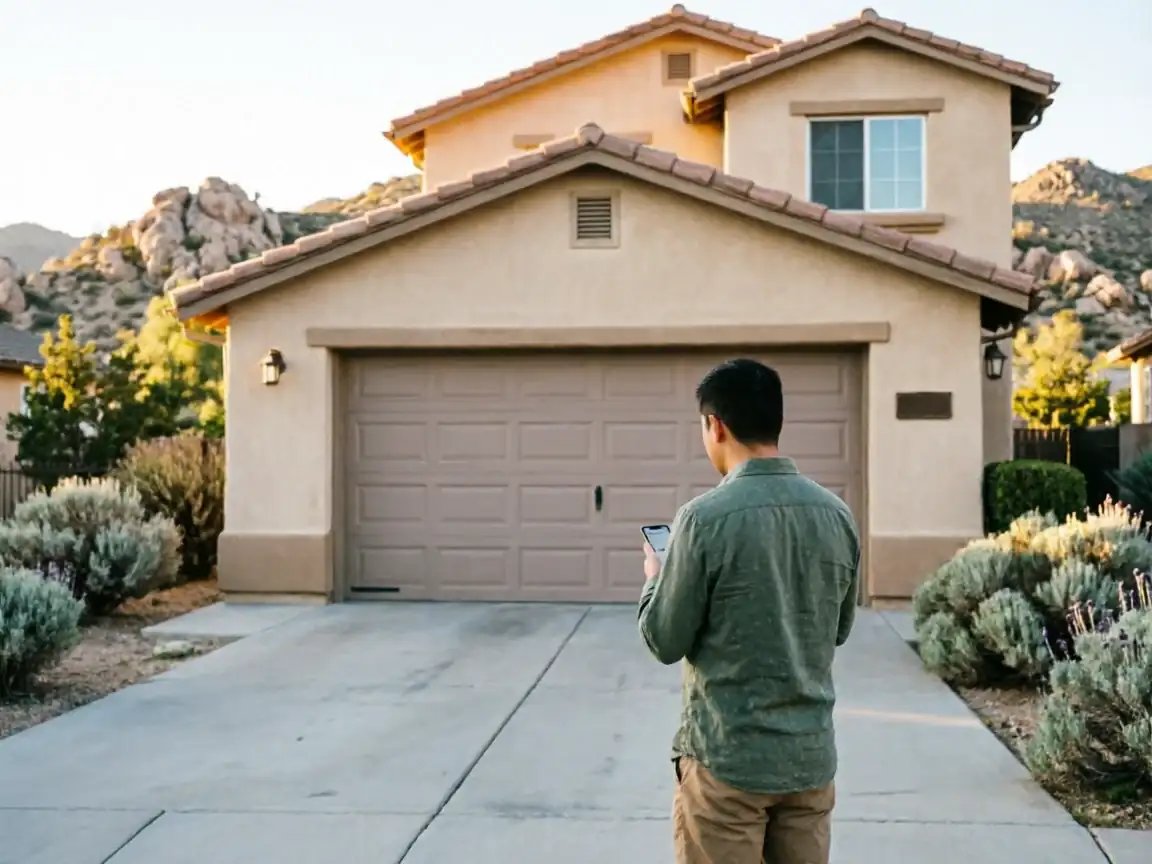
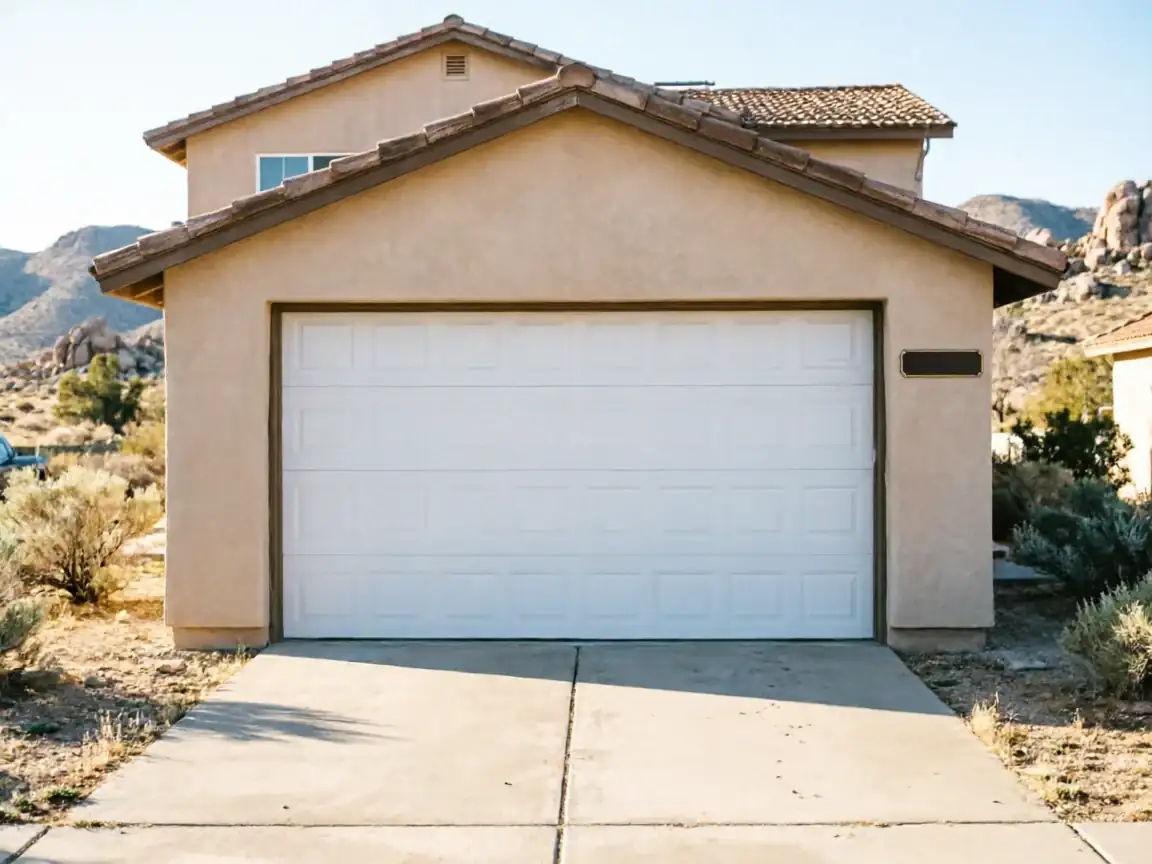
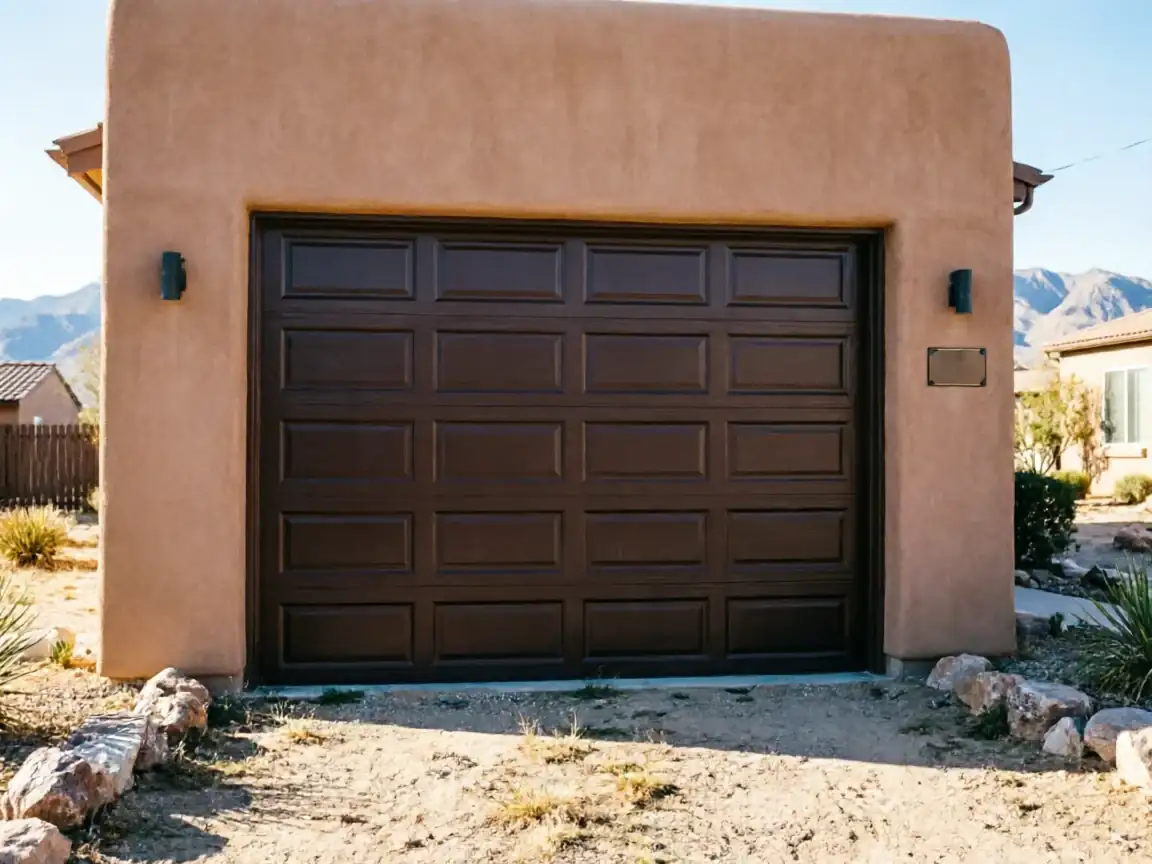
Rio Verde's housing stock is mostly from the 1990s, median build year 1994, which puts a lot of original steel garage doors right at the age where sun exposure starts winning. This area sits in a severe heat climate band, and steel panels that have spent three decades absorbing direct sun tend to show it at the bottom panel first - that's the one closest to the slab, catching reflected heat and the occasional irrigation overspray.
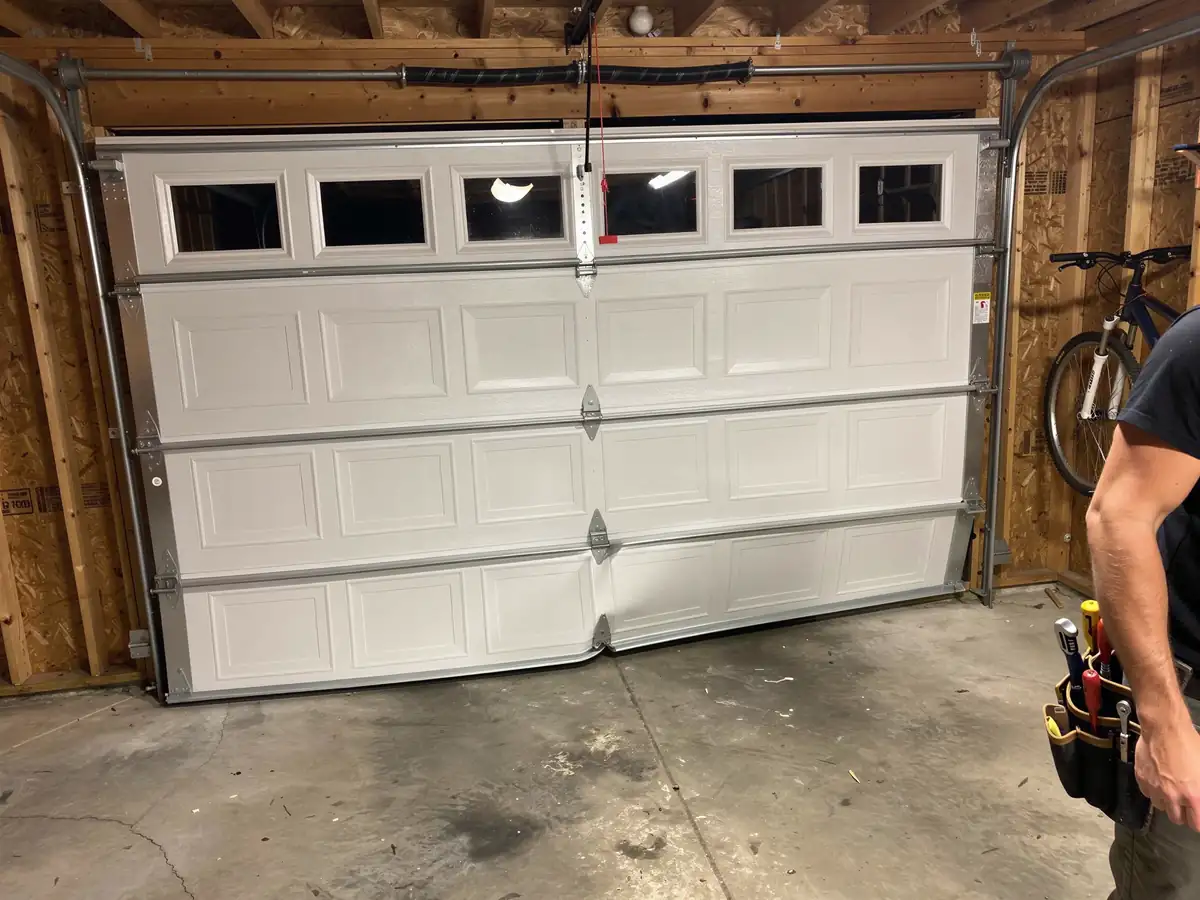
What you're likely looking at is bottom-panel rust-through, a seam that's started to separate from repeated heat expansion and contraction, or a dent that's cracked the paint enough to let moisture in underneath. On doors this age, it's rarely the whole door failing at once - it's one panel that's taken the brunt of thirty summers while the rest held up fine. That's actually good news: it usually means a panel job, not a full door replacement.
What the Fix Involves
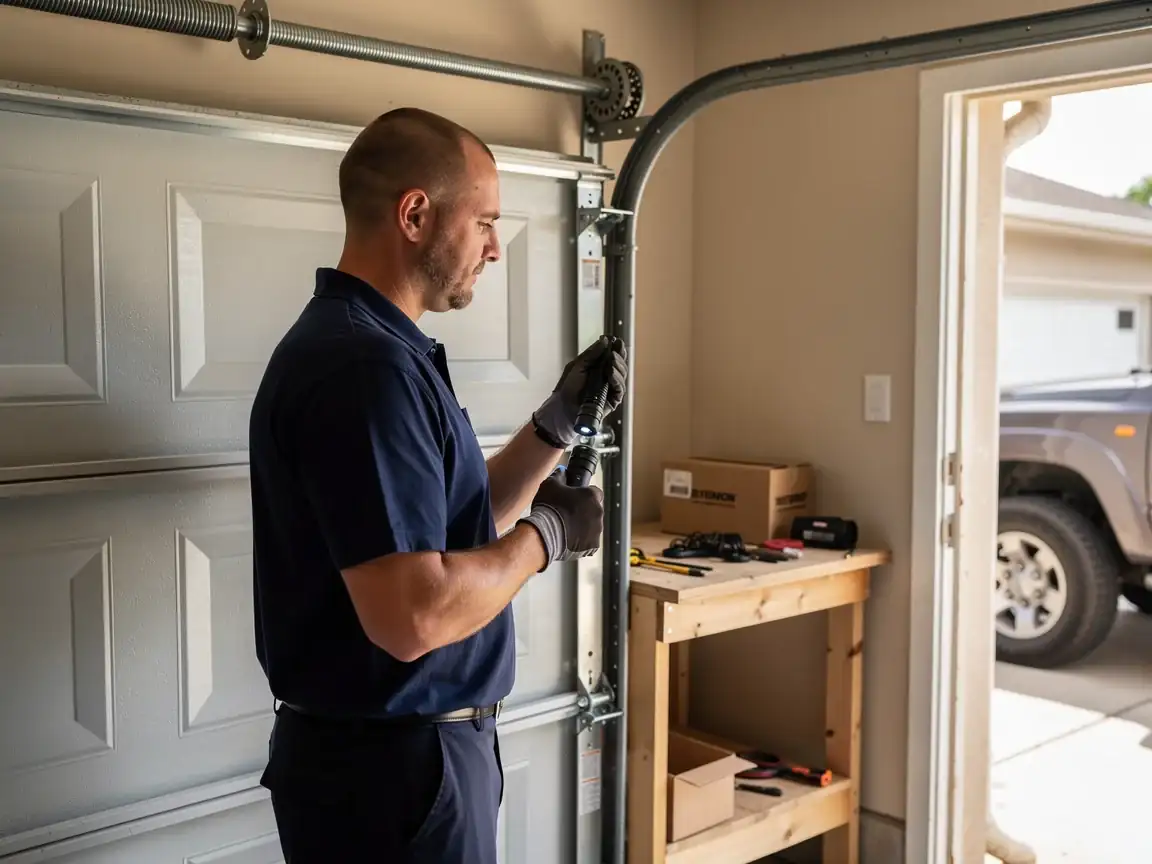
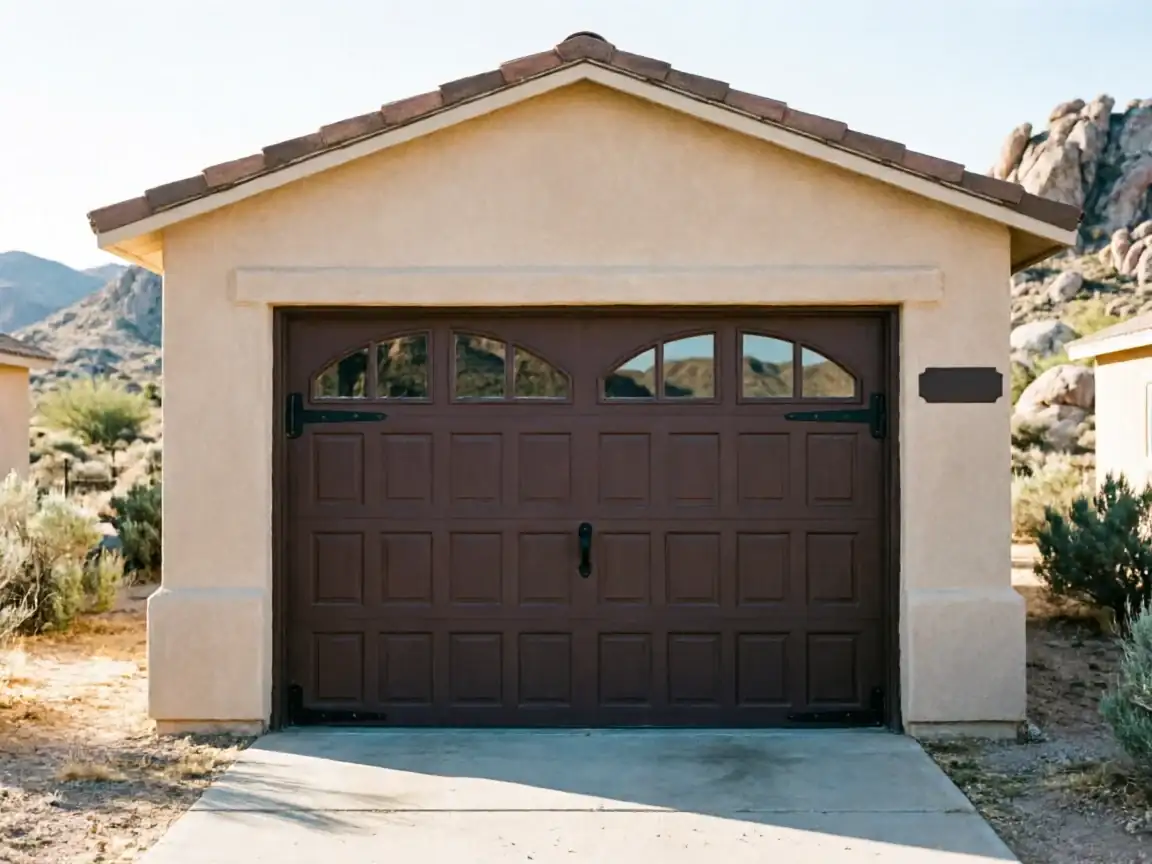
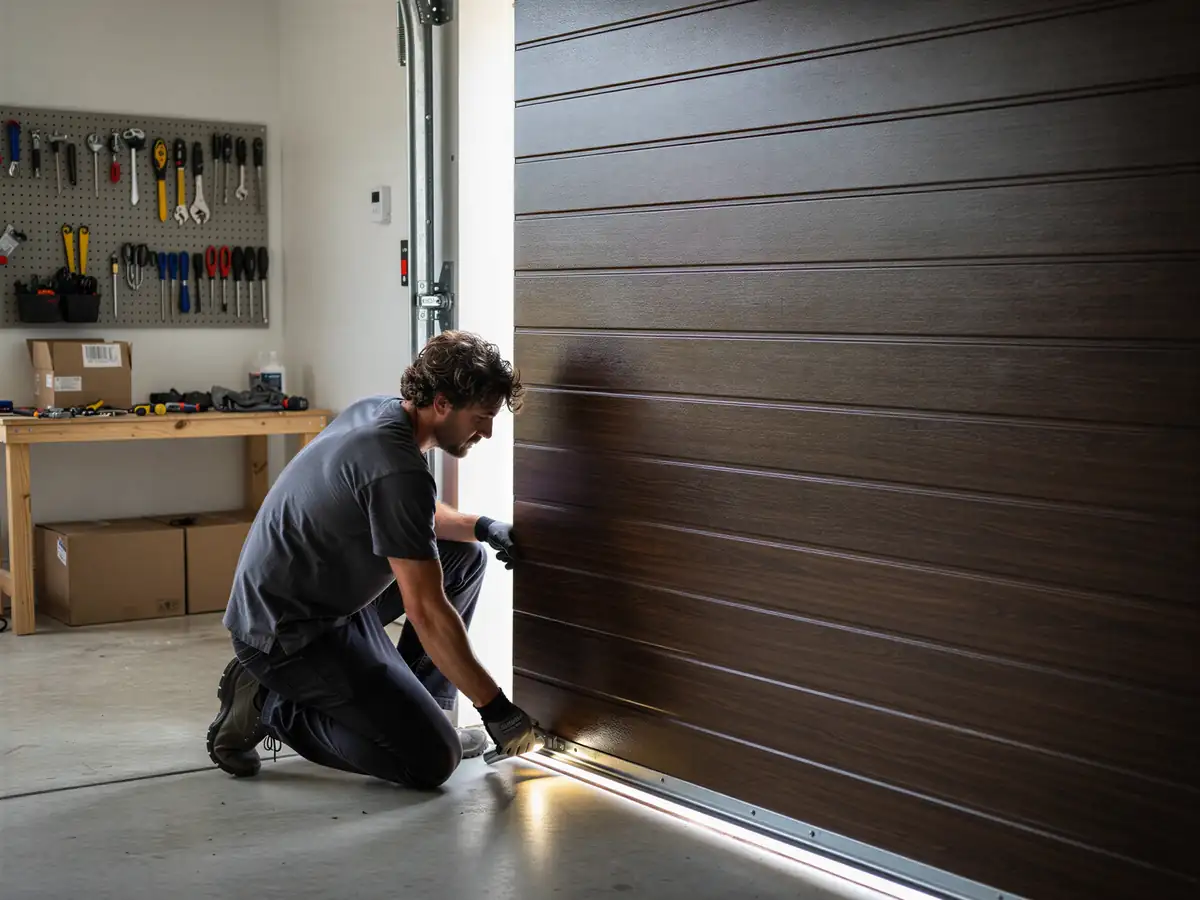
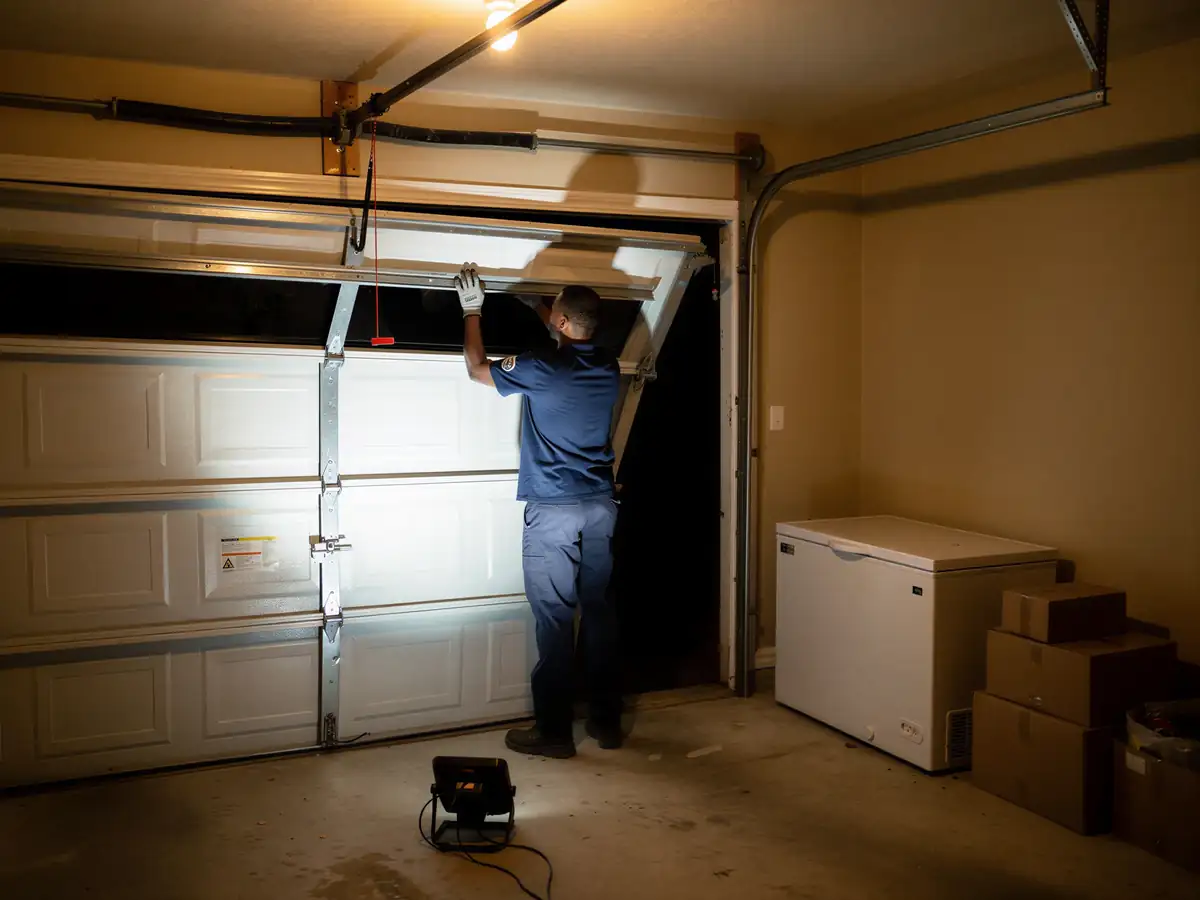
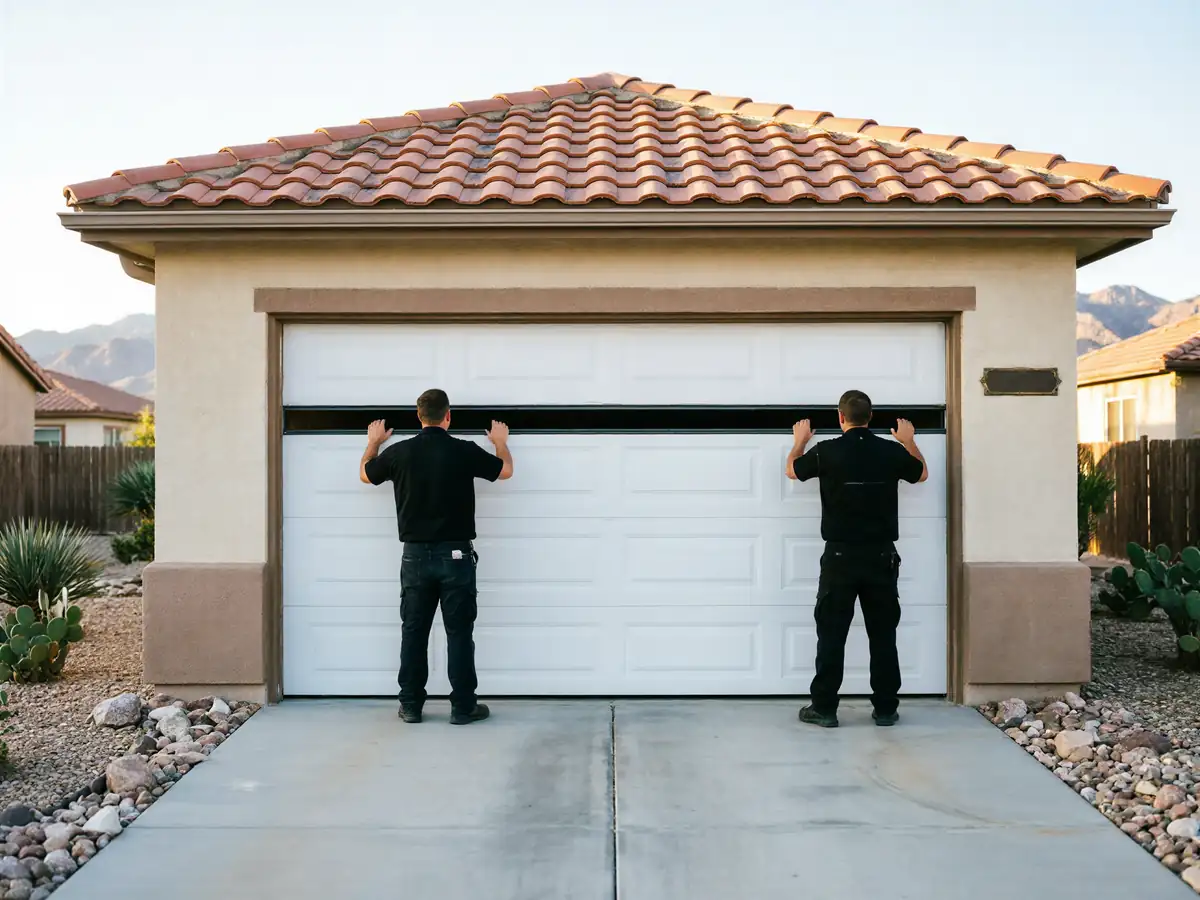
First step is figuring out whether your door's panel profile is still made. A lot of 1990s-era steel doors used styles that are now discontinued, so we check the manufacturer and model before promising anything. If a match exists, it's a straightforward swap - pull the damaged panel's hinges and end stiles, set the new one, and reattach, matching color as close as the original paint allows after this much fade.
If the exact panel isn't available anymore, the choice becomes replacing the full door section or living with a visible mismatch. We'd rather tell you that up front than install something that looks patched. Either way, we're not touching torsion springs or the opener unless that's a separate issue you've flagged - this is panel work, not a full system overhaul.
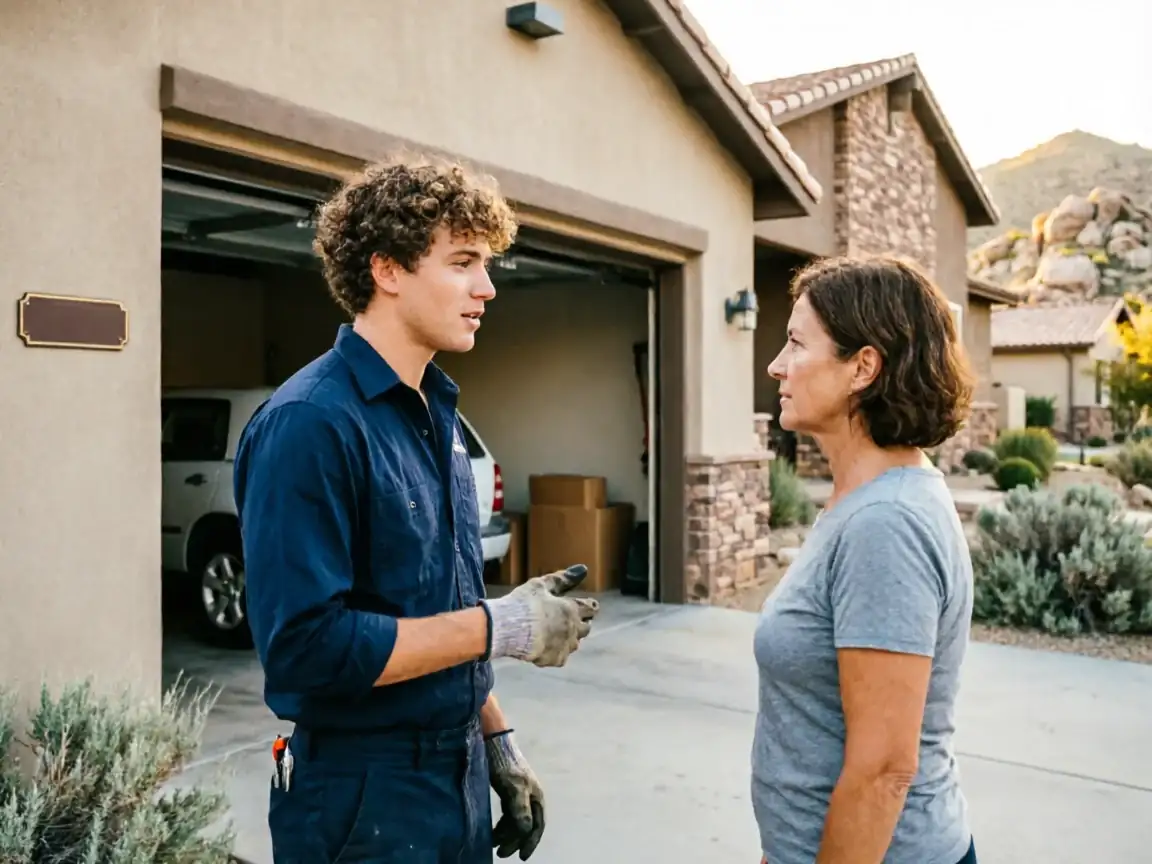
For homes in Rio Verde specifically, we're bringing the panel stock and tools out from Fountain Hills, so having the door's brand and model ready before we arrive saves a second trip if a special-order panel is needed.
Time on the Job
A single panel swap with stock in hand is usually a same-visit job once we're out at the house
The variable is parts: if your door's panel style needs to be special-ordered because it's an older or discontinued design, that adds lead time before we can even schedule the install. We're not going to quote a turnaround we can't back up, so we check availability first rather than guess.
Rio Verde is about 9 miles out from our Fountain Hills base
Which we factor into scheduling rather than treating as an afterthought. With roughly 1,288 households in the area and a lot of them sharing the same era of door, panel wear tends to cluster - if your neighbor's door is showing the same bottom-panel fatigue, that's not a coincidence, it's the building stock.
- 9 miles
- 1,288 households