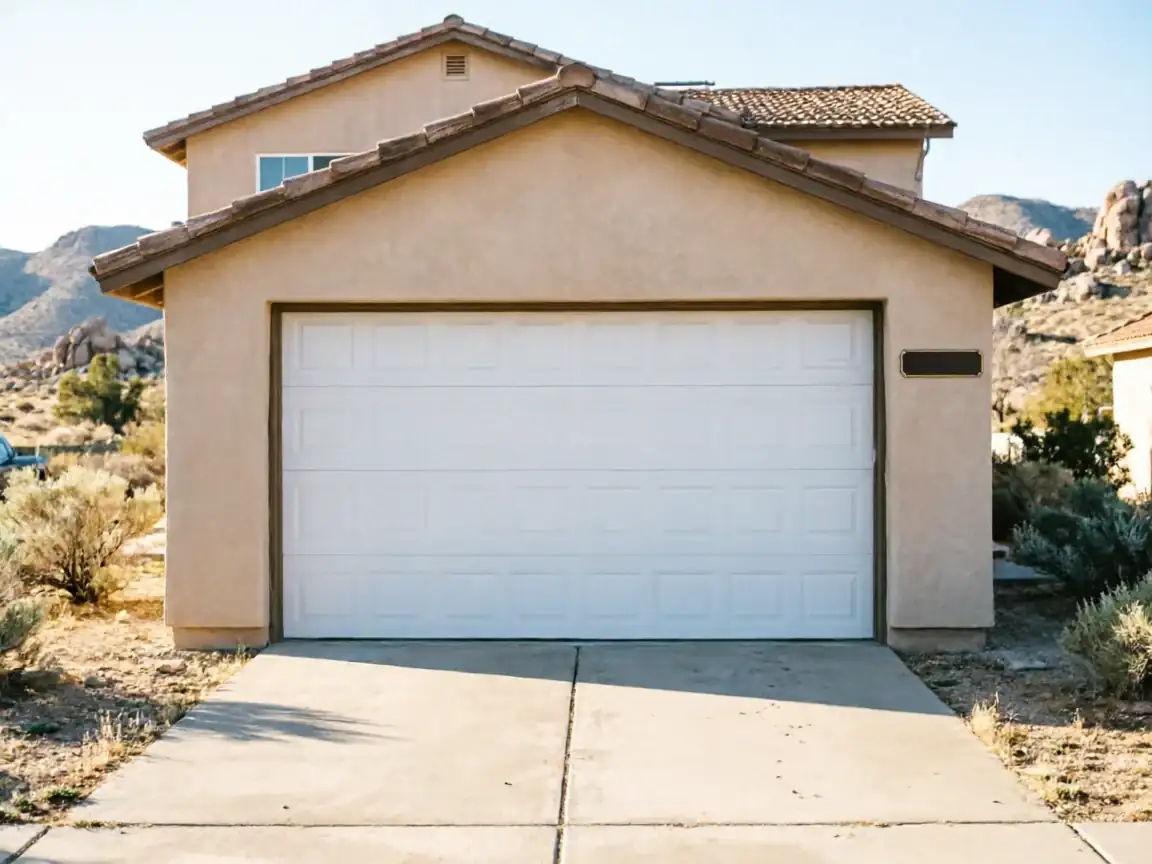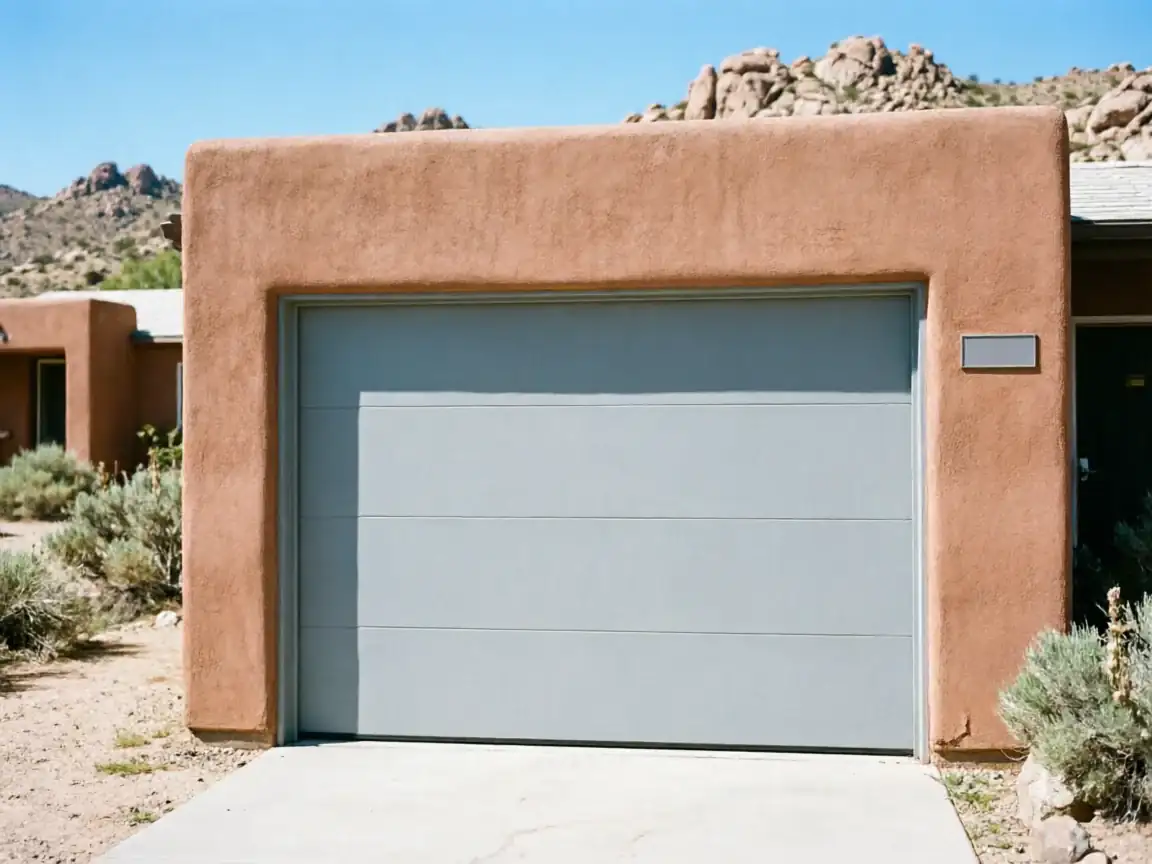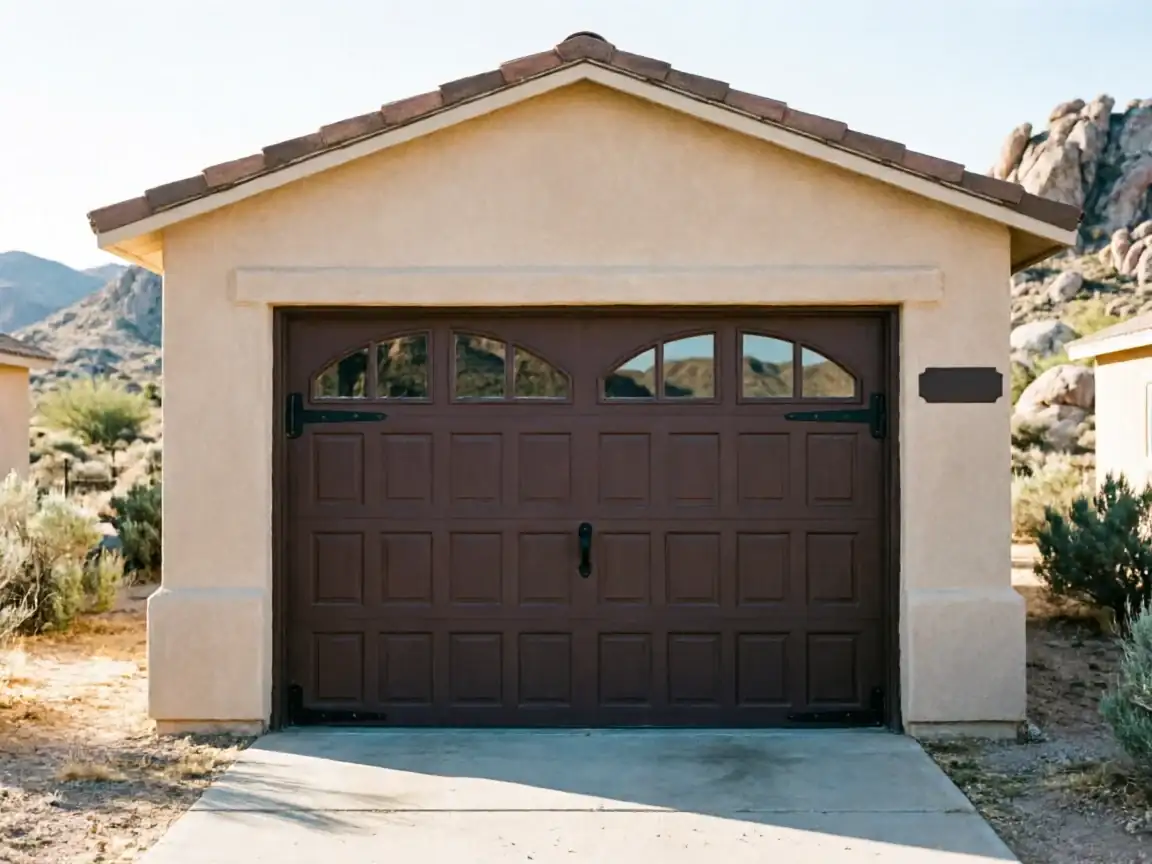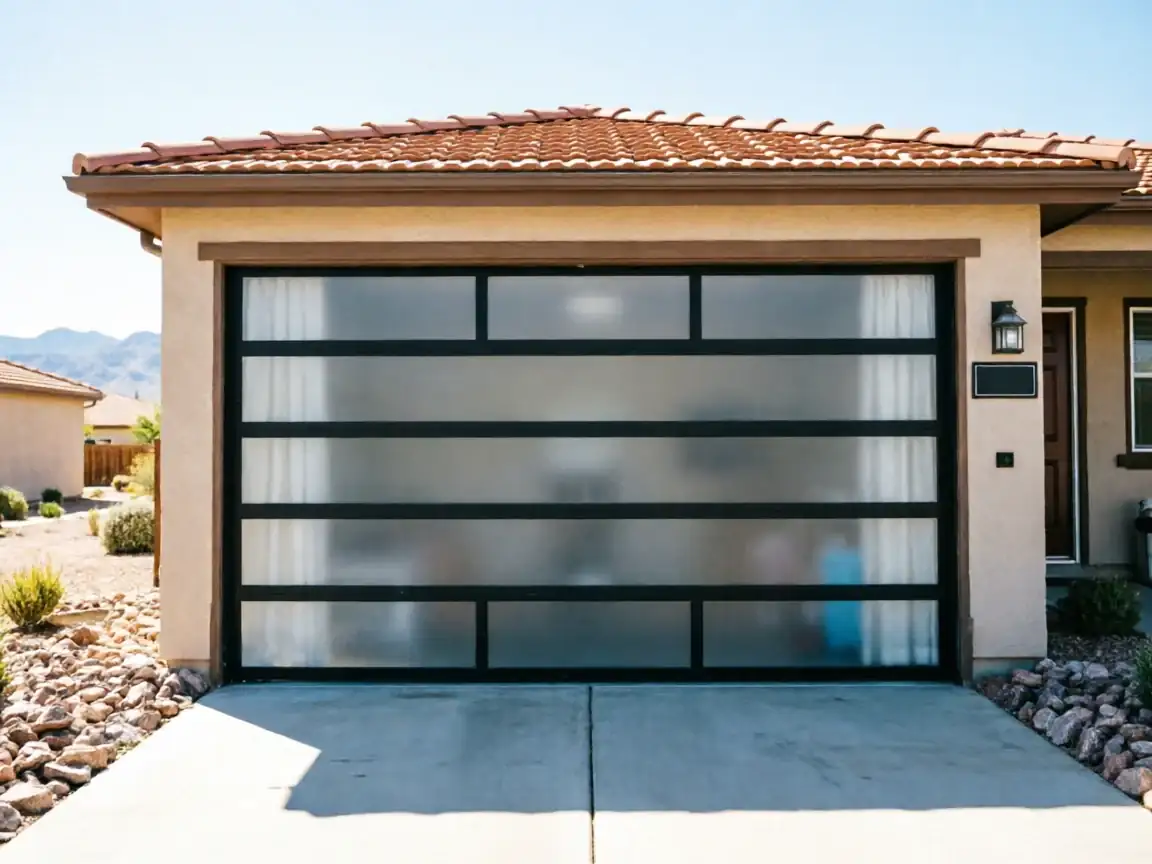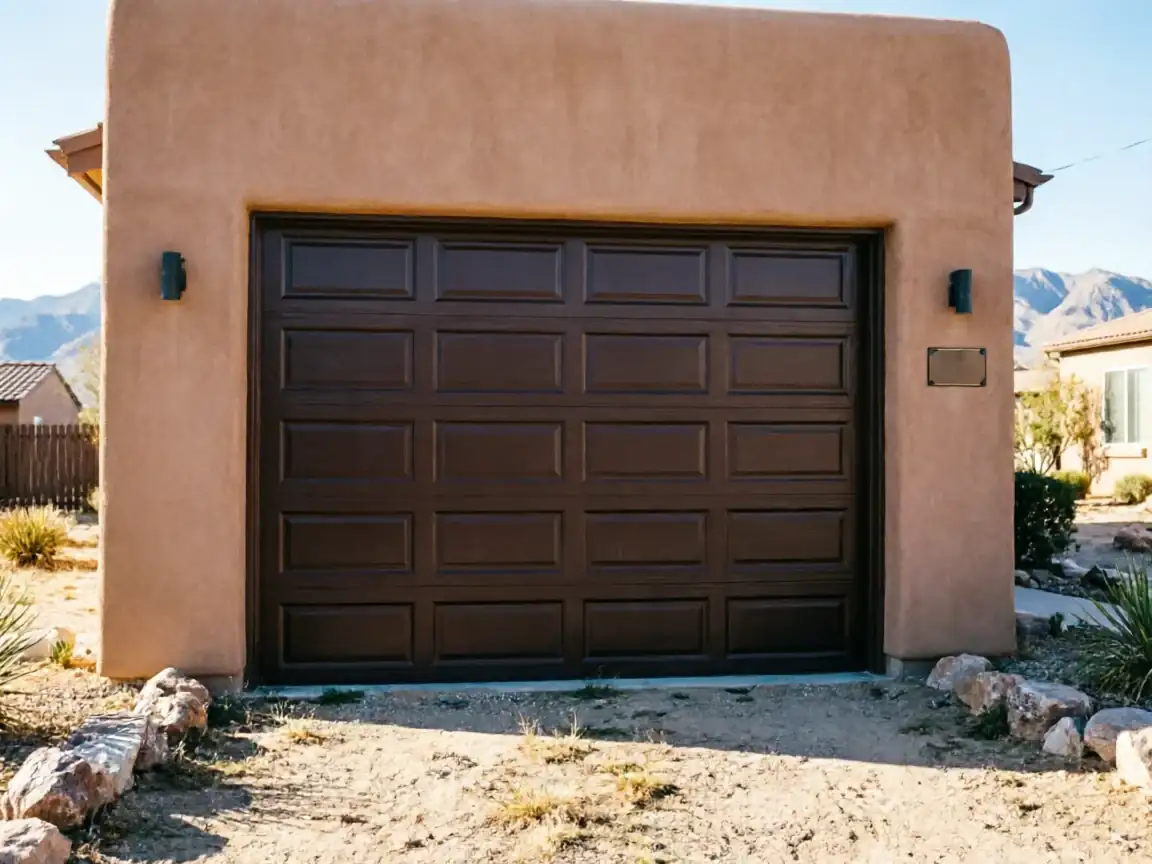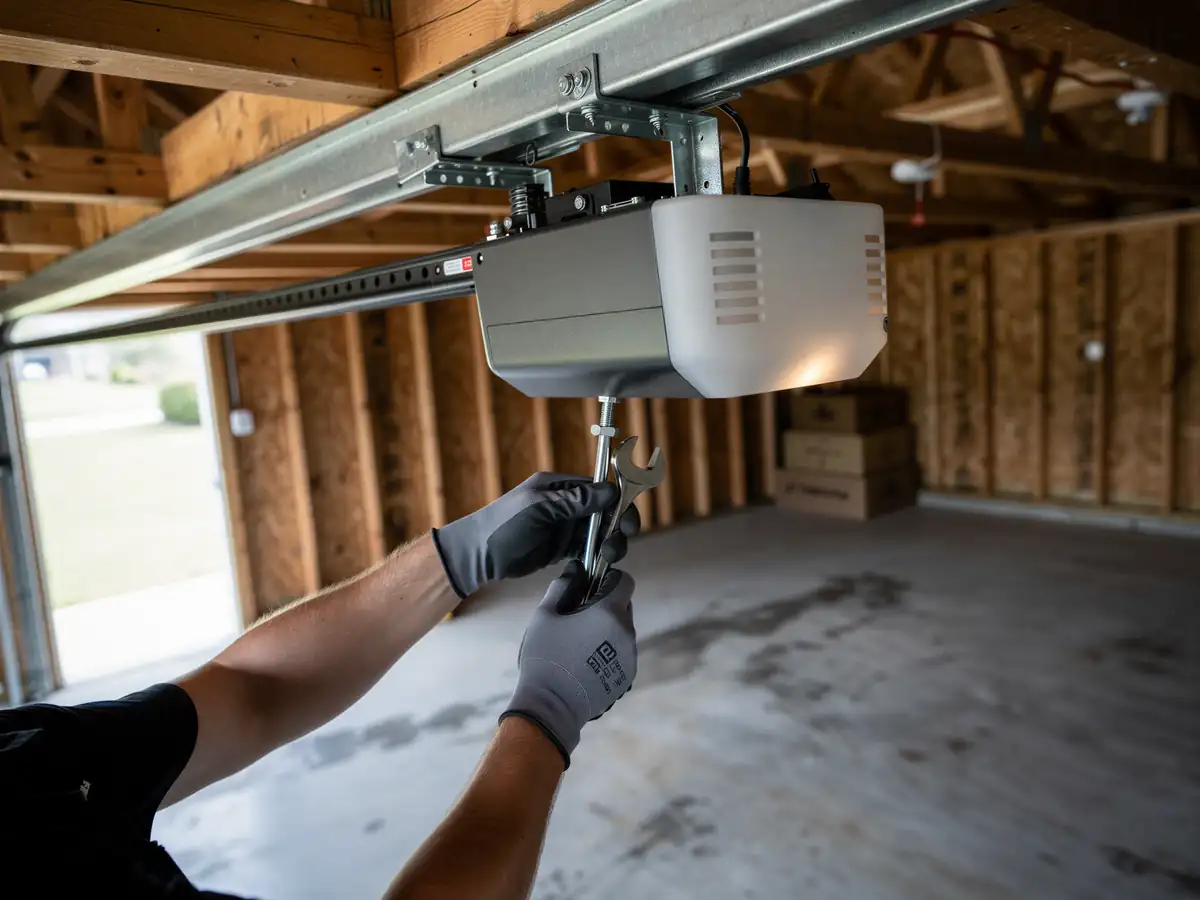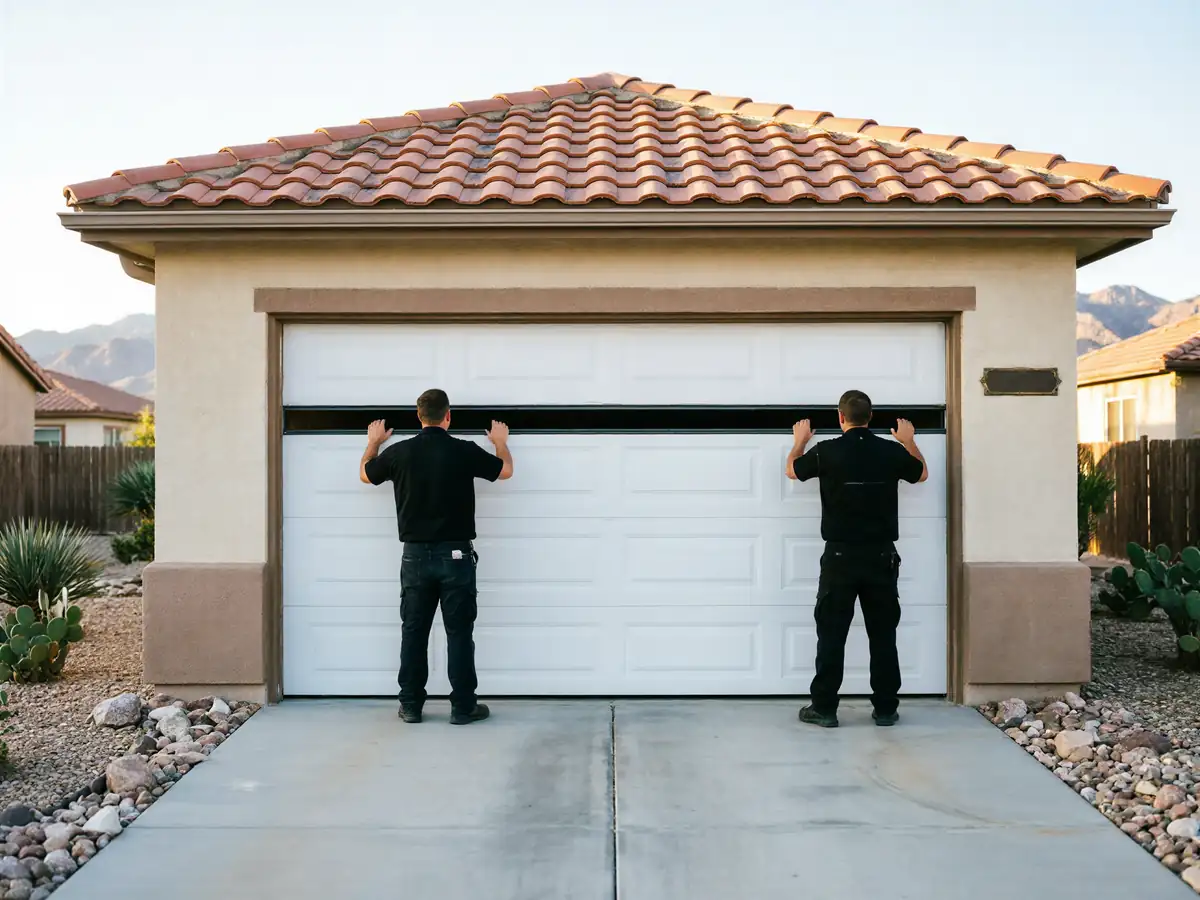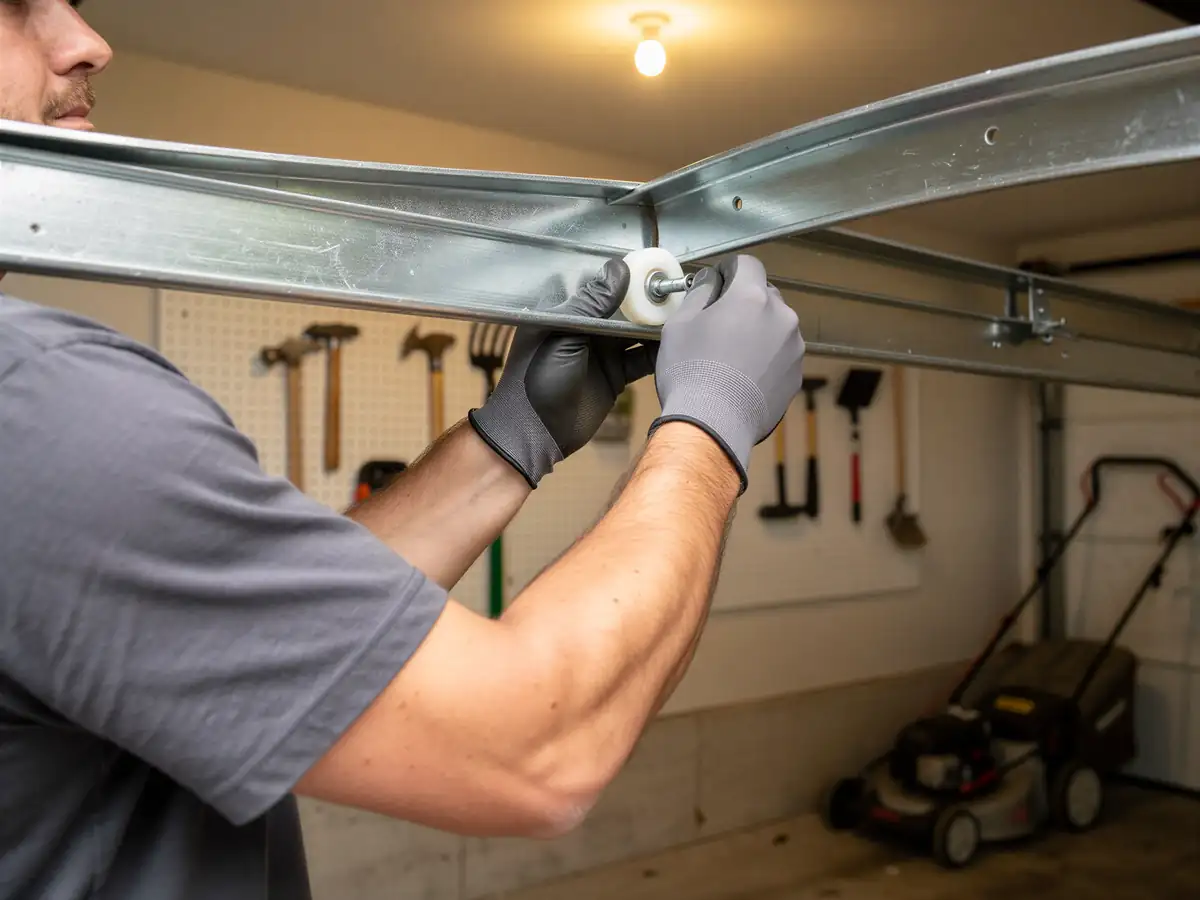
What You Are Seeing
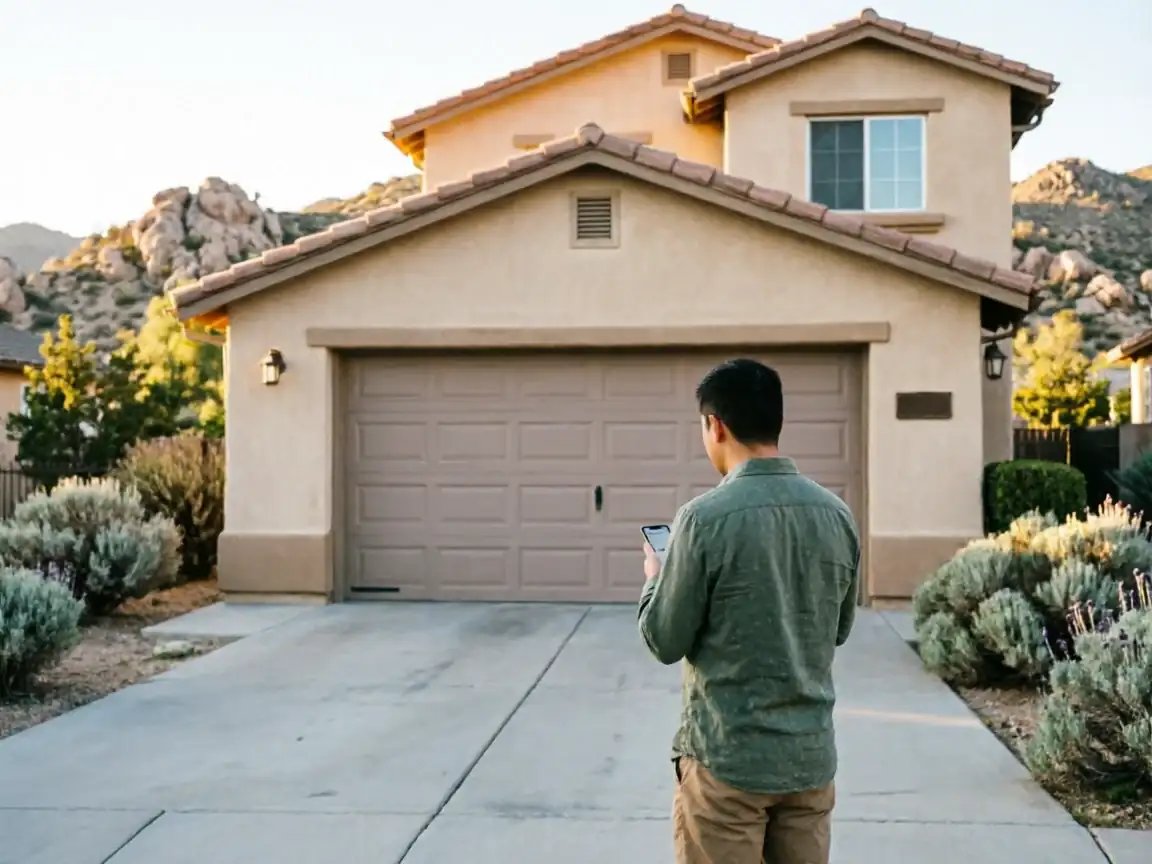
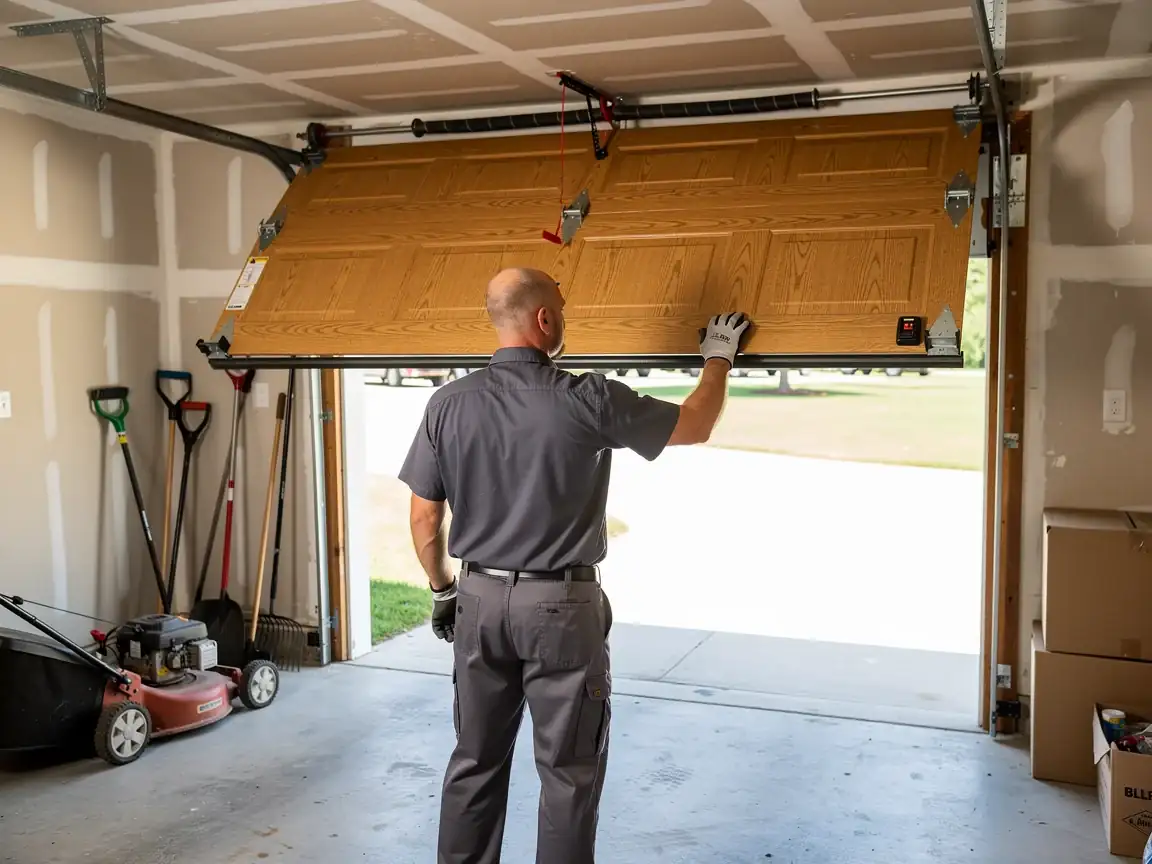
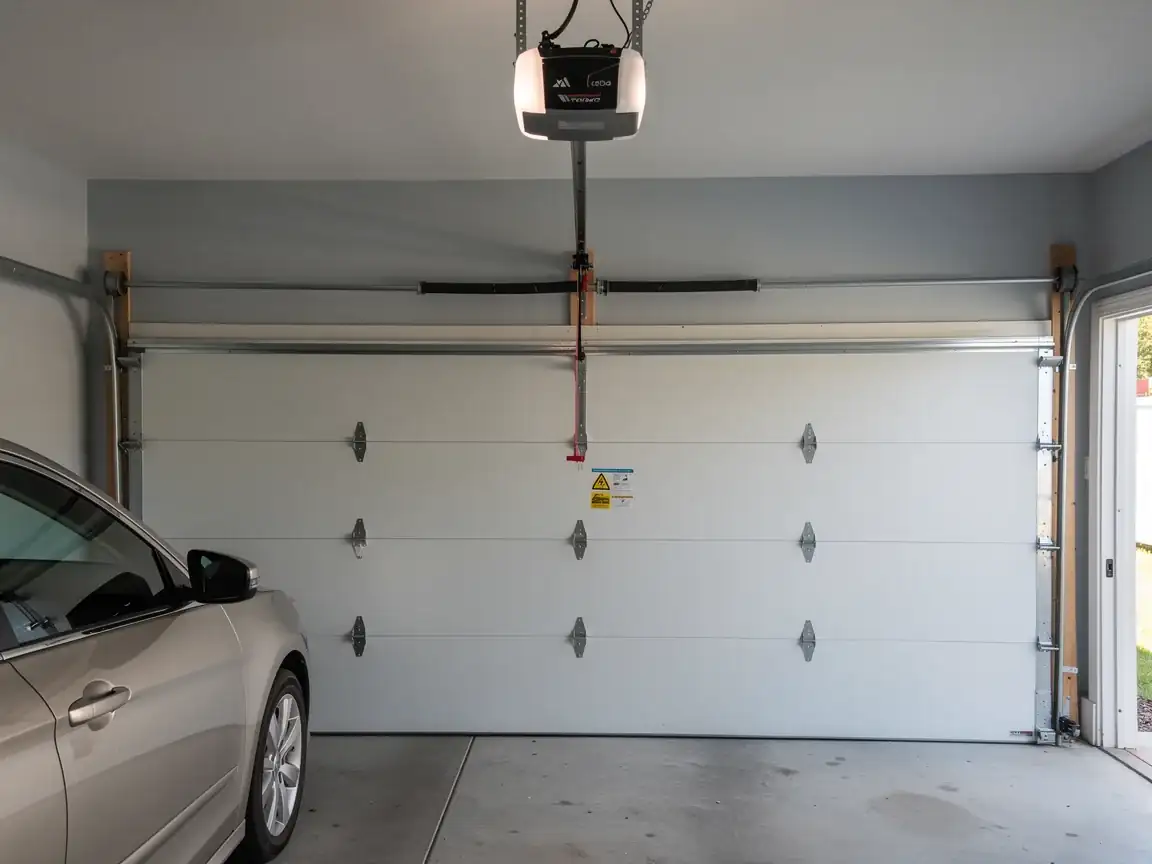
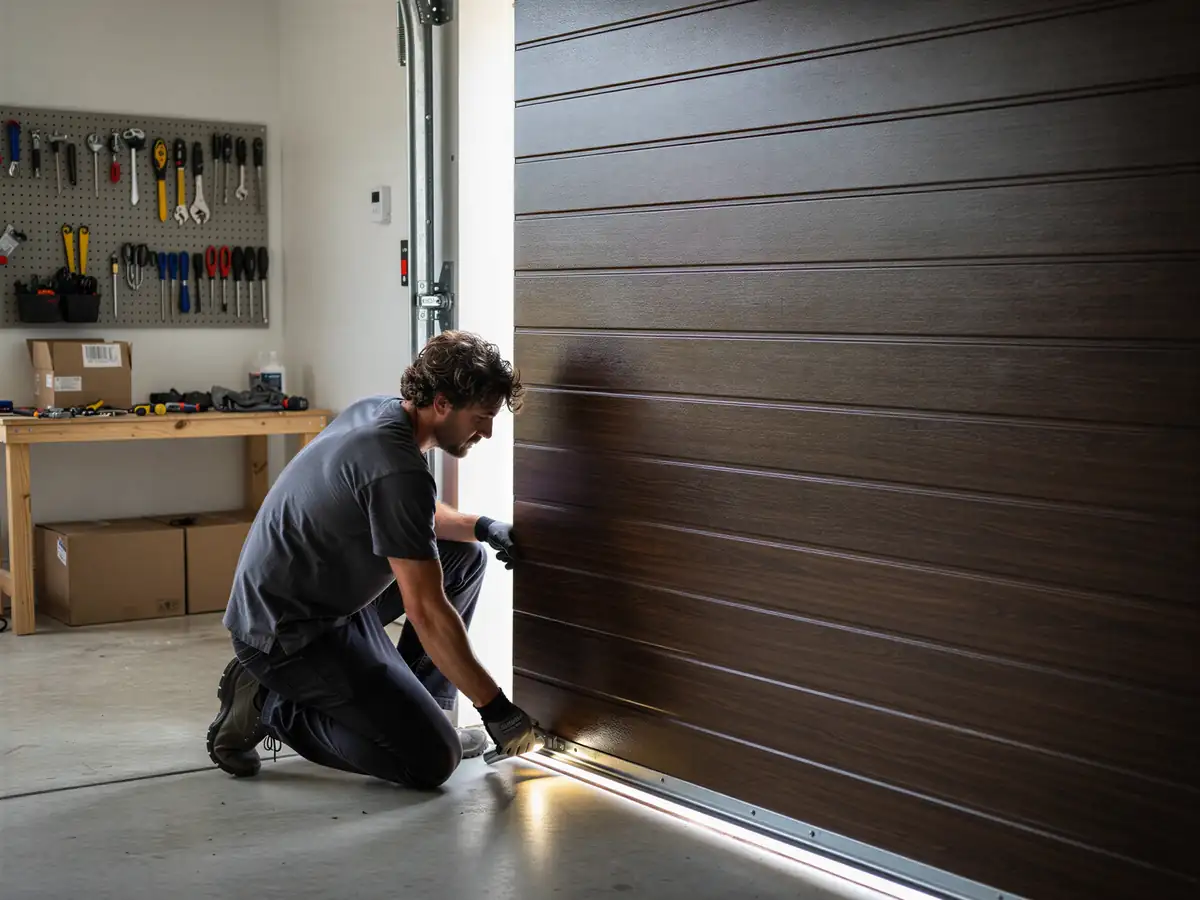
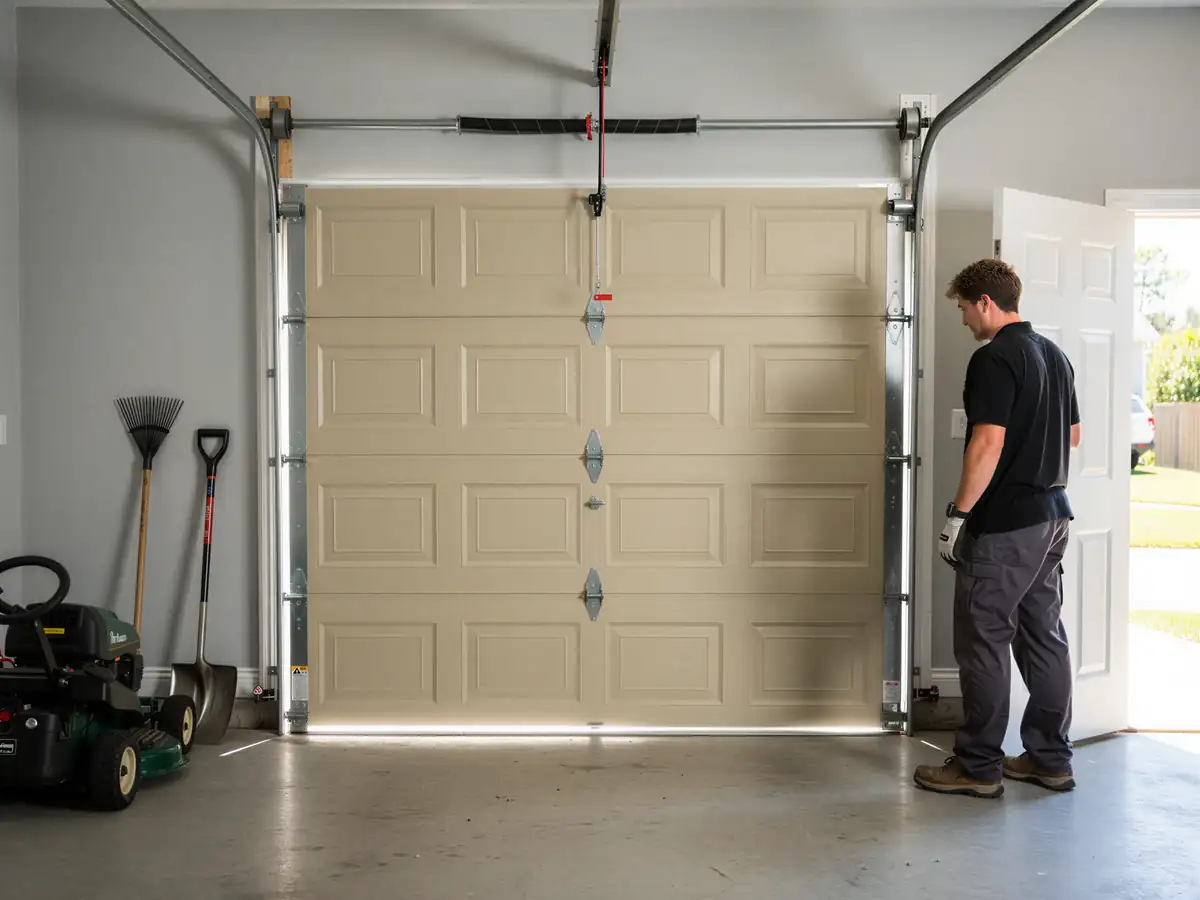
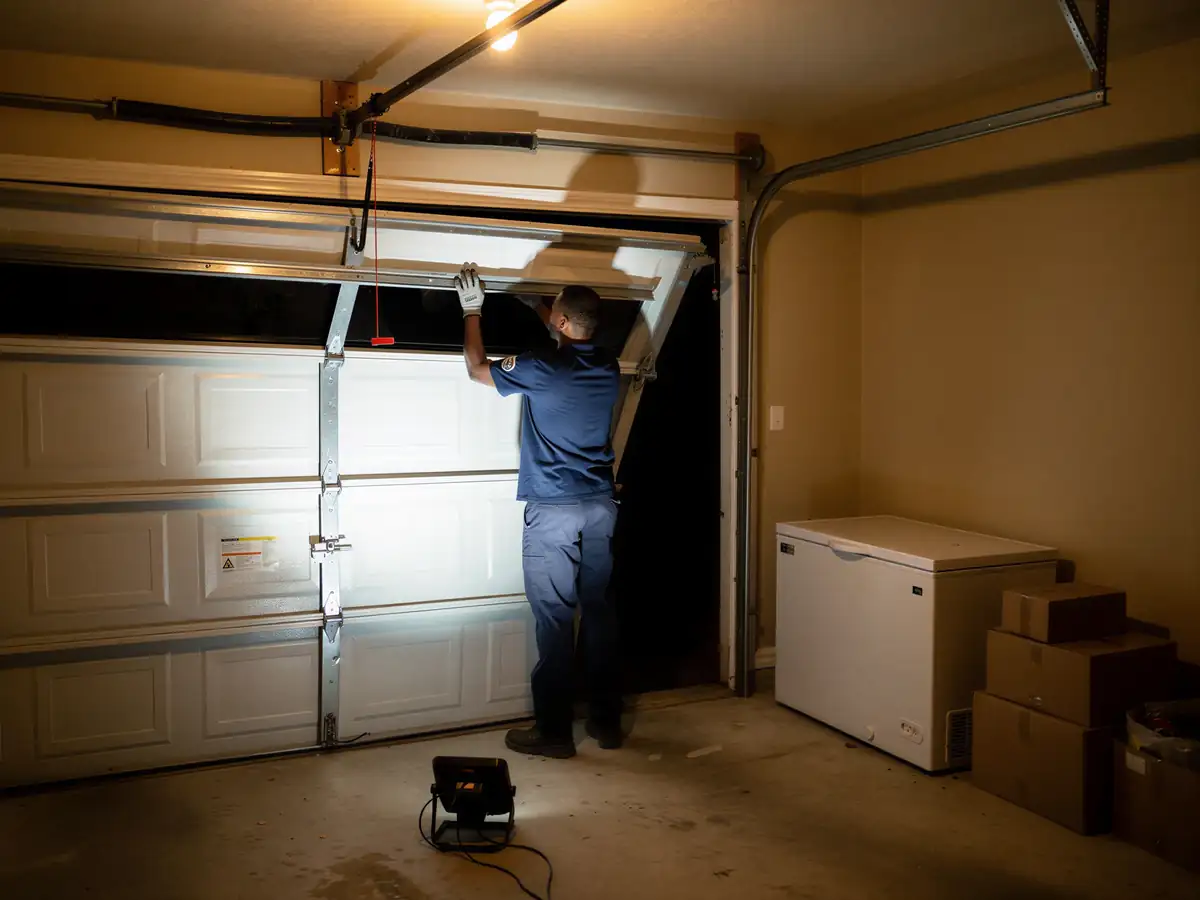
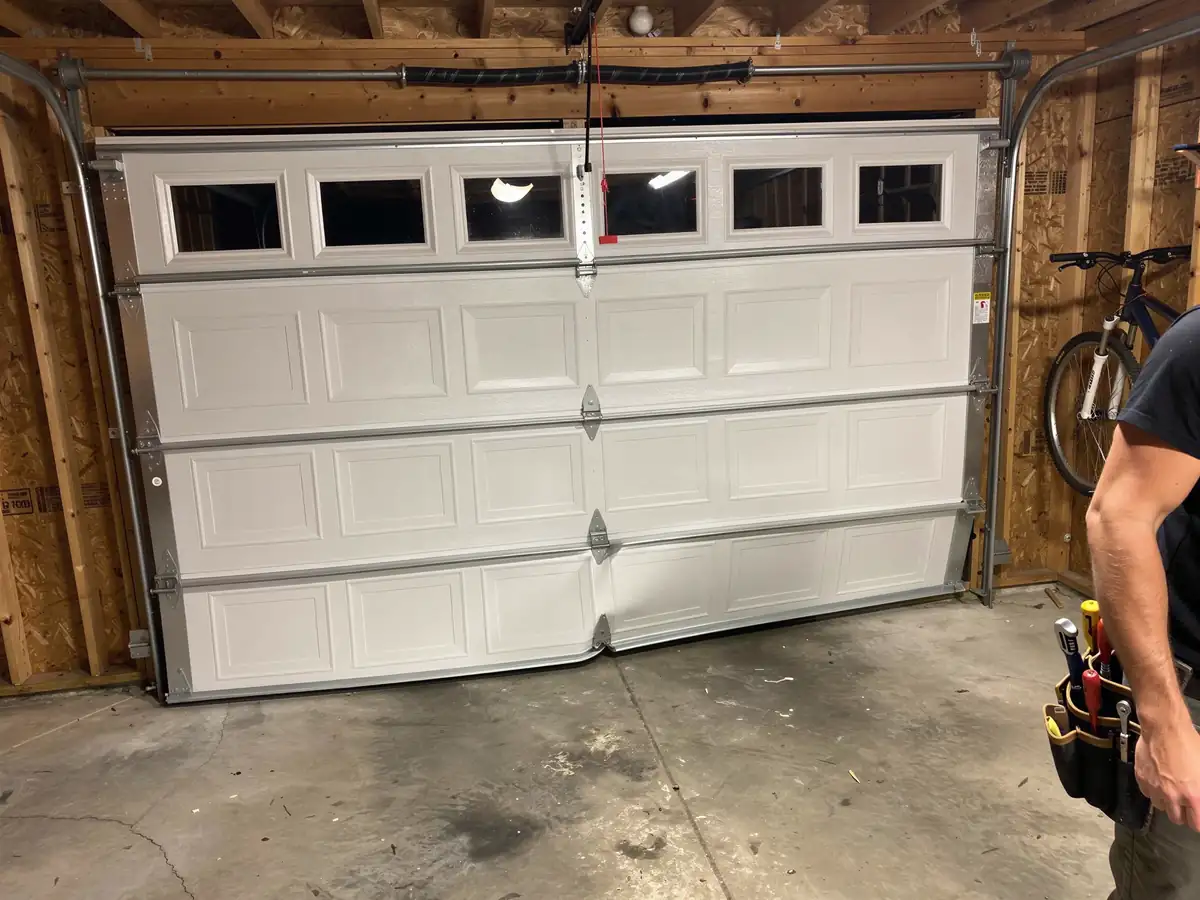
Most houses in Rio Verde went up around 1994, a few years newer than the broader service area's 1989 median build year. That later build date usually means sectional steel doors on extension spring setups rather than the older one-piece or torsion-first designs you'd find on an earlier house. On these doors, off-track almost always starts at the bottom roller or the bottom bracket, not the top. You'll see the bottom corner of one panel sitting proud of the frame, the weatherstrip bunched or torn, and sometimes a visible gap where the track has splayed outward. The severe summer heat this area sits in plays a real role too - composite and wood-look panels expand and contract more than steel does, and over enough summers that movement loosens the screws holding the track brackets to the jamb. A door that's been slightly out of alignment for a season will finally give the week it gets hot enough. If your door only came off on one side and the opener still lifts it, that's a narrower repair than a door hanging loose on both sides.
What the Fix Involves
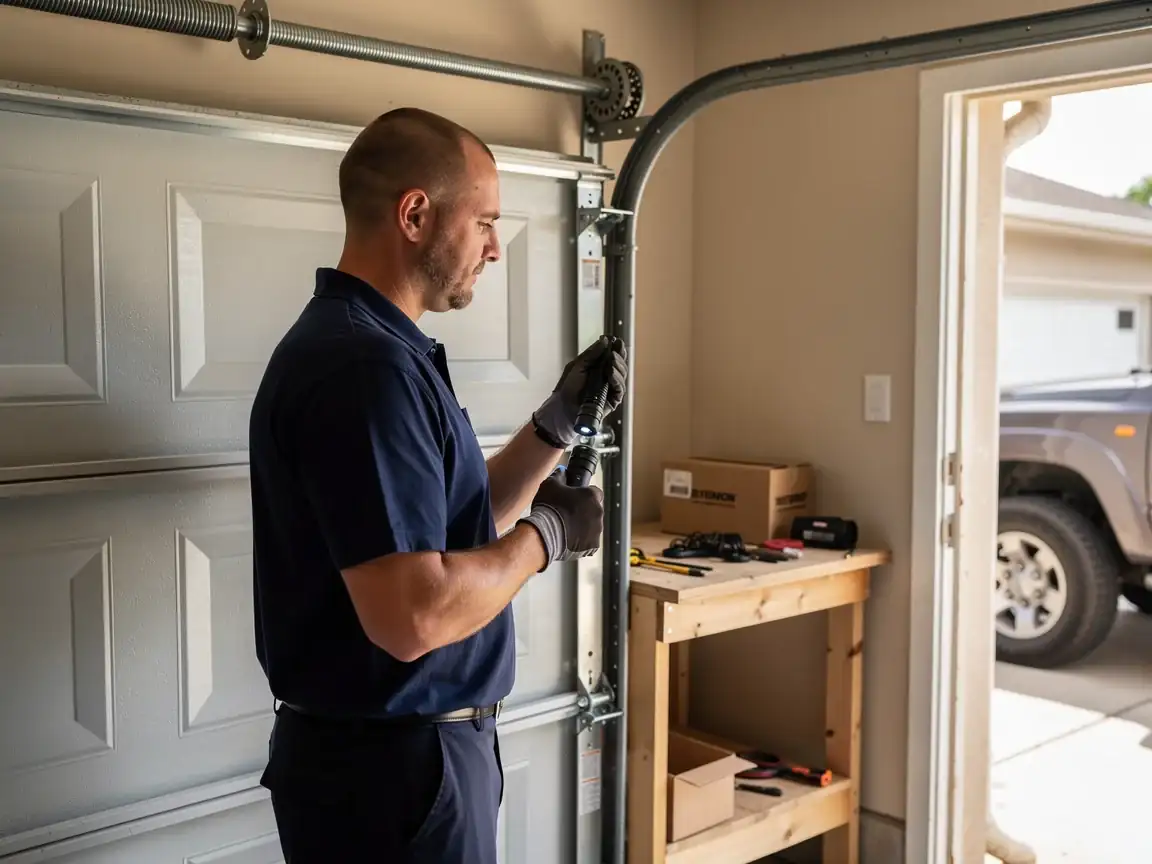
On a clean off-track job - one bent hinge, one dented roller track - straightening or swapping the track section and rehanging the panel is usually enough, and we do that from the truck on most visits. Where it gets more involved is when the track has pulled away from the framing on an upper section, which happens more often on these 1990s-era sectional doors once the original mounting screws have worked loose over thirty years of heat cycling. That calls for repositioning the whole track assembly and checking both sides for square, not just patching the one spot you can see. We also check the rollers themselves while we're in there - on a door this age they're often the original nylon rollers, and if one failed from age, its neighbors aren't far behind. Replacing just the one that broke and leaving three worn ones in place is how you end up with the same call again inside a year.