Time on the Job
Carefree's housing stock centers on 1989
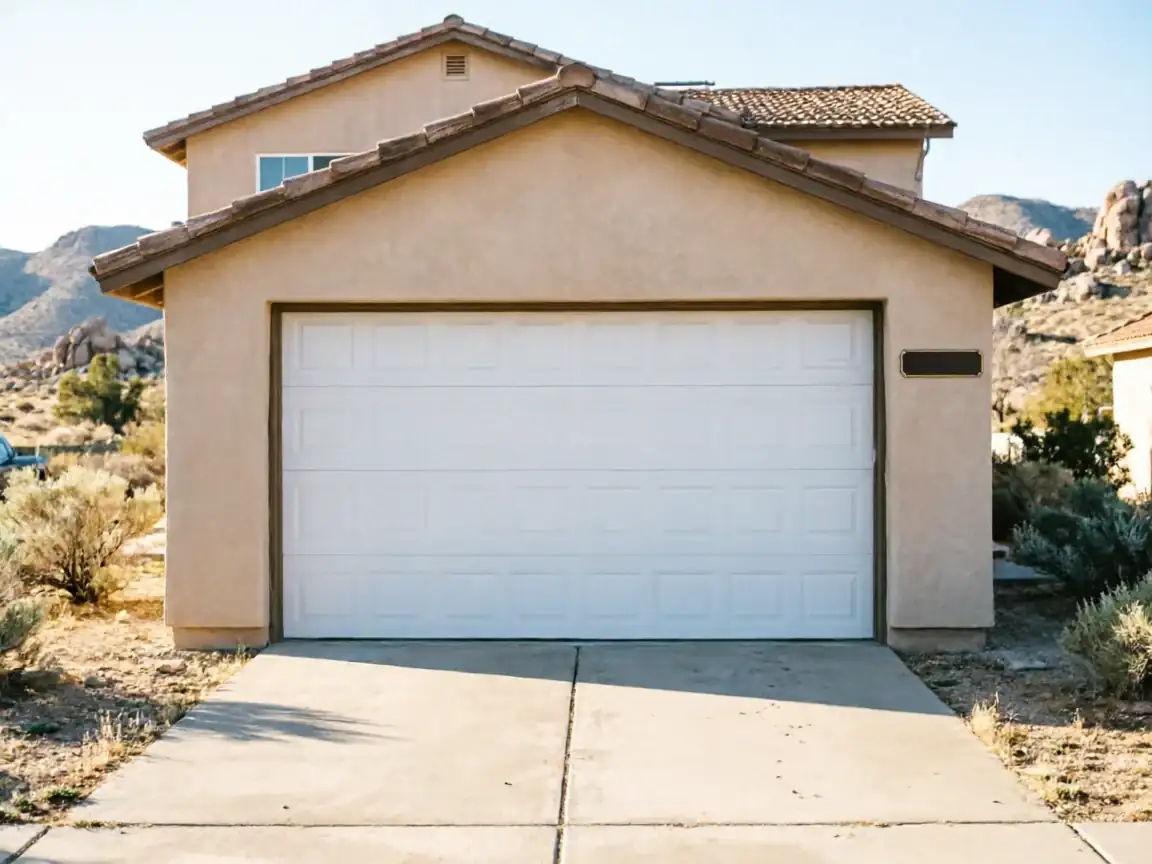
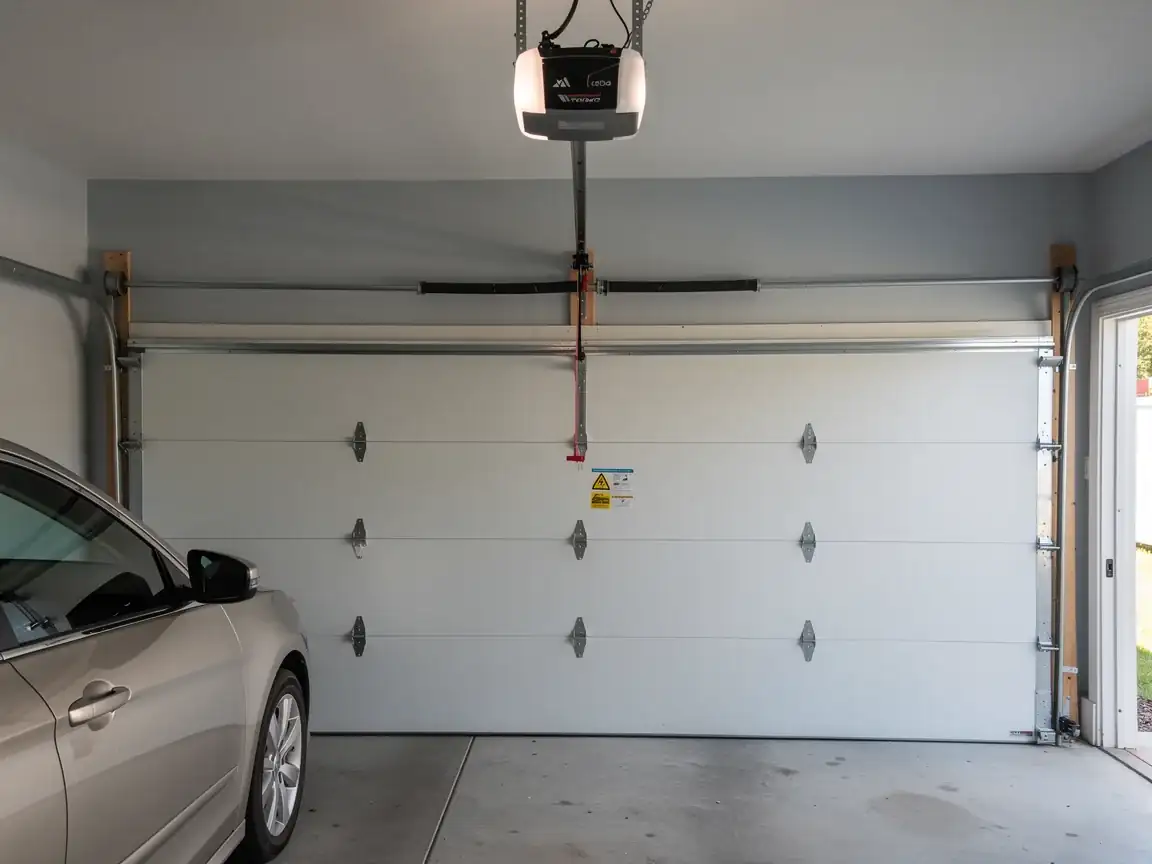
The same mid-to-late-1980s wave that built out most of this part of the territory. That means a lot of garages out here are still running what was standard at the time: galvanized torsion springs sized for uninsulated steel panel doors, and chain-drive or screw-drive openers - belt drives weren't common yet. A spring rated for 10,000 to 15,000 cycles, on a door used twice a day, tends to give out somewhere in year seven to twelve. On a house built in 1989, that puts a lot of these springs on their second or third replacement by now, sometimes with hardware nobody's touched since.
We don't keep a truck staged in Carefree
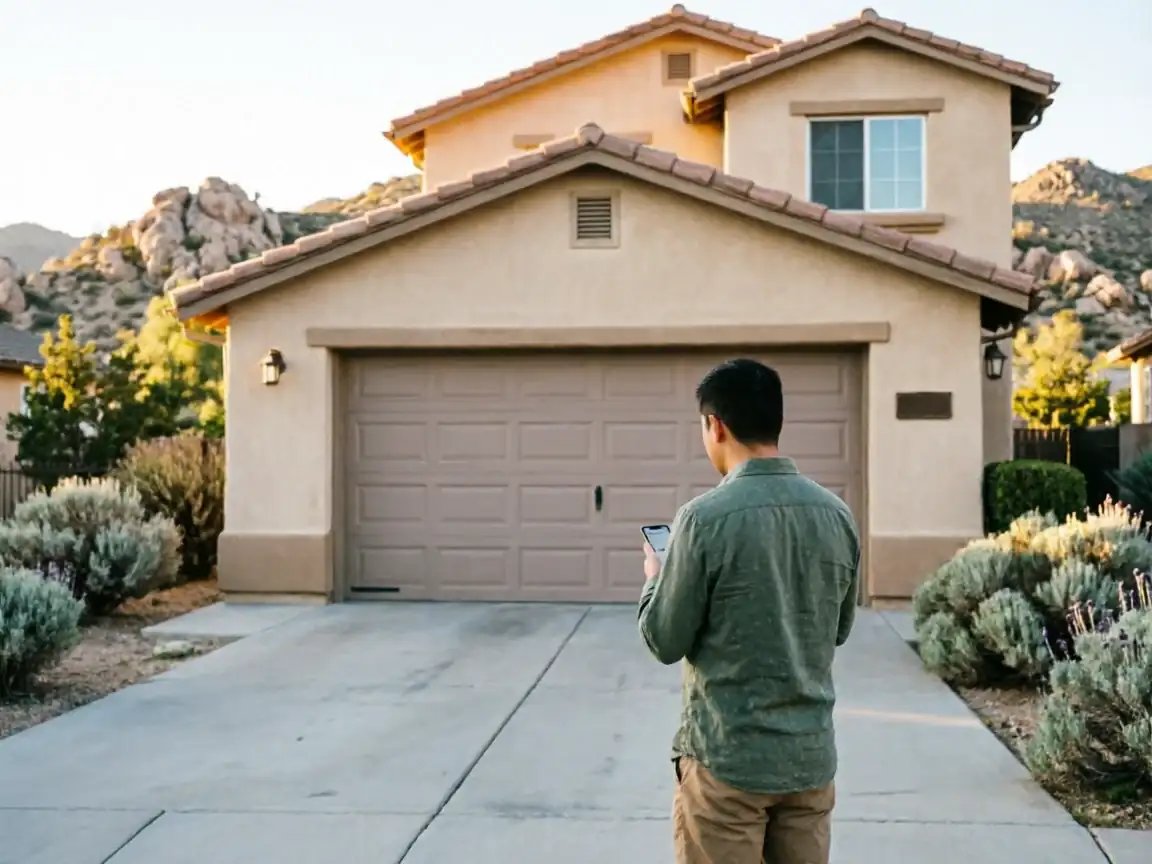
The call comes from Fountain Hills, 18 miles out - the longest run in our service area outside Rio Verde. We're honest about that distance; if a job can wait for a scheduled visit instead of an emergency run, we'll tell you, because driving 18 miles for something that isn't urgent doesn't save anyone money.
- 18 miles
What You Are Seeing
The calls we get from this part of the territory usually sound the same: a door that won't budge off the floor, a loud bang followed by the door refusing to move, or an opener that hums and strains without lifting anything. On a house built around 1989, a sudden bang is almost always a torsion spring letting go - the coil has been fatiguing for years and finally snaps, usually on the coldest or hottest stretch of a day when the steel is under the most stress.
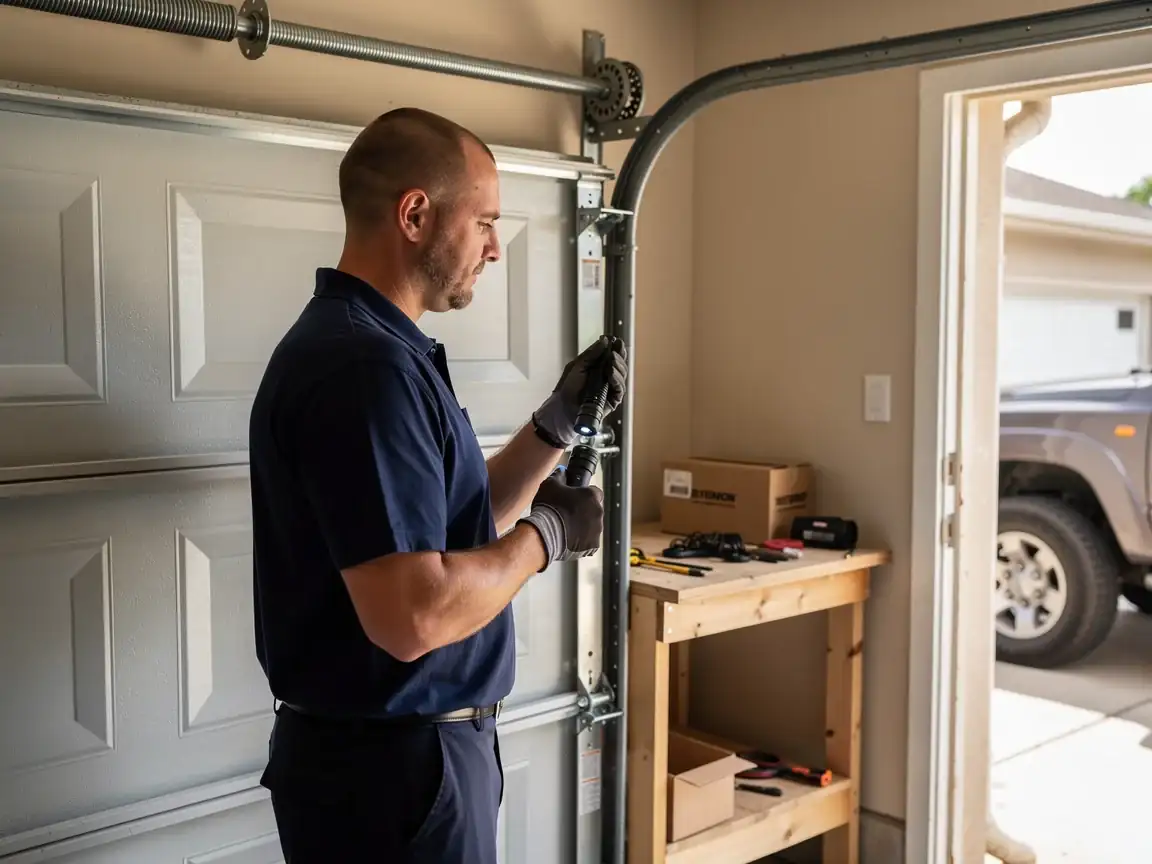
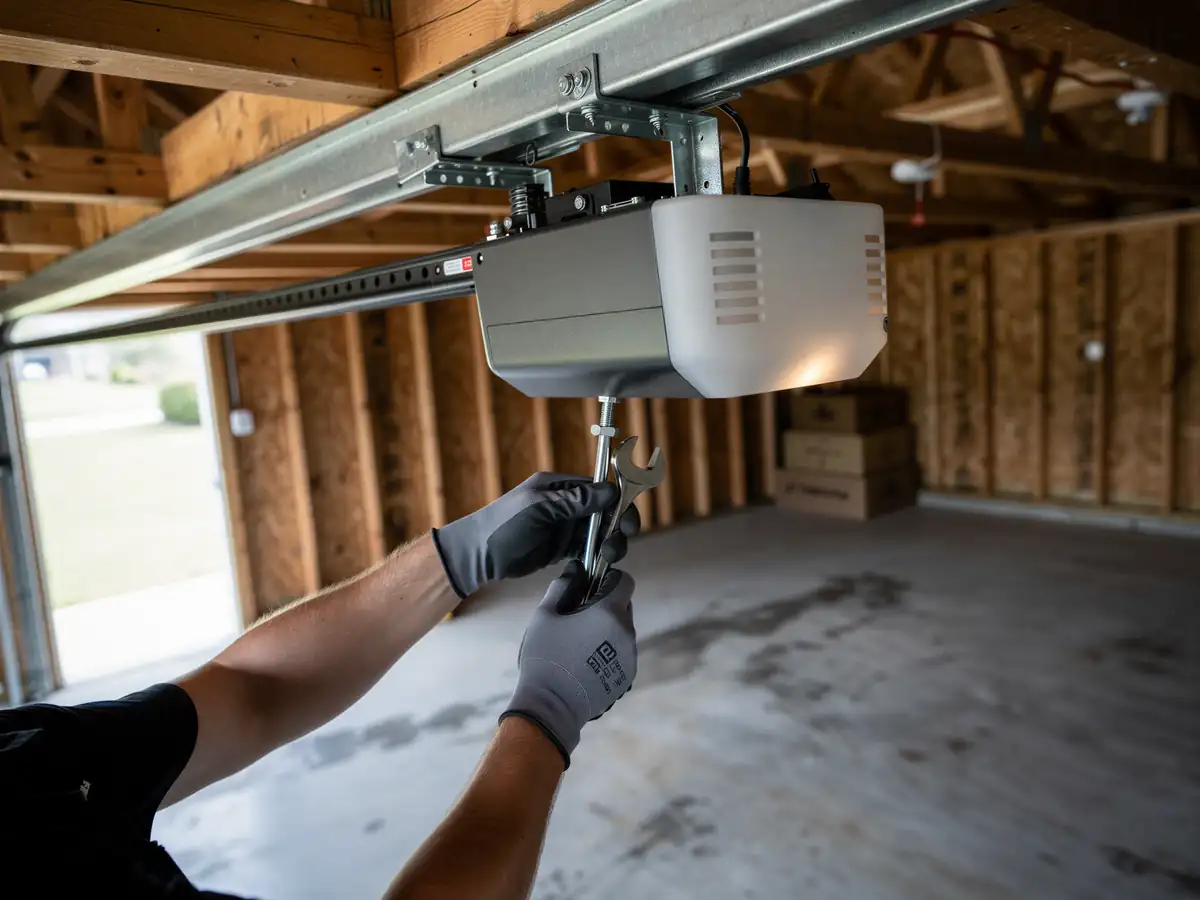
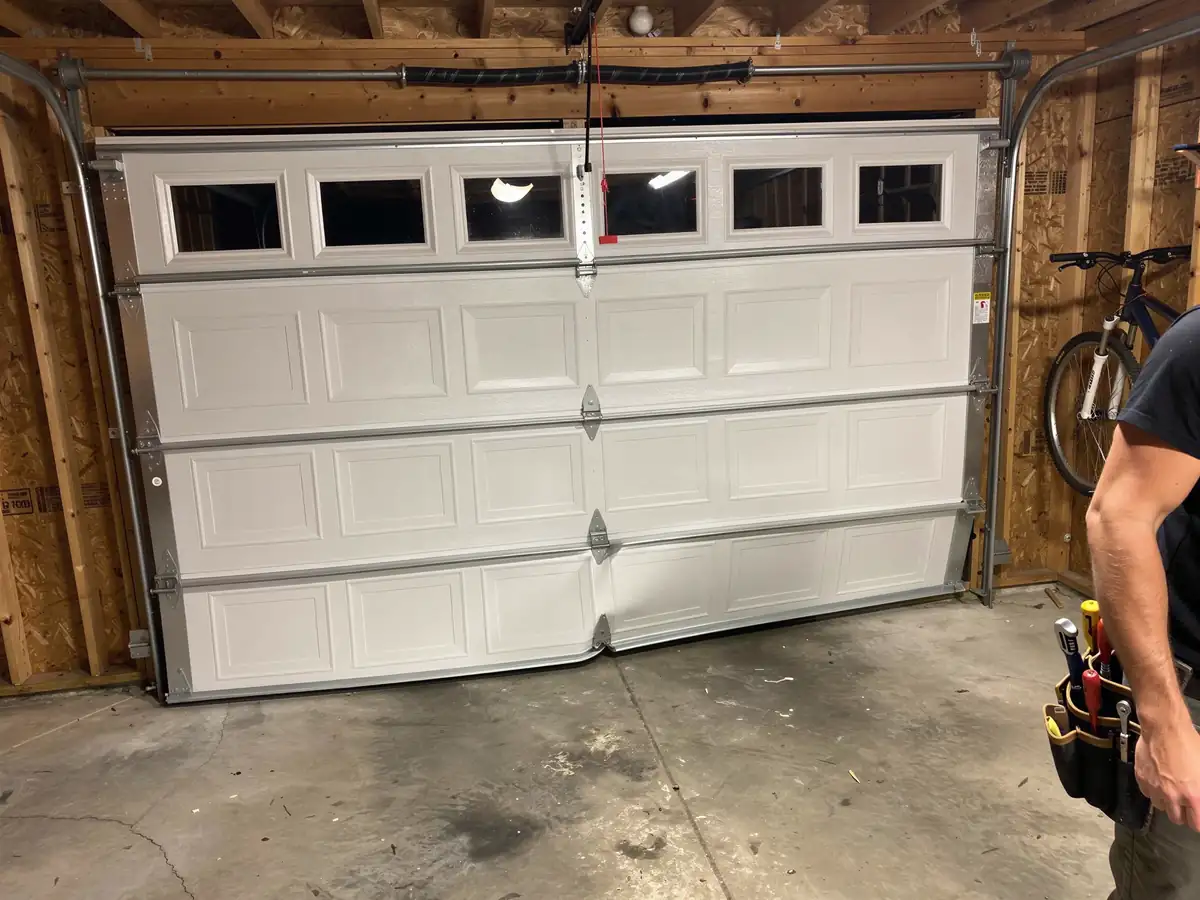
Cables on these original setups fray at the drum end first, and once a strand or two goes, the cable can slip without fully snapping, which shows up as a door that tracks crooked or drops unevenly on one side. If the opener motor runs but the door doesn't move, check the gear and sprocket assembly before assuming it's electrical - on chain-drive units from this era, the nylon gear is usually the first part to strip.
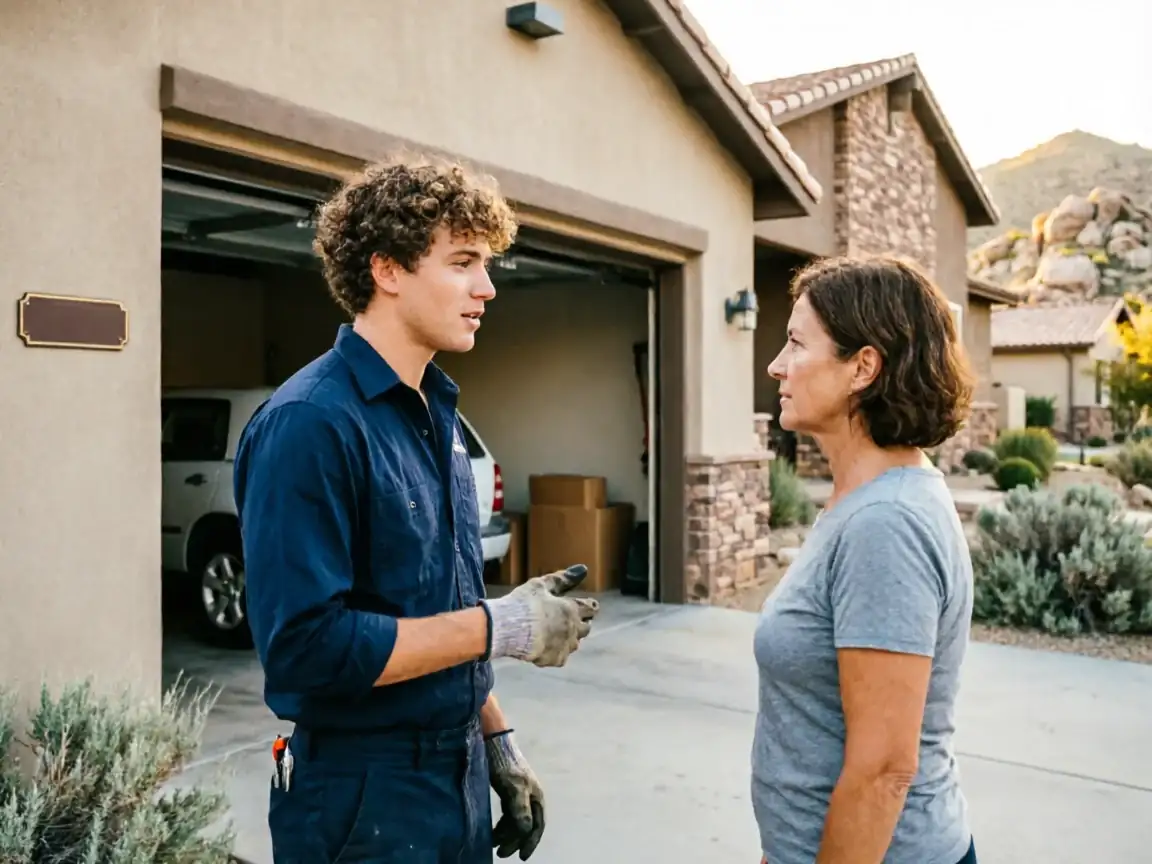
We can diagnose most of this over the phone well enough to know what parts to bring, which matters when the part isn't something we'd normally carry for a newer belt-drive setup.
What Causes It Around Here
The desert heat classification for this area is severe, and that heat does specific damage to hardware this age. Galvanized spring coils lose temper faster under sustained high heat than they would in a milder climate - the metal doesn't fail instantly, it fatigues faster, cycle after cycle, until it lets go well short of its rated life. Lubricant on rollers and hinges cooks off faster too, so a roller that should be quiet starts grinding months before it would somewhere cooler.
The steel track itself expands and contracts across the daily swing between desert morning and afternoon heat, and on a 1989-era door that track was set with less tolerance than current code calls for. Over enough summers that shows up as a door that binds at one specific point every time, usually right where the track brackets were set tightest.
We don't have weather-event data specific to Carefree to point to beyond the heat classification - no hail or wind figures to cite - so we're not going to invent a storm story. The heat alone is doing most of the damage out here, and it does it slowly.
What Can Go Wrong
Left alone, a fatigued spring on a 1989-era door doesn't just need tightening
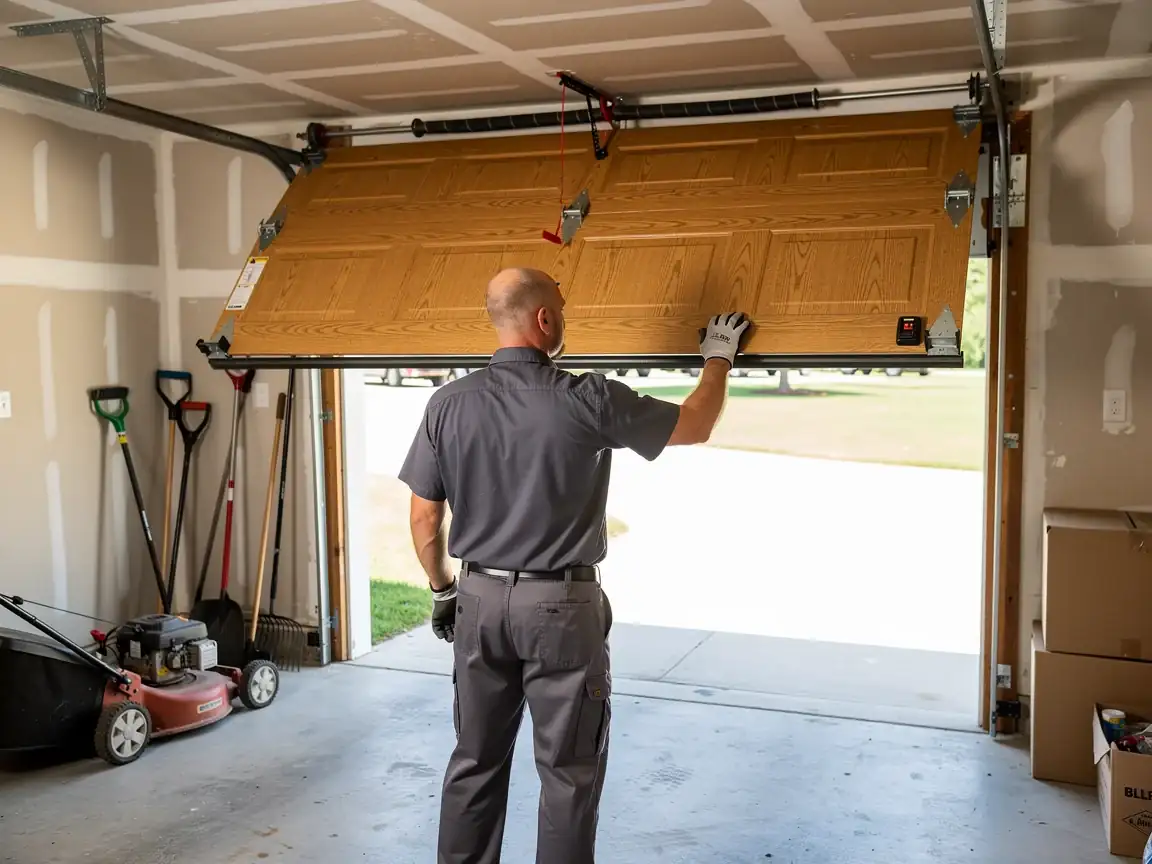
Once it's cracked or stretched past spec, the whole coil has to come off, and on an uninsulated steel door the replacement spring often has to be matched by weight since the original door panels are heavier than the foam-core doors sold today. That's not a same-part swap; it's a measured job.
A stripped gear on an original chain-drive opener is a judgment call
If the opener itself is still from that era, we'll tell you honestly when a repair isn't worth it against the cost of a new unit - parts for openers that old aren't always in stock, and waiting on a special order isn't a fix for a door you need working today.
The one we see most and worst
A cable that's partially frayed but hasn't fully let go yet, so the door still runs - until it doesn't, usually with the door stuck halfway and the garage unsecured. That's the kind of failure that looks minor until it isn't, and it's worth a look before it becomes the emergency call.