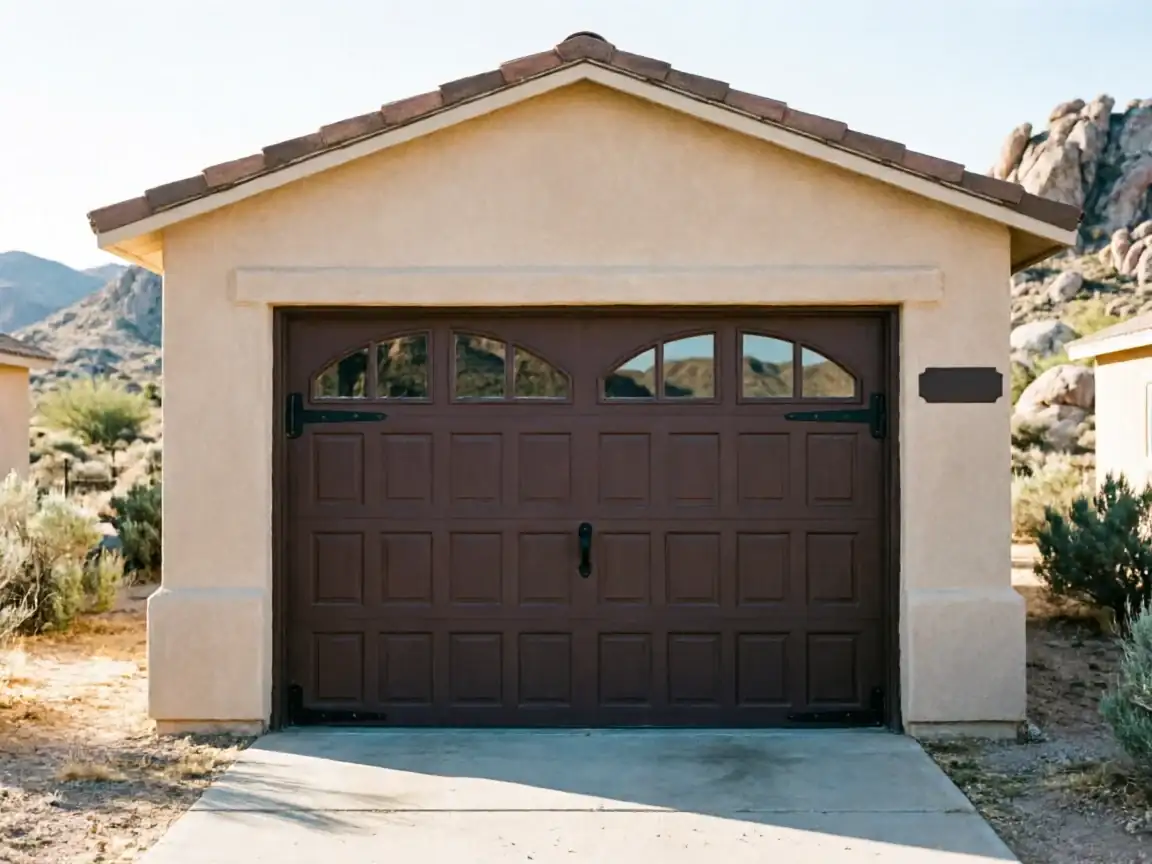
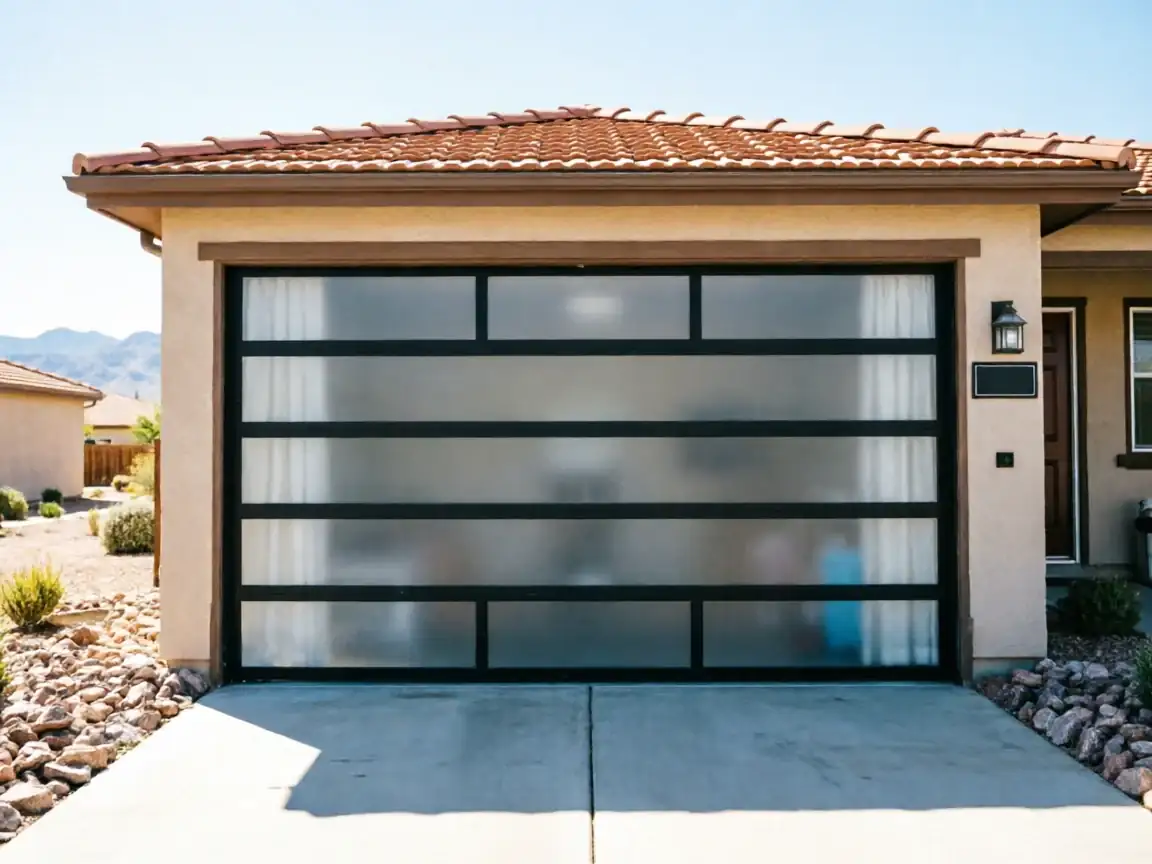
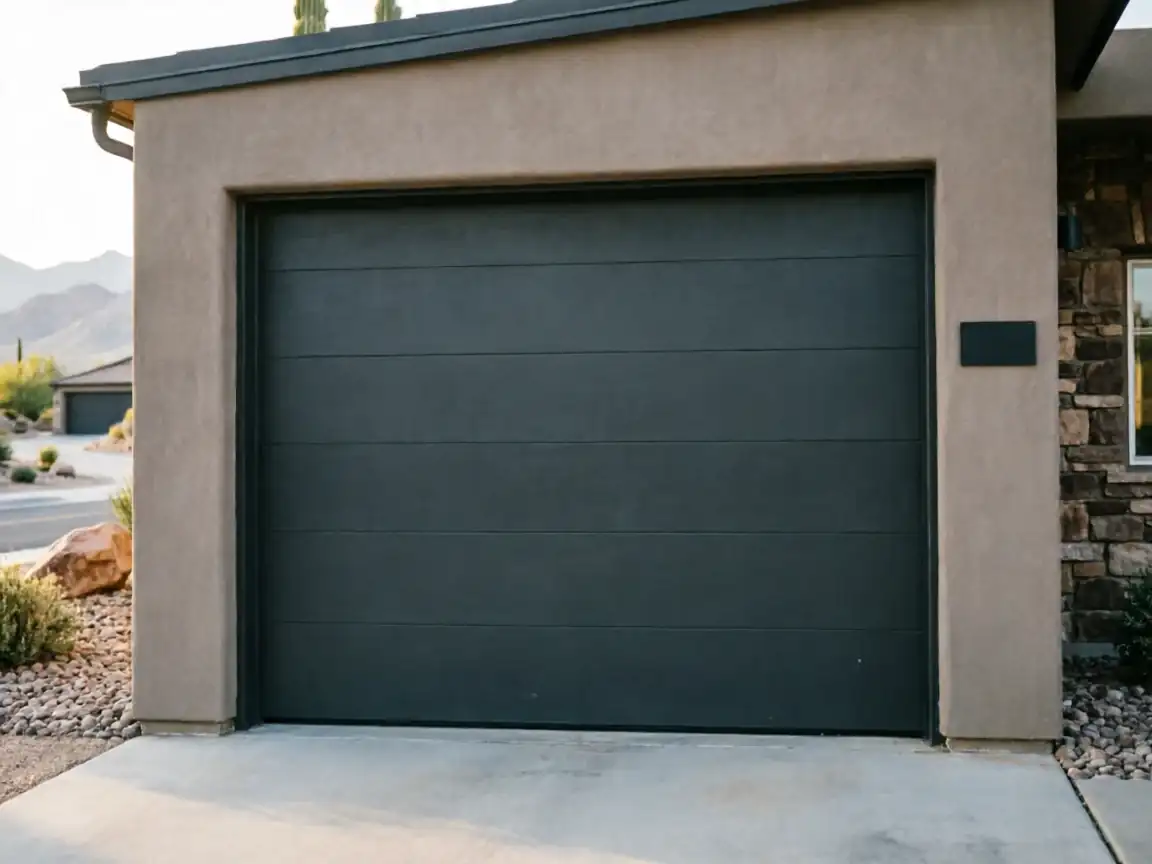
New garage door installs for Carefree's 1980s-90s custom-lot homes: oversized steel panels, heat-rated hardware, and what 18 miles from Fountain Hills means for the job.
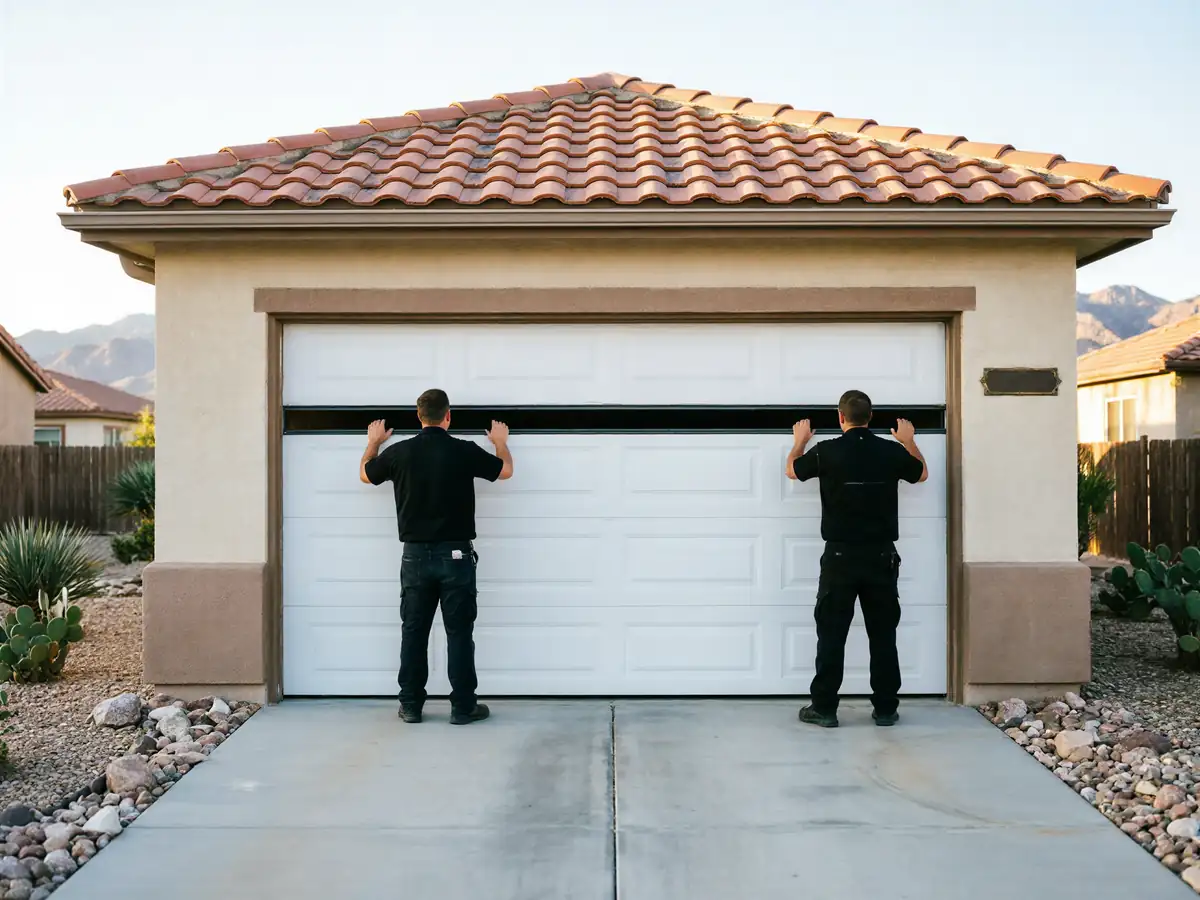
We run out of Fountain Hills, and Carefree sits about 18 miles out, so a new install here is a planned trip, not a drop-in. We bring the door, the track, the opener, and the spare hardware on the truck because there's no second run back to the shop mid-job. That means we size the order carefully before we leave: panel width, headroom, and spring weight all get confirmed against the actual opening, not a guess from a phone photo. Most of the custom lots out here were built with garages wide enough for two full-size vehicles or a truck and a second car, which changes the door size and spring count from what you'd order for a standard subdivision double. We don't stock every width on the truck, so if your opening is an odd size, we order the panel and schedule the swap for when it arrives rather than installing something close enough. That's the one limitation worth saying plainly: a non-standard width means a wait, not a same-day fix.
What You Are Seeing
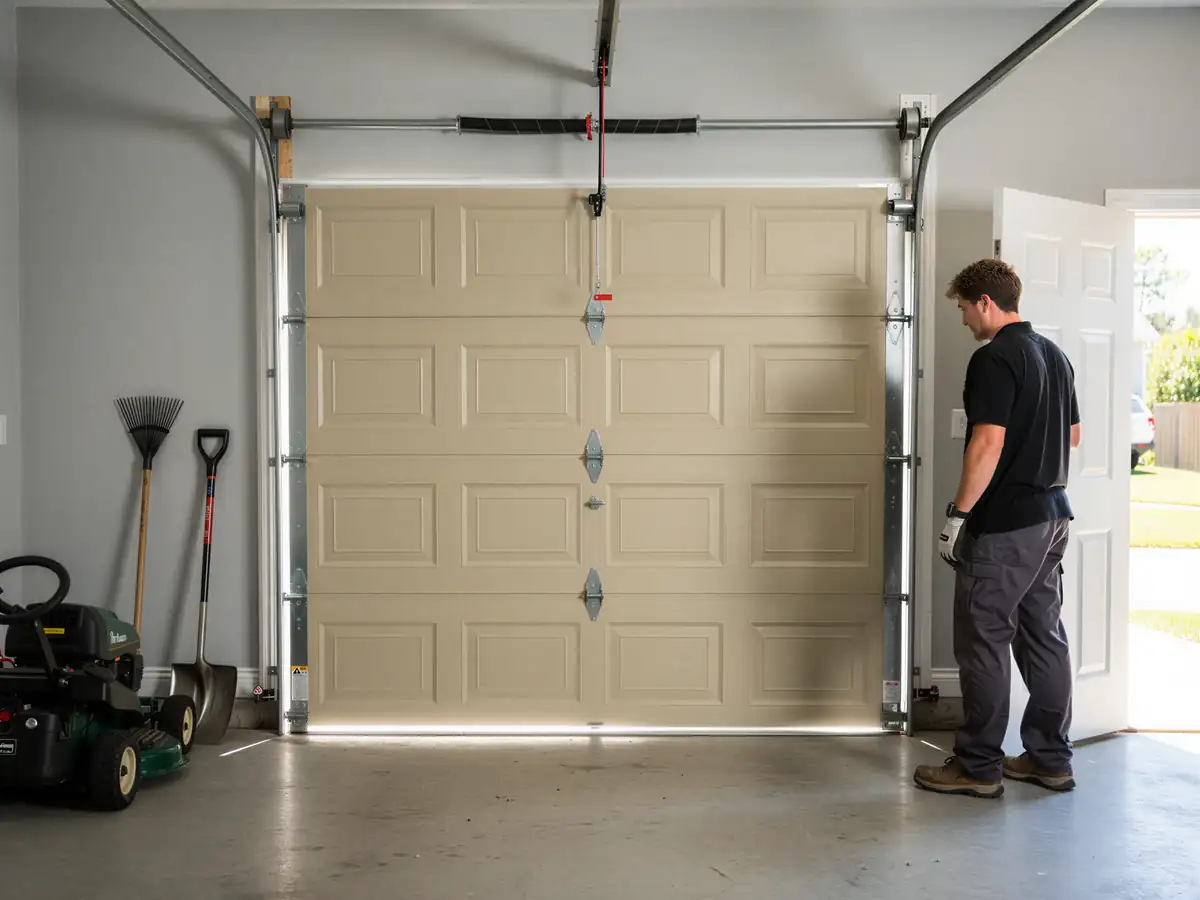
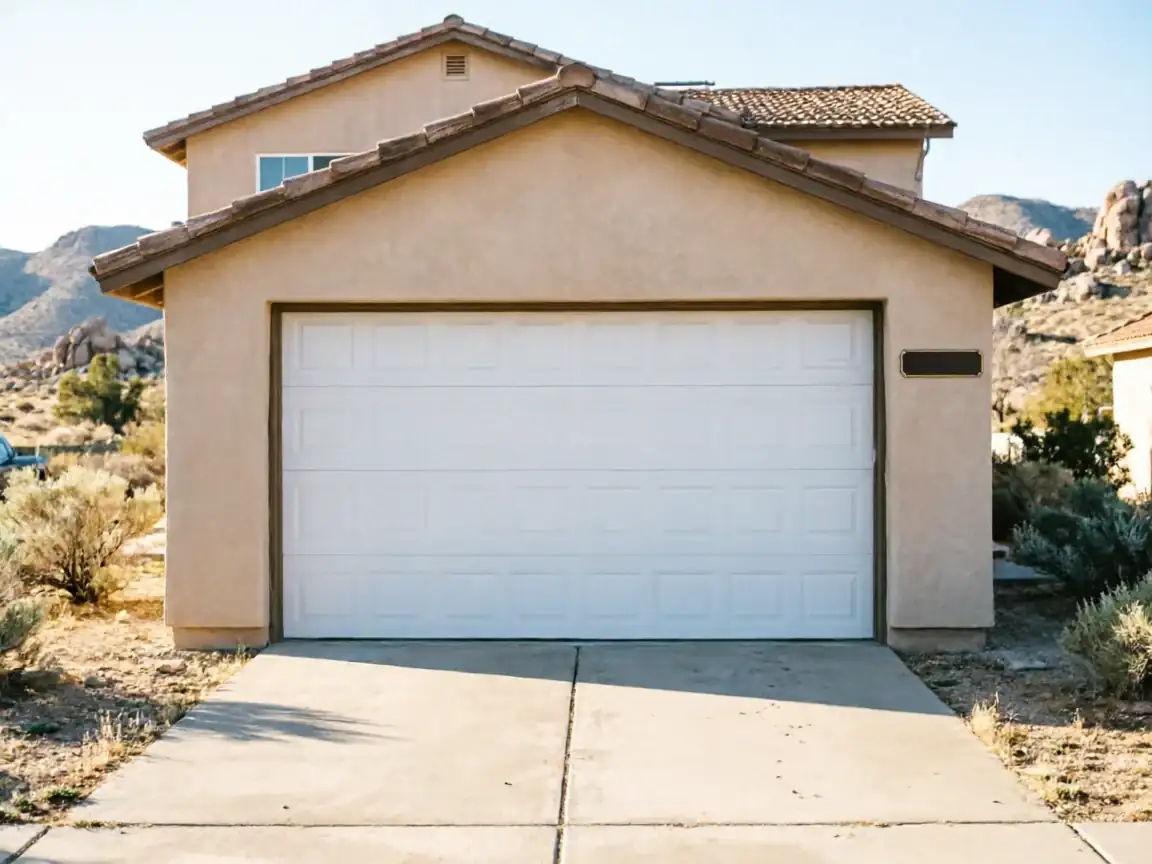
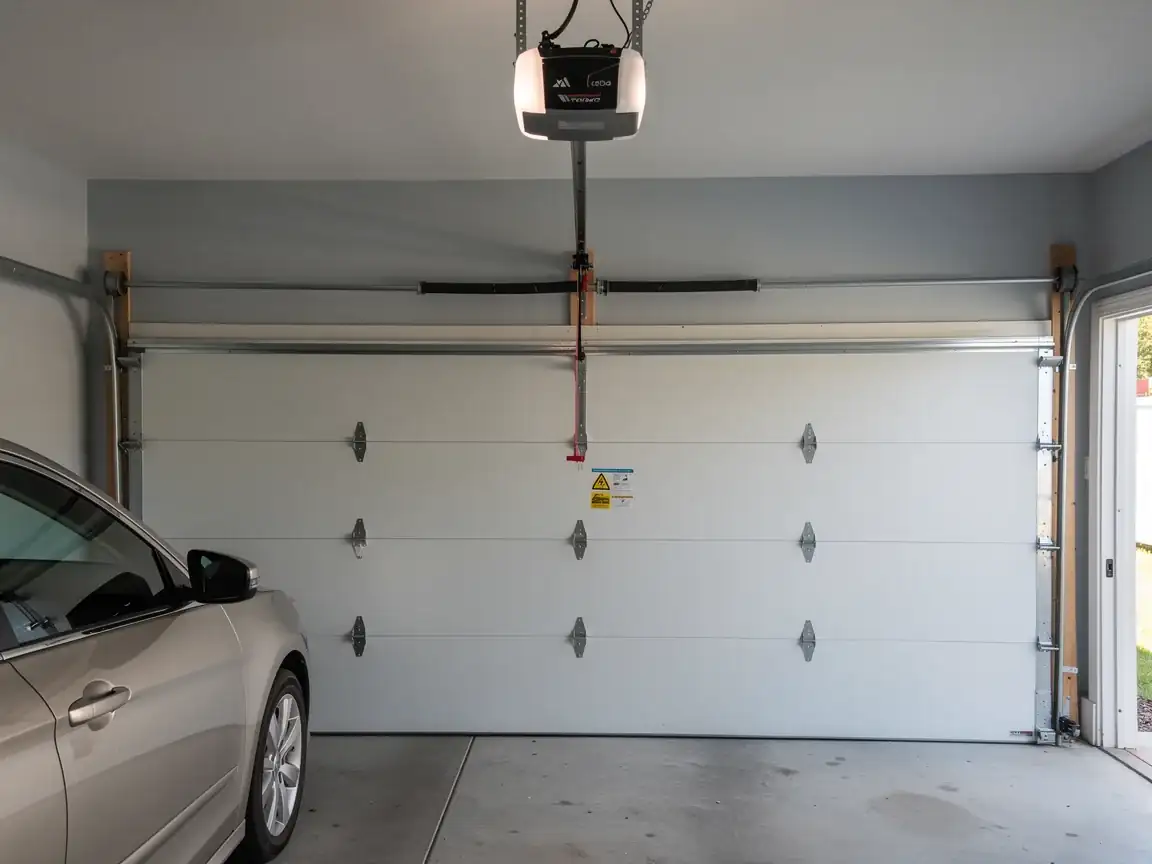
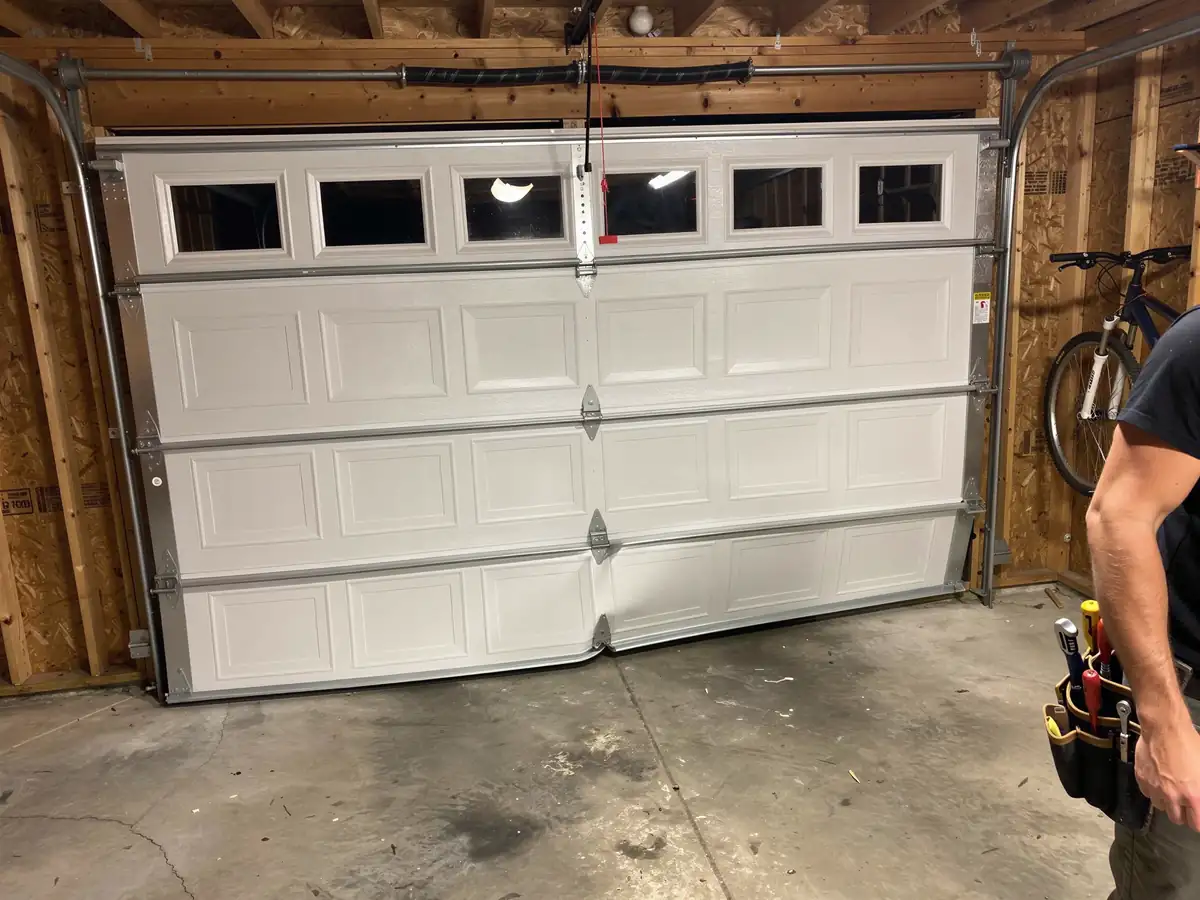
Carefree's housing stock mostly dates to 1985 through 1994, median build year 1989, and that generation of garage door is almost always a single-skin steel panel on a torsion spring set sized for the house's original, heavier wood-style aesthetic. Thirty-plus years of Arizona sun on bare steel means the panels have usually faced more thermal cycling than the hardware was built to handle. You'll see hairline rust at the bottom panel seam, a sag at the corner where the roller track has pulled away from the jamb, or an opener straining because the counterbalance spring lost tension years ago and nobody replaced it. None of that is cosmetic only - it's the door telling you the balance is off, which is exactly the problem a new install corrects rather than patches.
What Causes It Around Here
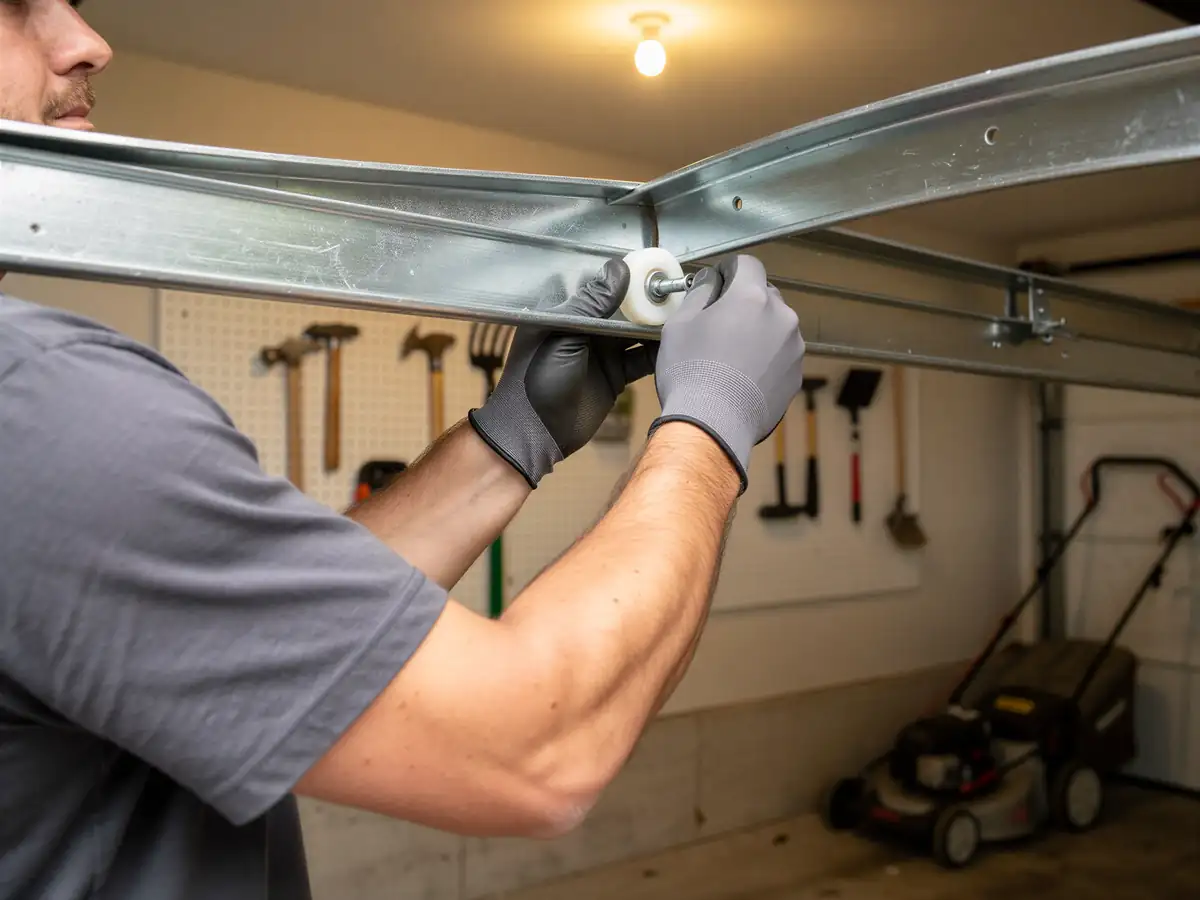
This area sits in a severe heat climate band, and that's the number that drives most of what fails on an original-era door. Steel expands and contracts daily through the summer, and a single-skin panel with no insulation layer moves more than a two-layer or insulated door would. Over a few thousand cycles that movement loosens hinge screws, stretches cable, and eventually throws the door out of square at the track. Combine that with household income in this area running well above the regional median - $141,331 - and we see more owners here opting for insulated steel or composite doors on the replacement, specifically because they hold shape better under heat swing and run quieter on the opener. It's not a style upgrade so much as a fix for the actual cause of the fatigue.
What Can Go Wrong
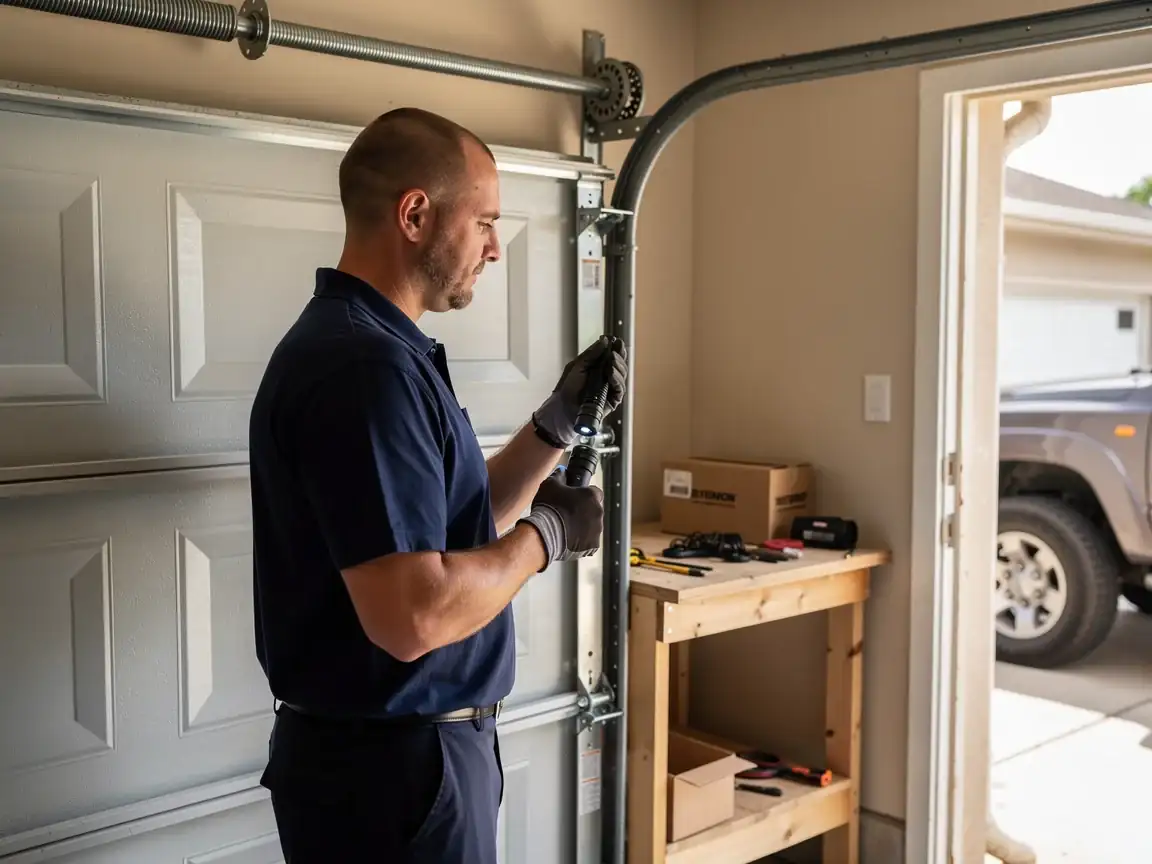
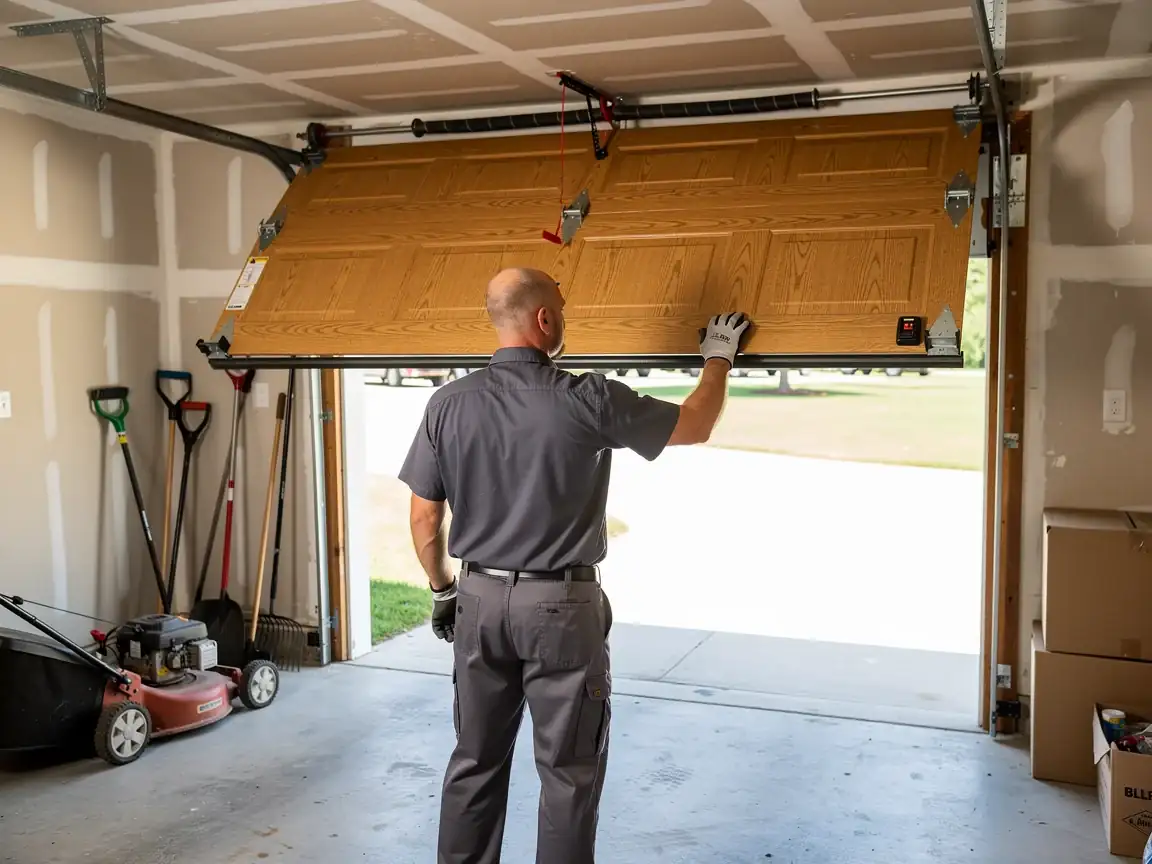
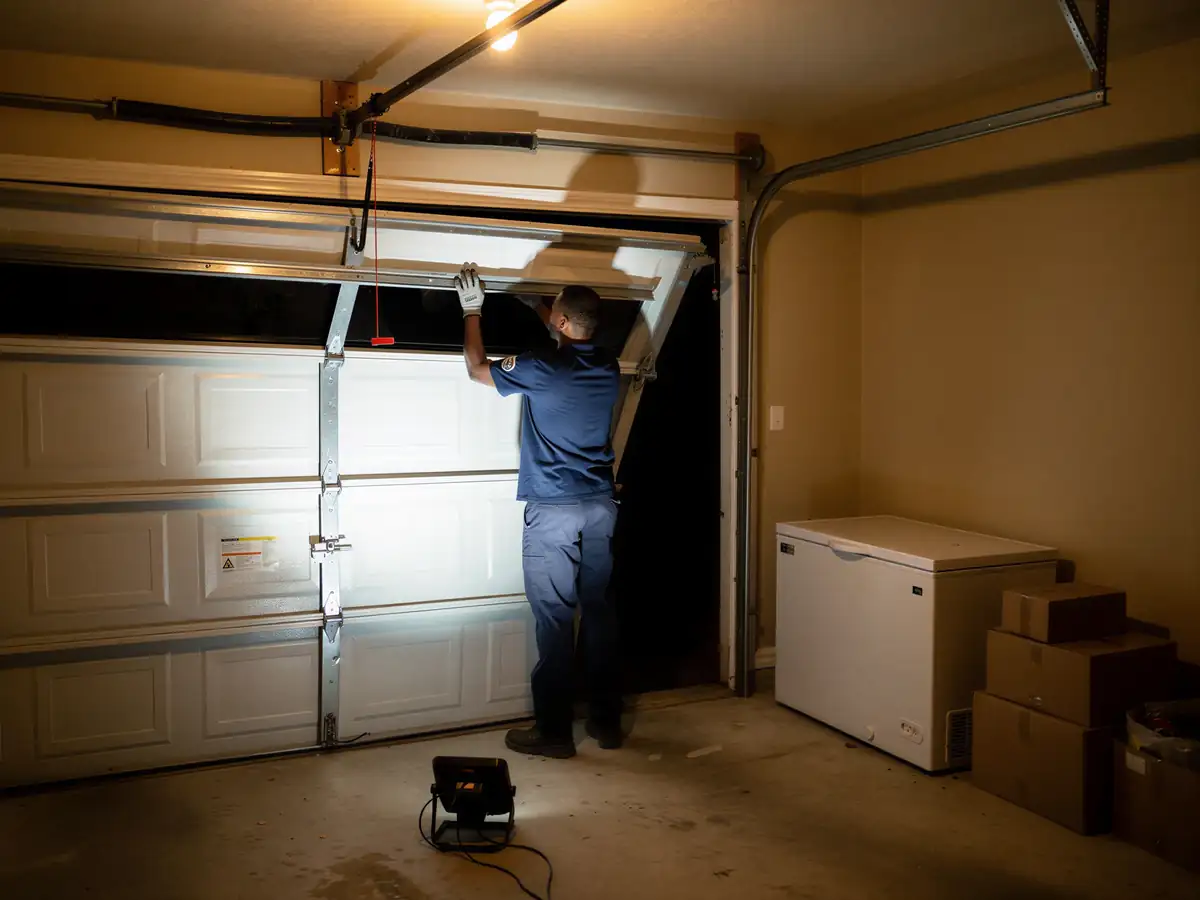
With roughly 1,849 households in Carefree, most on the same 1980s build cycle, we run into a narrow set of failure patterns rather than a wide one. The one that costs the most if ignored: a torsion spring from the original install that's been re-tensioned once or twice already and is now undersized for a heavier replacement door. Put a new insulated panel on old springs and the opener will burn out trying to lift weight the spring isn't rated for. We size springs to the new door's actual weight every time, not to what was there before. The other common issue is a jamb that's shifted slightly out of plumb over three decades of heat expansion - small enough you won't see it standing in the garage, big enough that a new door won't seal or glide right until the track gets reset to true.
How it works
From “it’s stuck” to “it’s fixed”
1
Tell us what’s wrong
Describe the symptom - won’t open, loud bang, opener runs but the door won’t move.
2
On-site diagnosis
A technician tests the door under power and by hand and finds what actually failed.
3
Clear, up-front plan
You get the fix that’s needed and what drives the cost - before any work starts.
4
Repaired & tested
The repair is done, the door is set true and tested, and the work area left clean.
Not sure which repair your door needs in Fountain Hills, AZ? Describe what it’s doing - every job starts with a diagnosis.
No. We're based in Fountain Hills and drive out to Carefree, about 18 miles each trip. We bring what the job needs on the truck, but an odd-size panel or a special-order opener means scheduling the install around when that part arrives rather than same-day.
Why does my 1980s garage door feel heavier or harder to lift than it used to?
Most Carefree homes were built between 1985 and 1994 with single-skin steel panels on torsion springs sized for that original door. Decades of heat cycling loosen hardware and reduce spring tension, so the door gets harder to lift well before it fails outright.
Is an insulated door worth it here?
Given the severe heat this area sits in, insulated steel or composite panels hold their shape better than bare single-skin steel and put less daily stress on the opener. It costs more upfront, but it's addressing the actual cause of panel warp and spring fatigue, not just the symptom.
Ready to get your garage door sorted?
Tell us what it’s doing and where you are in Fountain Hills - we’ll take it from there.